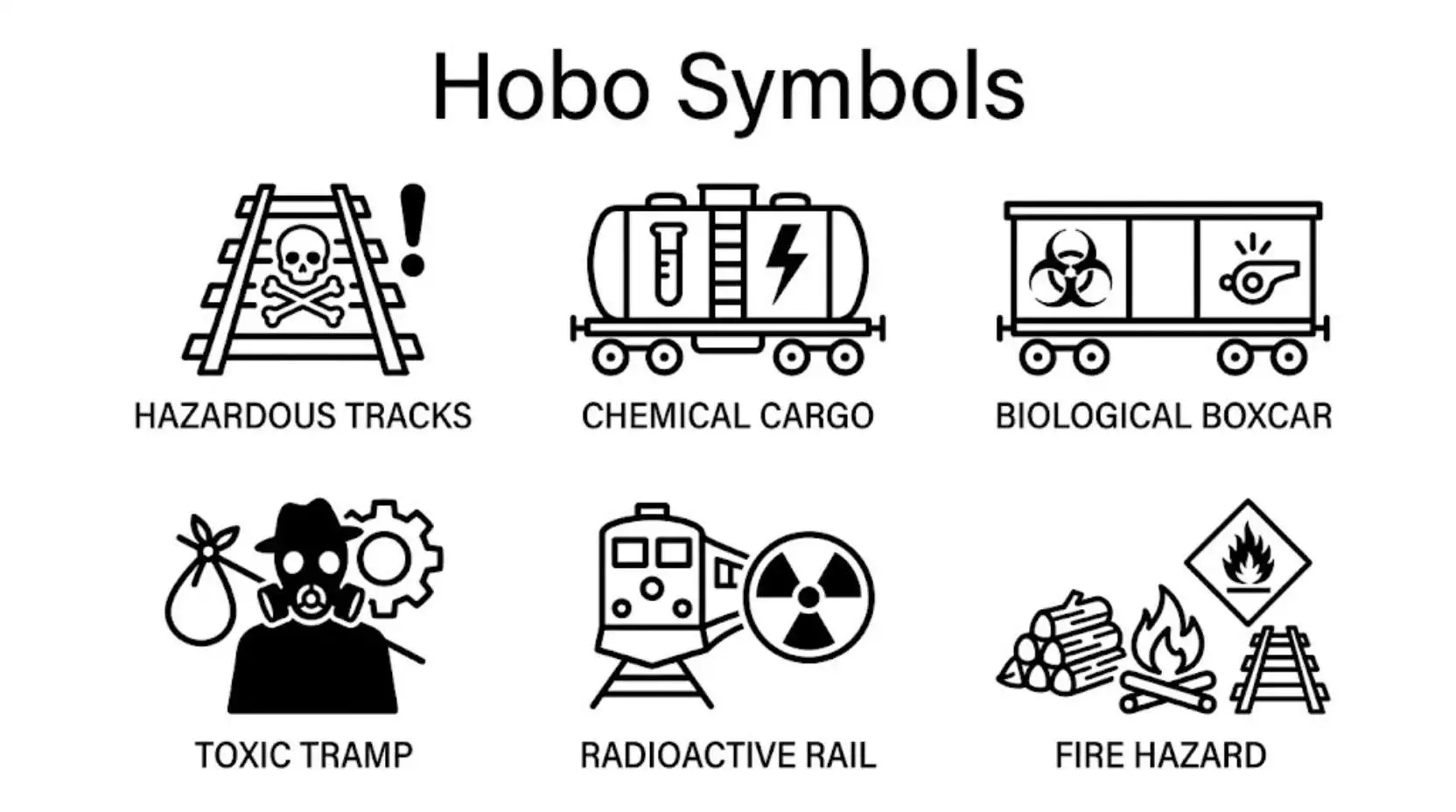
“Hobo symbols” are one of the most fascinating hidden communication systems in history. These mysterious drawings, marks and coded signs helped traveling workers survive during hard times by sharing warnings, safety tips, and opportunities.
During the late 1800s and the Great Depression, hobos used symbols to secretly guide one another across towns, railroads and unfamiliar places.
Today, hobo symbols still capture people’s imagination because they combine survival, mystery, freedom and human connection in a way few other symbols do.
In this guide, you will discover the meanings, history, spiritual interpretations, and cultural impact behind these legendary secret signs.
Quick Answer
Hobo symbols are coded drawings and marks traditionally used by traveling workers and homeless wanderers in the United States to communicate information about food, danger, work, kindness, police presence, and safe places. These symbols became popular during the late 19th century and the Great Depression. Common hobo symbols include signs for “safe house,” “good food,” “danger,” “angry man,” and “work available.”
What Are Hobo Symbols?
Hobo symbols are simple visual codes drawn on fences, sidewalks, buildings, train stations, and walls. They allowed travelers to communicate quickly without speaking directly.
These symbols worked like a hidden language. A person passing through a town could instantly know:
- Where to find food
- Which homes were friendly
- Where police were strict
- If work was available
- Which places were dangerous
Many symbols were drawn using chalk, charcoal, or scratched into wood and metal.
Why Hobo Symbols Were Important?
Life on the road was dangerous. Travelers often faced hunger, violence, harsh weather, and rejection. Hobo symbols helped create an underground support network among strangers.
For many wandering workers, these symbols meant survival.
Did you know?
Some historians believe hundreds of different hobo symbols existed across the United States during the early 1900s.
The History of Hobo Symbols
Origins of the Hobo Culture
Hobo culture grew rapidly after the American Civil War and expanded during the industrial age. Many workers traveled by freight train looking for temporary jobs.
During the Great Depression of the 1930s, unemployment forced thousands of people onto the roads and railways.
Why Secret Communication Was Necessary
Travelers could not always trust strangers. In many towns, homeless people were unwelcome or arrested. Hobo symbols allowed quiet communication without attracting attention.
Connection to Railroad Life
Railroads became the center of hobo travel. Many symbols appeared near:
- Train yards
- Bridges
- Water towers
- Campsites
- Abandoned buildings
These marks acted like survival maps for travelers moving across America.
Most Famous Hobo Symbols and Their Meanings
Safe House Symbol
One of the most important hobo symbols marked homes where travelers could receive food or shelter.
Meaning
- Friendly family lives here
- Safe place to rest
- Kind people inside
This symbol offered hope to exhausted travelers.
Danger Symbol
Danger signs warned hobos about unsafe areas.
It Could Mean
- Violent people nearby
- Aggressive police
- Dangerous dogs
- Criminal activity
These warnings protected travelers from serious harm.
Good Food Symbol
Food symbols pointed toward generous households or businesses.
Emotional Meaning
For hungry travelers, this symbol represented:
- Relief
- Survival
- Human kindness
Work Available Symbol
Some symbols informed hobos that temporary work could be found nearby.
Types of Work
- Farm labor
- Railroad jobs
- Construction
- Cleaning work
This symbol gave struggling workers hope for income and stability.
Kind Woman Lives Here Symbol
One famous sign indicated a compassionate woman lived in the home.
What Is It Represented?
- Food likely available
- Safer interaction
- Compassion and generosity
This became one of the most emotionally comforting symbols in hobo culture.
Angry Man Lives Here Symbol
This warning sign helped travelers avoid hostile homeowners.
It Symbolized
- Aggressive behavior
- Possible violence
- Risk of being chased away
Police Warning Symbol
Some towns were known for strict police enforcement.
Meaning
- Leave quickly
- Avoid staying overnight
- High risk of arrest
This symbol helped hobos avoid trouble.
Symbols for Water and Campsites
Finding clean water and safe sleeping areas was essential.
Water Symbol
Represented:
- Drinking water nearby
- River or pump location
- Safe supply
Campsite Symbol
Showed:
- Safe sleeping area
- Hidden camp
- Resting location
What Makes Hobo Symbols Unique?
Unlike religious or royal symbols, hobo signs were created for survival. Their meanings were practical, emotional, and immediate.
Key Features of Hobo Symbols
- Simple and quick to draw
- Easy to recognize
- Secretive
- Functional
- Emotionally powerful
They formed a hidden language built on trust and shared hardship.
Psychological Meaning Behind Hobo Symbols
Hobo symbols reveal deep human emotions connected to fear, hope, survival, and community.
Symbols as Emotional Support
A small chalk mark could reduce anxiety by telling someone:
- Food is nearby
- This place is safe
- Others survived here
Human Need for Connection
Even strangers wanted to help one another during difficult times. These symbols became signs of invisible solidarity.
Freedom and Independence
Many people associate hobo culture with freedom from social rules and fixed lifestyles. The symbols represented movement, exploration, and resilience.
Hobo Symbols and the Great Depression
The Great Depression gave hobo symbols major cultural importance.
Why They Spread Rapidly?
Millions of Americans lost jobs and homes. Traveling workers relied heavily on coded messages for survival.
Symbols During Economic Hardship
The signs reflected:
- Hunger
- Poverty
- Mutual aid
- Adaptation
Many symbols carried emotional weight because they represented survival during one of America’s hardest periods.
Hobo Symbols in Literature and Popular Culture
Hobo culture inspired countless books, films, songs, and artworks.
In Literature
Writers used hobo symbols to represent:
- Loneliness
- Freedom
- Survival
- American struggle
In Movies and Television
Hobo imagery often appears in stories about:
- Train hopping
- The Great Depression
- Wanderers and outsiders
In Music
Folk and country songs frequently mention railroad travel, wandering workers, and coded signs.
Spiritual and Deeper Interpretations of Hobo Symbols
Although practical, many people see spiritual symbolism within hobo culture.
Journey as a Symbol of Life
The endless road often symbolizes:
- Personal growth
- Searching for meaning
- Transformation
Marks as Signs of Hope
Even simple symbols became emotional reminders that kindness still existed in difficult times.
Hidden Wisdom
Some people compare hobo symbols to ancient secret languages or spiritual codes shared among marginalized groups.
Hobo Symbols Around the World
While American hobo symbols are most famous, similar systems appeared globally.
Europe
Traveling workers and migrants in Europe also developed secret signs to communicate safety and resources.
Asia
Certain traveling communities used coded markings and symbolic communication near trade routes.
Africa
Nomadic groups sometimes used visual signs to indicate water sources, danger, or tribal boundaries.
Common Hobo Symbols and Their Meanings
Circle With Arrows
Means move on quickly or leave town immediately.
Cross Symbol
Often represented religious help or a church offering aid.
Cat Symbol
Could indicate a kindhearted woman lived nearby.
Zigzag Line
Warning of aggressive dogs or danger.
Triangle Symbol
Sometimes represented safety or hidden opportunity.
Wavy Lines
Usually symbolized water or rivers nearby.
Did you know?
Many hobo symbols changed slightly depending on the region and local railroad communities.
Hobo Symbols in Modern Life
Although traditional hobo culture faded, the symbols still influence modern design and storytelling.
Tattoos and Body Art
People choose hobo symbol tattoos to represent:
- Freedom
- Survival
- Independence
- Adventure
Fashion and Graphic Design
Vintage hobo signs appear on:
- Clothing
- Posters
- Book covers
- Travel themed artwork
Urban Exploration Culture
Modern explorers and travelers sometimes use hobo inspired symbols in art and photography.
Hobo Symbol Tattoo Ideas and Meanings
Safe House Tattoo
Represents:
- Protection
- Hospitality
- Emotional security
Railroad Symbol Tattoo
Symbolizes:
- Freedom
- Endless journeys
- Personal independence
Work Symbol Tattoo
Represents determination and resilience during hard times.
Danger Symbol Tattoo
Some people use warning symbols to reflect difficult life experiences they survived.
How to Draw Hobo Symbols?
Hobo symbols are intentionally simple.
Step 1: Choose a Meaning
Think about what you want the symbol to communicate:
- Safety
- Danger
- Hope
- Freedom
- Survival
Step 2: Use Simple Shapes
Most symbols use:
- Circles
- Arrows
- Lines
- Crosses
- Triangles
Step 3: Keep It Minimal
The symbols must be easy to draw quickly.
Step 4: Add Personal Meaning
Modern artists often combine traditional hobo symbols with personal storytelling elements.
Hobo Symbols vs Modern Graffiti
People often confuse hobo symbols with graffiti, but they are different.
Hobo Symbols
- Practical communication
- Secret survival language
- Minimal design
Graffiti
- Artistic expression
- Public visibility
- Personal or political messages
Hidden Lessons Inside Hobo Symbols
These small signs teach important lessons about humanity.
Kindness Matters
A simple act of generosity could save someone’s life.
Communication Creates Community
Even strangers form connections during hardship.
Hope Can Be Small but Powerful
A tiny chalk mark carried enormous emotional meaning for travelers.
FAQs About Hobo Symbols
What are hobo symbols?
Hobo symbols are coded signs used by traveling workers to share information about safety, food, work, danger, and shelter.
When were hobo symbols most popular?
They became most popular during the late 1800s and the Great Depression in the United States.
Were hobo symbols real?
Yes, historians confirm that traveling workers used coded signs and markings across railroad routes and towns.
What is the most famous hobo symbol?
The safe house symbol is one of the most recognized because it represented food, shelter, and kindness.
Are hobo symbols still used today?
Traditional use is rare today, but the symbols remain popular in art, tattoos, books, and historical studies.
Conclusion
Hobo symbols are far more than old chalk drawings on forgotten walls. They tell powerful stories about survival, trust, loneliness, hope, and human kindness during some of history’s hardest times.
These secret signs created invisible communities among wandering workers searching for food, safety, and opportunity. Even today, hobo symbols continue to inspire artists, travelers, historians, and people drawn to ideas of freedom and resilience. Their simple designs remind us that even the smallest message can carry life changing meaning.

Ryan Scott is a dedicated writer and symbol researcher who uncovers the deeper meanings behind everyday signs and symbols. His work focuses on making complex symbolic concepts simple, engaging, and easy to understand for readers from all backgrounds.
He is the author of Hidden Symbol Codes and Secrets Behind Ancient Symbols, where he explores the origins and meanings of symbols across different cultures.
Ryan’s goal is to inspire curiosity and help readers see the world from a new perspective through the language of symbols.
 Sophia Bennett
 Andrew Clark