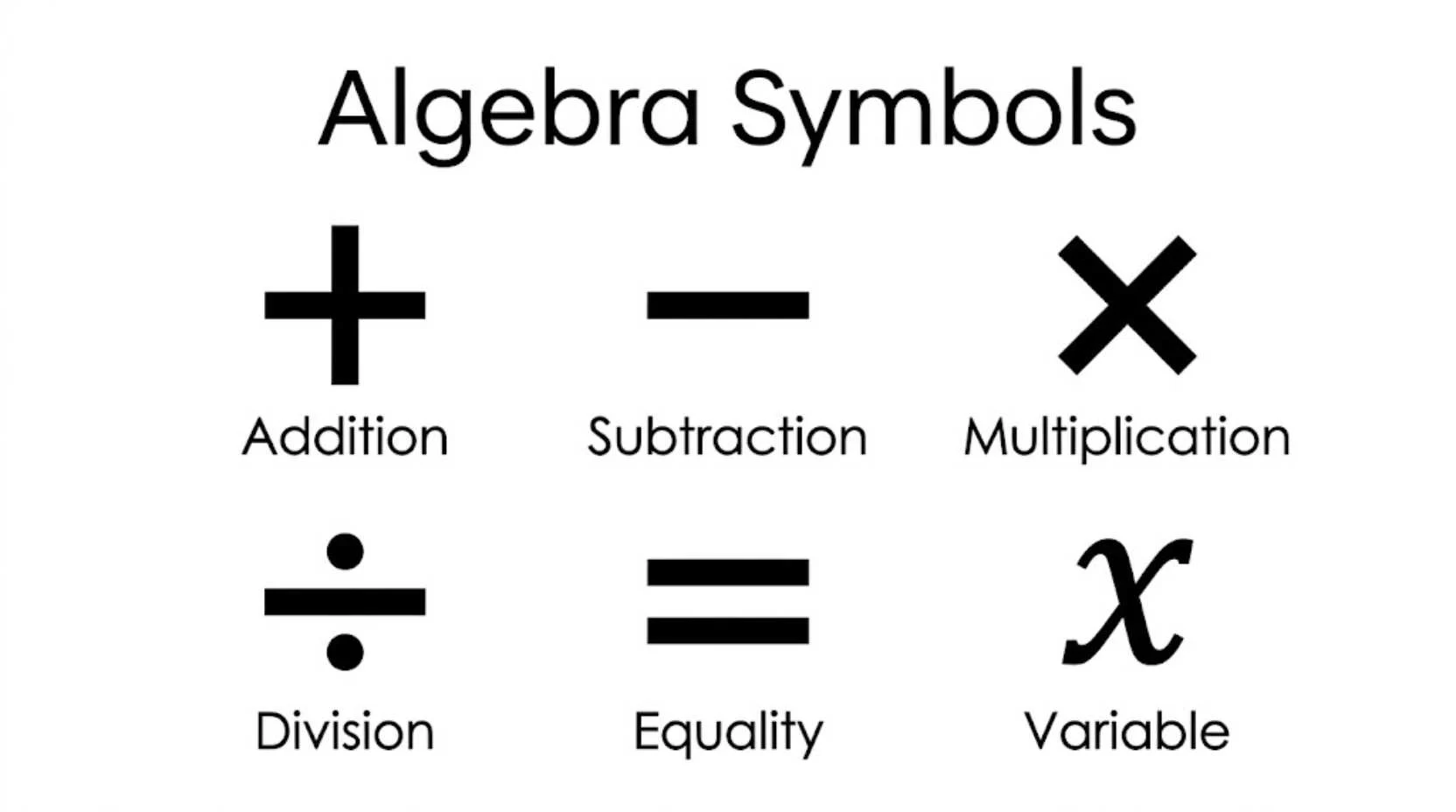
“Algebra symbols” are the secret language of mathematics, helping people solve problems, understand patterns and describe the world around them.
From the simple plus sign to powerful equations used in science and technology, these symbols shape modern life in ways most people never notice.
Algebra symbols are more than classroom tools, they represent logic, balance, discovery, and human intelligence.
Every symbol carries a deeper purpose that helps students, scientists, engineers, and thinkers communicate complex ideas quickly and clearly.
In this guide, you will discover the meanings, history, uses, and fascinating psychology behind the most important algebra symbols.
Quick Answer
Algebra symbols are mathematical signs used to represent numbers, operations, relationships, variables, and equations. Common algebra symbols include plus (+), minus (−), equals (=), multiplication (×), division (÷), variables like x and y, inequality signs, brackets, and exponents. These symbols help simplify mathematical expressions and solve equations efficiently.
What Makes Something an Algebra Symbol?
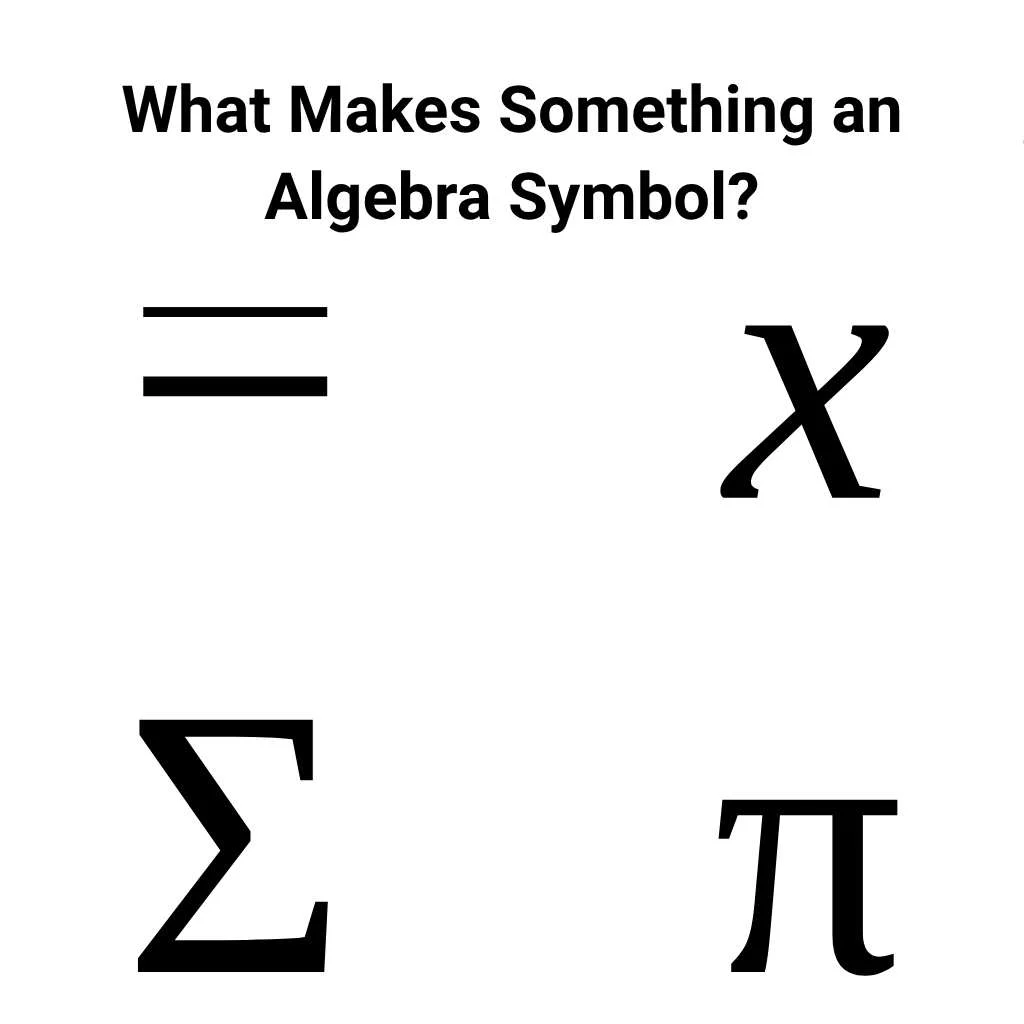
An algebra symbol becomes important when it represents a mathematical action, relationship, or unknown value. Instead of writing long explanations, mathematicians use symbols to communicate ideas in a fast and universal way.
Algebra symbols help with:
- Solving equations
- Comparing values
- Showing relationships
- Representing unknown numbers
- Simplifying calculations
- Understanding patterns
These symbols form the foundation of mathematics, science, economics, engineering, and computer programming.
Why Algebra Symbols Matter?
Without symbols, modern mathematics would be extremely slow and confusing. Symbols allow humans to organize thoughts logically and solve complex problems step by step.
Did you know?
The equals sign (=) was invented in 1557 by Welsh mathematician Robert Recorde because he believed nothing could be more equal than two parallel lines.
Most Common Algebra Symbols and Their Meanings
Plus Symbol (+)
The plus sign means addition.
Example
3+5=83+5=83+5=8
Meaning and Importance
The plus symbol represents:
- Growth
- Increase
- Combination
- Positive movement
In psychology, people often connect the plus sign with positivity and improvement.
Minus Symbol (−)
The minus sign represents subtraction or negative values.
Example
10−4=610-4=610−4=6
Symbolic Meaning
The minus symbol can represent:
- Reduction
- Distance
- Loss
- Opposite direction
It helps mathematicians measure differences between values.
Equals Sign (=)
The equals sign shows that two expressions have the same value.
Example
2x+4=102x+4=102x+4=10
Why the Equals Symbol Is Powerful
The equals sign represents:
- Balance
- Truth
- Logical connection
- Mathematical harmony
It is one of the most important symbols in algebra.
Multiplication Symbol (×)
The multiplication sign shows repeated addition.
Example
4×3=124\times3=124×3=12
Emotional and Practical Meaning
The multiplication symbol often represents:
- Expansion
- Productivity
- Scaling
- Increased power
In algebra, multiplication helps simplify large calculations.
Division Symbol (÷)
The division sign separates quantities into equal parts.
Example
12÷3=412\div3=412÷3=4
What Division Represents
Division symbolizes:
- Sharing
- Distribution
- Fairness
- Balance
It plays an important role in statistics, business, and science.
Variable Symbols in Algebra
Variables are letters used to represent unknown numbers.
Common Variables
- x
- y
- z
- a
- b
- c
Example of Variables
x+7=12x+7=12x+7=12
Why Variables Matter
Variables allow mathematicians to:
- Solve unknown problems
- Create formulas
- Describe changing values
- Model real life situations
Psychological Meaning of Variables
Variables symbolize mystery, possibility, and problem solving. Many students see algebra as a puzzle because variables create curiosity.
Inequality Symbols and Their Meanings
Inequality symbols compare values instead of making them equal.
Greater Than Symbol (>)
This symbol means one value is larger than another.
Example
9>49>49>4
Less Than Symbol (<)
This symbol means one value is smaller than another.
Example
2<82<82<8
Greater Than or Equal To (≥)
Example
x≥5x\geq5x≥5
Less Than or Equal To (≤)
Example
y≤10y\leq10y≤10
Real Life Importance
Inequality symbols help with:
- Budget planning
- Business analysis
- Scientific measurements
- Engineering limits
Exponents and Power Symbols
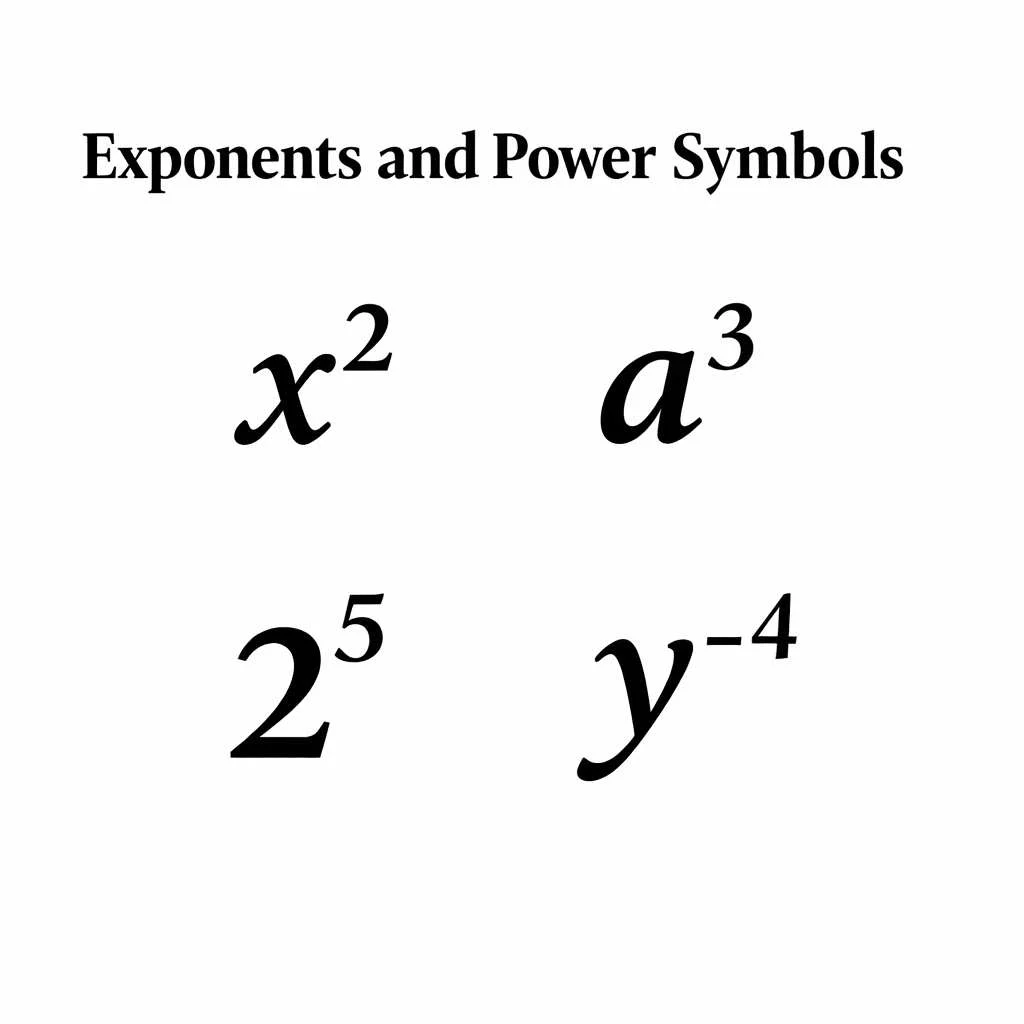
Exponents show repeated multiplication.
Example
23=82^3=823=8
Meaning of Exponents
Exponents symbolize:
- Growth
- Power
- Expansion
- Energy
They are essential in physics, finance, and computer science.
Brackets and Parentheses in Algebra
Brackets organize mathematical expressions.
Types of Brackets
- Parentheses ( )
- Square brackets [ ]
- Curly brackets { }
Example
3(2+4)=183(2+4)=183(2+4)=18
Why They Matter
Brackets:
- Prevent confusion
- Show priority
- Organize equations
- Improve accuracy
Fraction Symbols in Algebra
Fractions represent parts of a whole.
Example
34\frac{3}{4}43
Symbolic Meaning
Fractions symbolize:
- Division
- Balance
- Proportion
- Fair sharing
Fractions appear in cooking, science, finance, and engineering.
Radical Symbols and Square Roots
The radical symbol (√) represents roots and hidden values.
Example
16=4\sqrt{16}=416=4
Deeper Interpretation
The square root symbol represents:
- Discovery
- Hidden truth
- Problem solving
- Transformation
Ancient Origins of Algebra Symbols
Algebra symbols evolved over thousands of years.
Early Civilizations
Ancient Egyptians and Babylonians used early symbols for calculations.
Arabic Contributions
The word “algebra” comes from the Arabic word “Al Jabr,” introduced by Persian mathematician Al Khwarizmi.
European Development
European mathematicians later standardized many symbols used today.
Did you know?
The letter “x” became famous as a variable because René Descartes used it frequently in mathematics.
Algebra Symbols in Different Cultures
Europe
European mathematicians developed symbols like:
- =
- −
Middle East
Islamic scholars advanced algebraic thinking and introduced methods still used today.
Asia
Chinese and Indian mathematicians developed early systems for equations and numerical calculations.
Africa
Ancient African civilizations used geometric and numerical patterns connected to algebraic thinking.
Spiritual and Psychological Meaning of Algebra Symbols
Although algebra is mathematical, symbols also connect to human psychology.
Equality and Balance
The equals sign emotionally represents fairness and truth.
Unknown Variables
Variables symbolize curiosity and exploration.
Infinite Possibilities
Algebra teaches that many problems have solutions if approached logically.
Mental Discipline
Working with algebra strengthens:
- Critical thinking
- Patience
- Logical reasoning
- Creativity
Algebra Symbols in Everyday Life
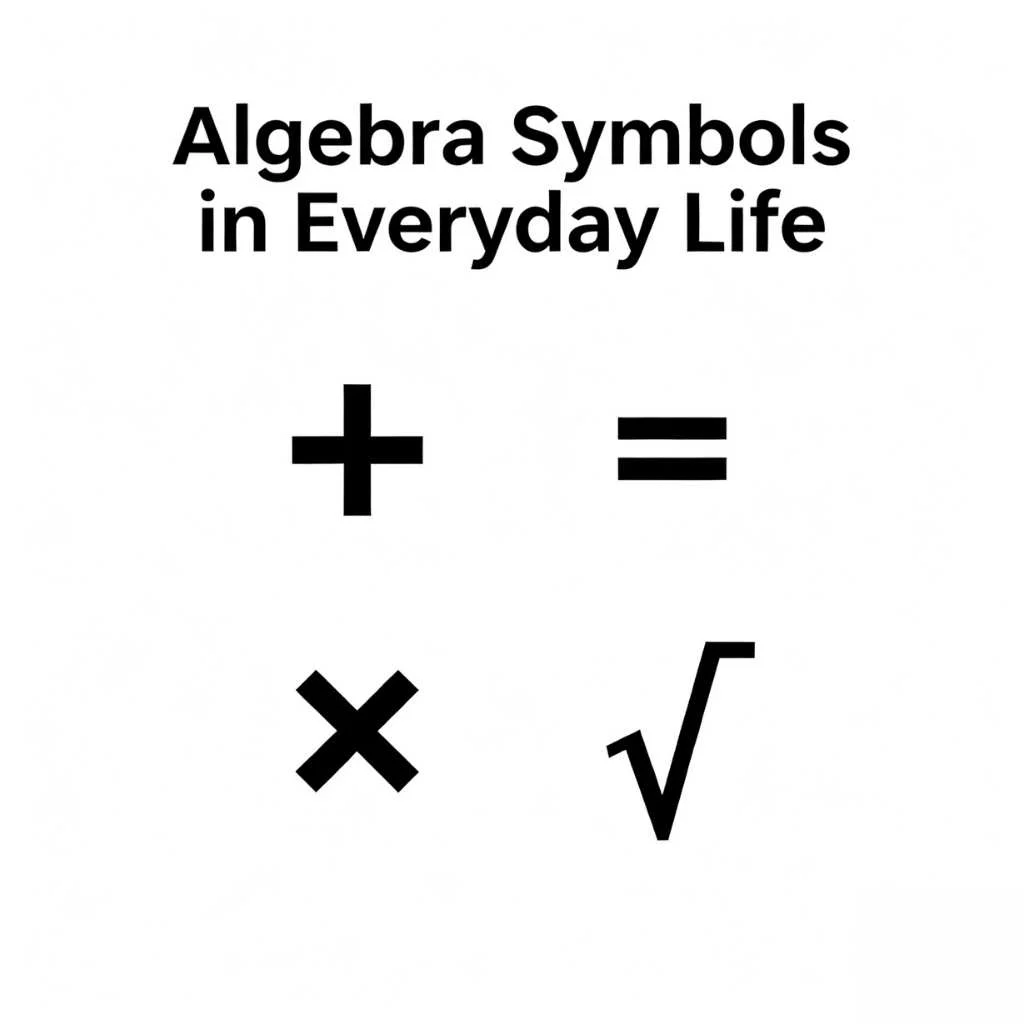
Many people use algebra symbols daily without realizing it.
Shopping and Discounts
Percentages and equations help calculate prices.
Technology
Computer programming uses algebraic logic constantly.
Construction and Engineering
Builders use formulas for measurements and safety calculations.
Banking and Finance
Interest rates and investments depend on algebraic equations.
Algebra Symbols in Literature and Popular Culture
Math symbols often appear in movies, books, and art.
Symbol of Intelligence
Algebra symbols are commonly associated with:
- Genius
- Discovery
- Scientific achievement
Mystery and Puzzle Themes
Movies and novels use equations to create suspense and intellectual excitement.
Educational Symbolism
Blackboards filled with algebra symbols often represent learning and innovation.
Universal Algebra Symbols Recognized Worldwide
Some symbols are understood globally regardless of language.
Most Recognized Algebra Symbols
- Plus (+)
- Minus (−)
- Equals (=)
- Division (÷)
- Multiplication (×)
These symbols help create a universal mathematical language.
How to Create or Draw Algebra Symbols?
Drawing algebra symbols correctly improves understanding and communication.
Step 1: Learn Basic Shapes
Start with:
- Lines
- Curves
- Angles
Step 2: Practice Proportions
Keep symbols balanced and clear.
Step 3: Use Proper Spacing
Good spacing prevents confusion in equations.
Step 4: Understand Meaning
Knowing what each symbol represents helps memory and accuracy.
Step 5: Practice Daily
Writing equations regularly improves speed and confidence.
Common Mistakes People Make With Algebra Symbols
Confusing Signs
Students often confuse:
- Greater than and less than
- Negative signs and subtraction signs
Ignoring Brackets
Missing parentheses can completely change answers.
Variable Errors
Using the wrong variable creates incorrect equations.
Order of Operations Problems
Failing to follow PEMDAS leads to mistakes.
Algebra Symbols for Tattoos and Creative Designs
Math lovers sometimes use algebra symbols in artistic ways.
Popular Tattoo Ideas
Infinity Symbol
Represents endless possibilities.
Equal Sign Tattoo
Represents equality and fairness.
Pi Symbol
Represents intelligence and mystery.
Equation Tattoos
People choose meaningful formulas connected to science or life goals.
FAQs About Algebra Symbols
What are algebra symbols used for?
Algebra symbols help represent mathematical operations, relationships, variables, and equations.
What is the most important algebra symbol?
The equals sign (=) is one of the most important because it shows balance between two expressions.
Why are letters used in algebra?
Letters act as variables that represent unknown or changing values.
What does the greater than symbol mean?
The greater than symbol (>) shows that one number is larger than another.
Who invented algebra symbols?
Different mathematicians from Arabic, European, Indian, and ancient civilizations contributed to algebra symbols over centuries.
Why is algebra important in real life?
Algebra helps solve practical problems in science, engineering, technology, finance, construction, and daily calculations.
Conclusion
Algebra symbols are much more than marks on paper. They form a universal language that helps humans understand patterns, solve problems, and explain the world logically. From simple addition signs to advanced equations, these symbols shaped science, technology, education, and modern civilization.
Each algebra symbol carries meaning connected to balance, discovery, intelligence, and creativity. Learning these symbols not only improves mathematical skills, it also strengthens logical thinking and confidence in everyday life. As technology continues to grow, algebra symbols will remain essential tools for innovation and human progress.

Sophia Bennett is a passionate writer and symbol researcher who explores the deeper meanings behind ancient and modern symbols. With a strong interest in hidden messages, spiritual signs and cultural symbolism, she helps readers understand how symbols influence thoughts, emotions and everyday life.
Over the years, Sophia has dedicated her work to simplifying complex symbolic meanings into easy-to-understand insights. Her writing blends research with real-life relevance, making her content both educational and engaging for readers of all backgrounds.
She is the author of “Whispers of Hidden Symbols” and “The Silent Language of Signs”, two unique works that uncover the mystery and power behind symbols used across different cultures and traditions. Through these books, she invites readers to see the world from a new perspective, where every sign tells a story.
When she’s not writing, Sophia enjoys exploring historical texts, studying symbolic art, and discovering the unnoticed meanings hidden in everyday life.
 Ryan Scott
 Andrew Clark