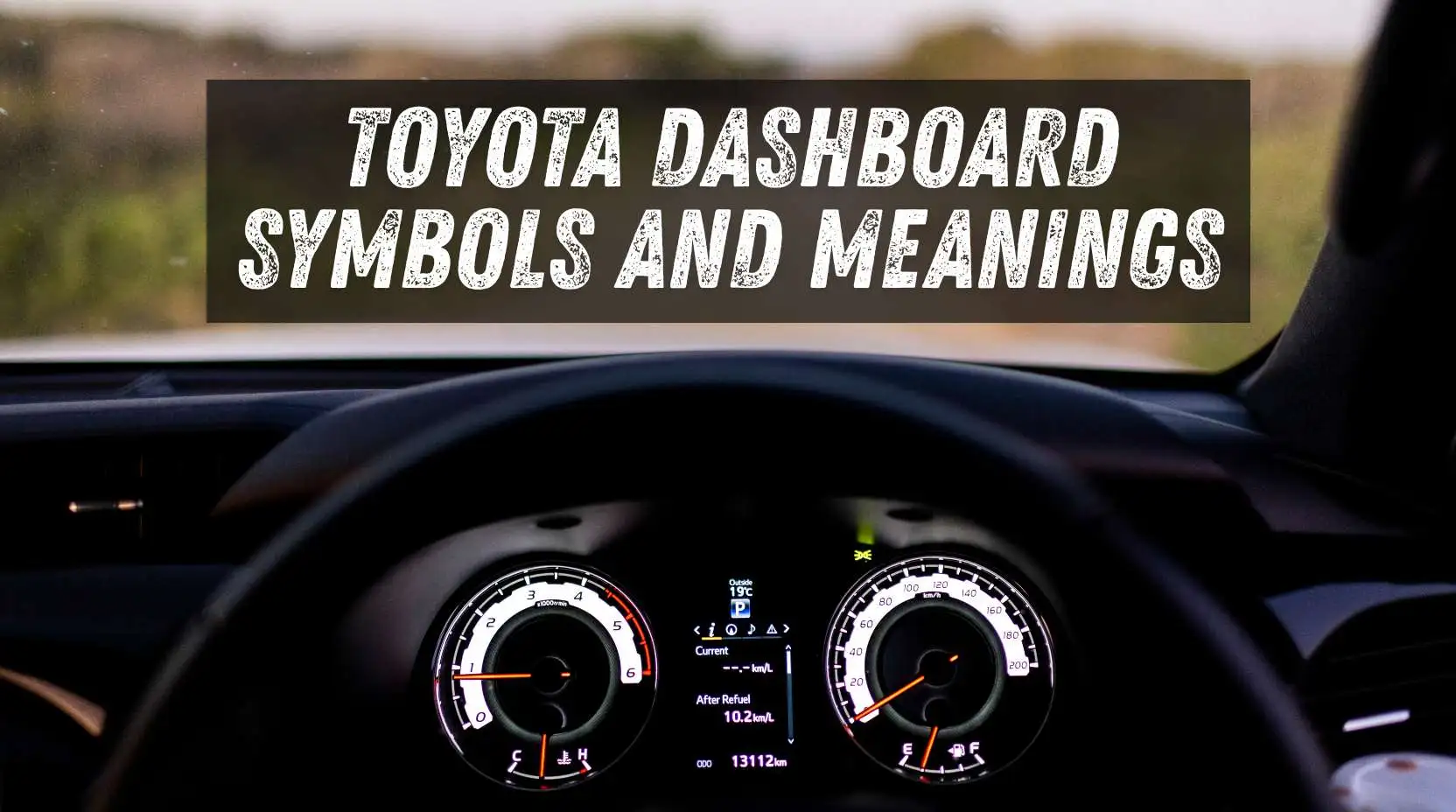
Driving a car feels simple until a small light suddenly appears on your dashboard. The Toyota dashboard symbols and meanings can feel confusing, stressful, and even scary when you do not understand them.
These tiny icons are not random. They are a communication system designed to protect your engine, your safety, and your wallet.
Across automotive history, dashboard symbols have evolved into a universal language of driving. Toyota uses them to warn you, guide you, and sometimes even prevent serious breakdowns. Once you understand them, you gain confidence every time you start your car.
This guide reveals every important Toyota dashboard symbol in simple language so you never feel lost or worried again.
Quick Answer
Toyota dashboard symbols are visual indicators that show your car’s condition in real time. Green and blue lights usually show normal system activity. Yellow or amber lights indicate caution or service needed soon. Red lights signal urgent problems that need immediate attention.
Common Toyota dashboard symbols include:
- Check engine light for engine or emission issues
- Oil pressure warning for low engine oil or pressure loss
- Battery warning for charging system problems
- Brake warning for brake system issues or handbrake engaged
- ABS light for anti lock braking system faults
- Tire pressure warning for low air in tires
- Coolant temperature warning for engine overheating
Understanding these symbols helps prevent breakdowns and improves driving safety.
What Makes Toyota Dashboard Symbols So Important in Modern Driving
Toyota dashboard symbols act like your car’s language. Every icon is connected to sensors placed across the vehicle. These sensors constantly monitor engine health, braking, fuel system, and safety systems.
When something changes, the car instantly sends a signal to the instrument cluster lights. This system is designed to protect both driver and engine before damage becomes serious.
From a psychological point of view, these symbols reduce uncertainty. Instead of guessing what is wrong, you get a clear visual message. This builds trust between driver and machine.
Key reasons these symbols matter:
- They prevent costly engine damage
- They improve road safety
- They help early detection of issues
- They guide maintenance decisions
- They reduce breakdown risks
Most Famous Toyota Dashboard Symbols and Their Meanings
Some symbols appear more often than others. These are the ones every Toyota driver should understand deeply.
Check Engine Light Meaning
The check engine light is one of the most recognized car symbols explained worldwide.
What it means:
- Engine misfire
- Emission system issue
- Fuel system malfunction
- Sensor failure
If it is steady, the issue is usually moderate. If it is flashing, it indicates a serious engine problem that needs immediate attention.
Oil Pressure Warning Light
This symbol looks like an oil can.
It indicates:
- Low engine oil level
- Oil pump failure
- Low oil pressure
Ignoring this light can damage your engine permanently.
Battery Warning Light
This symbol shows a battery icon.
It signals:
- Faulty alternator
- Weak battery
- Charging system failure
Your car may stop once the battery drains completely.
Brake Warning Light
This symbol often appears as an exclamation mark inside a circle.
It may indicate:
- Handbrake is engaged
- Low brake fluid
- Brake system malfunction
This is a critical safety warning.
ABS Warning Light
ABS stands for anti lock braking system.
Meaning:
- ABS system is not working properly
- Reduced braking control during emergencies
Normal braking still works, but safety is reduced.
Tire Pressure Warning Light TPMS
TPMS stands for tire pressure monitoring system.
It warns about:
- Low tire pressure
- Uneven tire inflation
- Slow leaks
Proper tire pressure improves fuel efficiency and safety.
Coolant Temperature Warning Light
This symbol looks like a thermometer in water.
It indicates:
- Engine overheating
- Low coolant level
- Cooling system failure
Immediate action is required to prevent engine damage.
Objects and Actions Represented in Toyota Dashboard Symbols
Toyota dashboard symbols often use simple objects to represent complex systems. These symbols are designed for universal understanding.
Common object based symbols include:
- Engine icon for engine system status
- Thermometer for temperature
- Battery shape for electrical system
- Oil can for lubrication system
- Steering wheel icon for steering issues
Each object connects directly to a mechanical function inside the car. This design helps drivers respond quickly without technical knowledge.
Evolution of Toyota Dashboard Symbols in Automotive History
Early cars had no warning systems at all. Drivers had to guess problems based on sound or performance. As vehicles became more advanced, manufacturers like Toyota introduced instrument cluster lights.
Over time, these symbols became standardized across the global automotive industry. Today, a check engine light in Japan looks almost identical to one in Europe or the United States.
This global standardization improves:
- Driver awareness
- Repair accuracy
- Road safety consistency
It also helps mechanics diagnose problems faster using universal meanings.
Psychological Meaning Behind Dashboard Warning Symbols
From a psychological perspective, Toyota dashboard symbols trigger immediate emotional reactions. A red light often creates stress because it signals danger. Yellow lights create caution and attention.
These responses are intentional. Designers use color psychology to guide driver behavior:
- Red means stop or urgent action
- Yellow means caution or service soon
- Green means system active or normal function
- Blue means informational status
This system reduces decision time while driving, which improves safety on the road.
Symbols in Everyday Driving Life
Toyota dashboard symbols are part of everyday driving experiences. Many drivers see them without understanding their meaning.
Common real life situations:
- Fuel light appears during long trips
- Tire pressure light shows during weather changes
- Check engine light appears after fuel quality issues
- Battery light appears during cold mornings
Understanding these signals turns confusion into control. You no longer panic. You respond correctly.
Universal Toyota Dashboard Symbols Recognized Worldwide
Some Toyota dashboard symbols are used globally across all car brands. These include:
- Check engine light
- Oil pressure warning
- Brake system warning
- Battery indicator
- Tire pressure warning
- Seatbelt reminder
- Airbag warning light
These universal symbols ensure that drivers from different countries understand vehicle alerts instantly.
Across regions:
- USA focuses on safety compliance
- Europe emphasizes emission warnings
- Asia prioritizes efficiency indicators
- Africa often focuses on durability warnings due to road conditions
Despite differences, the meaning stays consistent.
Deeper Interpretation of Toyota Dashboard Symbols
Beyond mechanics, dashboard symbols represent communication between human and machine. Each symbol acts like a language that keeps both working in harmony.
You can think of it like this:
- Car senses a problem
- Sensors collect data
- System converts data into symbols
- Driver receives message
- Action is taken
This chain prevents small issues from turning into major failures.
Symbols in Culture and Driving Awareness
In modern culture, dashboard symbols have become part of driving awareness education. Driving schools teach beginners how to read these icons before hitting the road.
On social media, many drivers share stories about ignoring warning lights and facing breakdowns later. This has increased awareness about Toyota dashboard symbols and meanings globally.
These symbols now represent responsibility, awareness, and smart driving habits.
How to Understand and React to Toyota Dashboard Symbols
Reading dashboard symbols is not enough. You must also know how to respond.
Simple reaction guide:
- Red light → stop safely and inspect immediately
- Yellow light → check soon and plan service
- Green light → normal operation
- Flashing light → urgent attention required
Basic steps:
- Check owner manual
- Restart vehicle if safe
- Inspect fuel, oil, and tires
- Visit certified mechanic if needed
Common Mistakes Drivers Make With Dashboard Symbols
Many drivers misunderstand Toyota dashboard symbols and make avoidable mistakes.
Common errors:
- Ignoring check engine light
- Driving long distance with brake warning
- Assuming battery light is harmless
- Overlooking tire pressure alerts
These mistakes often lead to expensive repairs or unsafe driving conditions.
How Toyota Designs Dashboard Symbols for Clarity
Toyota follows strict design principles for dashboard symbols:
- Simple shapes for fast recognition
- High contrast colors for visibility
- Universal icons for global understanding
- Minimal detail to avoid confusion
This ensures drivers understand alerts within seconds, even under stress or low visibility conditions.
FAQs About Toyota Dashboard Symbols and Meanings
What does the check engine light mean in Toyota cars
It indicates engine or emission system issues that need diagnosis.
Can I drive with the oil pressure warning light on
No, driving may cause severe engine damage.
What should I do when ABS light turns on
Get your braking system checked soon for safety.
Is tire pressure warning serious
Yes, low tire pressure affects safety and fuel efficiency.
How do I reset Toyota dashboard warning lights
Some reset after fixing the issue, others need diagnostic tools.
Conclusion
Toyota dashboard symbols are more than just lights on your instrument panel. They are a built in communication system designed to protect your car and your life. Understanding them turns confusion into confidence and stress into control.
Every symbol tells a story about your vehicle’s health and needs. When you respond correctly, you extend your car’s life and improve driving safety. Learning these meanings is one of the most important skills for every Toyota driver.

Ryan Scott is a dedicated writer and symbol researcher who uncovers the deeper meanings behind everyday signs and symbols. His work focuses on making complex symbolic concepts simple, engaging, and easy to understand for readers from all backgrounds.
He is the author of Hidden Symbol Codes and Secrets Behind Ancient Symbols, where he explores the origins and meanings of symbols across different cultures.
Ryan’s goal is to inspire curiosity and help readers see the world from a new perspective through the language of symbols.
 Sophia Bennett
 Andrew Clark