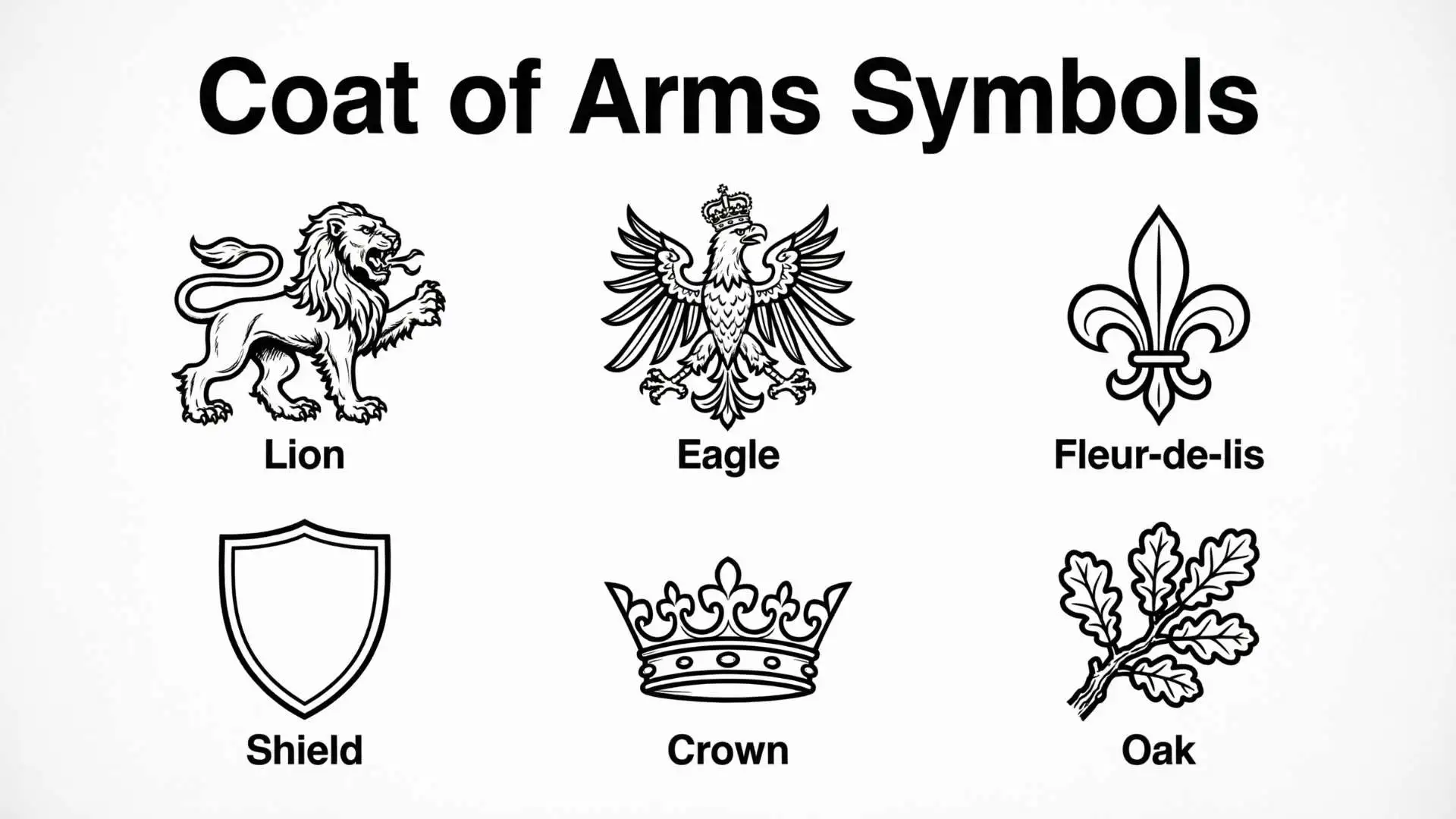
From ancient battlefields to royal palaces, “coat of arms symbols” have always told stories without using a single word. They represent identity, honor, power, and family legacy.
When you look at a coat of arms, you are not just seeing a design, you are seeing centuries of history, emotions, and meaning packed into one visual.
These symbols matter because humans have always needed ways to express belonging and pride. From medieval knights to modern families, coats of arms still connect us to our roots.
In this guide, you will discover meanings behind these symbols that most people never notice and understand why they still matter today.
Quick Answer
Coat of arms symbols are visual designs used to represent families, nations, or organizations. Each element such as animals, colors, and objects carries a specific meaning related to strength, honor, courage, or heritage.
What Makes Something a Coat of Arms Symbol?
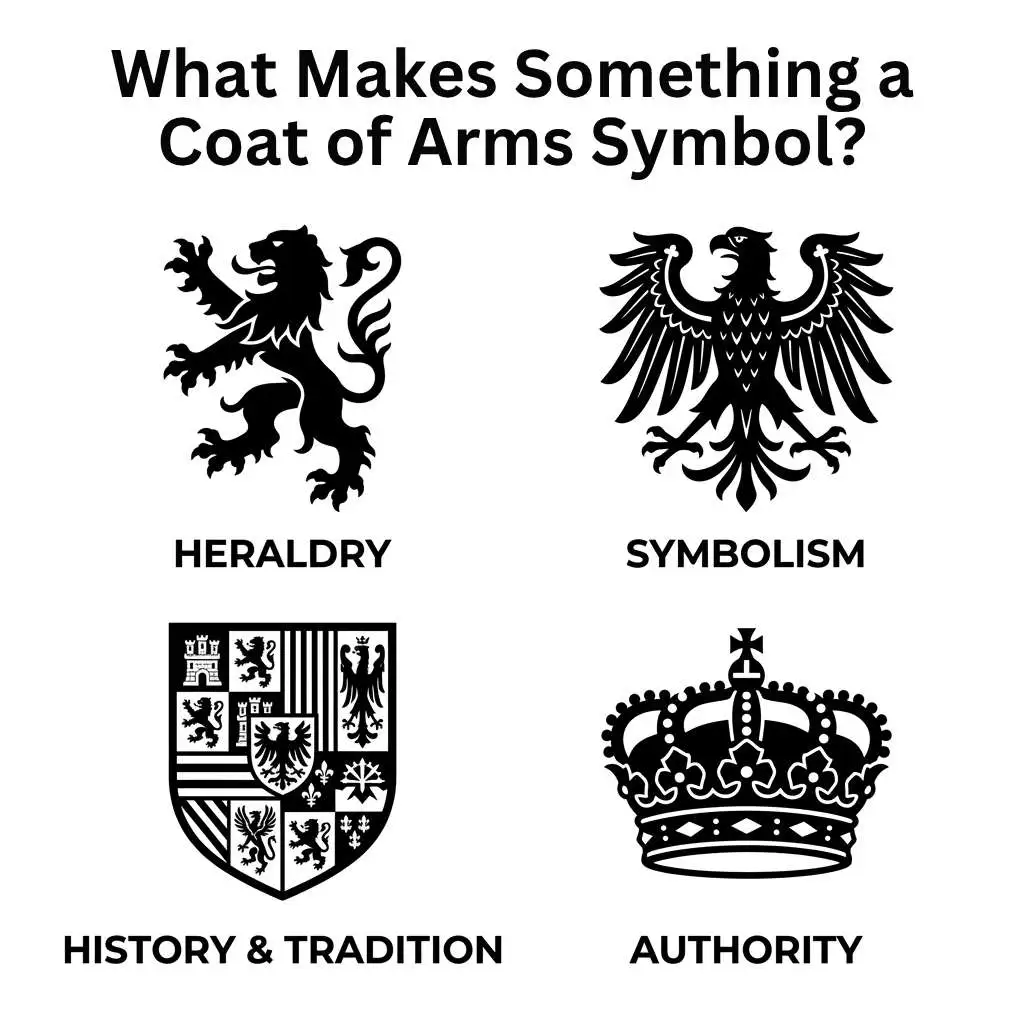
A coat of arms symbol is not random decoration. Every shape, color, and figure has a purpose. These symbols were carefully chosen to reflect identity, achievements, and values.
Key features of coat of arms symbols
- Recognizable design that stands out from a distance
- Symbolic meaning connected to personal or family traits
- Historical relevance often tied to battles or achievements
- Consistency passed down through generations
In medieval times, knights used coats of arms on shields and armor so they could be identified during battle. Over time, these symbols became a mark of honor and legacy.
Most Famous Coat of Arms Symbols and Their Meanings
Some symbols appear again and again in coats of arms because their meanings are universal.
Lion
- Represents courage, strength, and leadership
- Common in European heraldry, especially in England
- Emotionally linked to bravery and dominance
Eagle
- Symbol of power, vision, and authority
- Often used by empires and nations
- Represents freedom and a higher perspective
Crown
- Sign of royalty, authority, and sovereignty
- Reflects leadership and divine right to rule
Cross
- Represents faith, sacrifice, and spirituality
- Widely used in Christian regions
Shield
- The base of every coat of arms
- Symbolizes protection and defense
Did you know? The lion and eagle are among the oldest and most widely used symbols in heraldry, appearing across Europe, Asia, and even parts of Africa.
Animal and Nature Symbols in Coat of Arms
Animals and natural elements bring life to coat of arms symbols. They often reflect personality traits or family values.
Popular animal symbols
- Wolf: Loyalty, intelligence, teamwork
- Bear: Strength, protection, courage
- Horse: Speed, freedom, endurance
- Dragon: Power, wisdom, mystery
Nature symbols
- Tree: Growth, stability, connection to roots
- Mountain: Strength, resilience, ambition
- Water waves: Life, adaptability, journey
Across cultures, animals carry similar meanings but can also differ. For example:
- In Europe, dragons are often seen as dangerous
- In Asia, dragons symbolize wisdom and good fortune
Objects and Actions That Represent Meaning
Coat of arms symbols are not limited to animals. Many objects and actions also carry deep meaning.
Common objects
- Sword: Justice, honor, military strength
- Book: Knowledge, wisdom, education
- Key: Authority, access, trust
- Anchor: Hope, stability, faith
Actions and positions
- Raised paw or wing: Readiness and courage
- Facing forward: Confidence and openness
- Looking backward: Reflection and wisdom
These details may seem small, but they completely change the meaning of a symbol.
Ancient and Cultural Coat of Arms Symbols Around the World
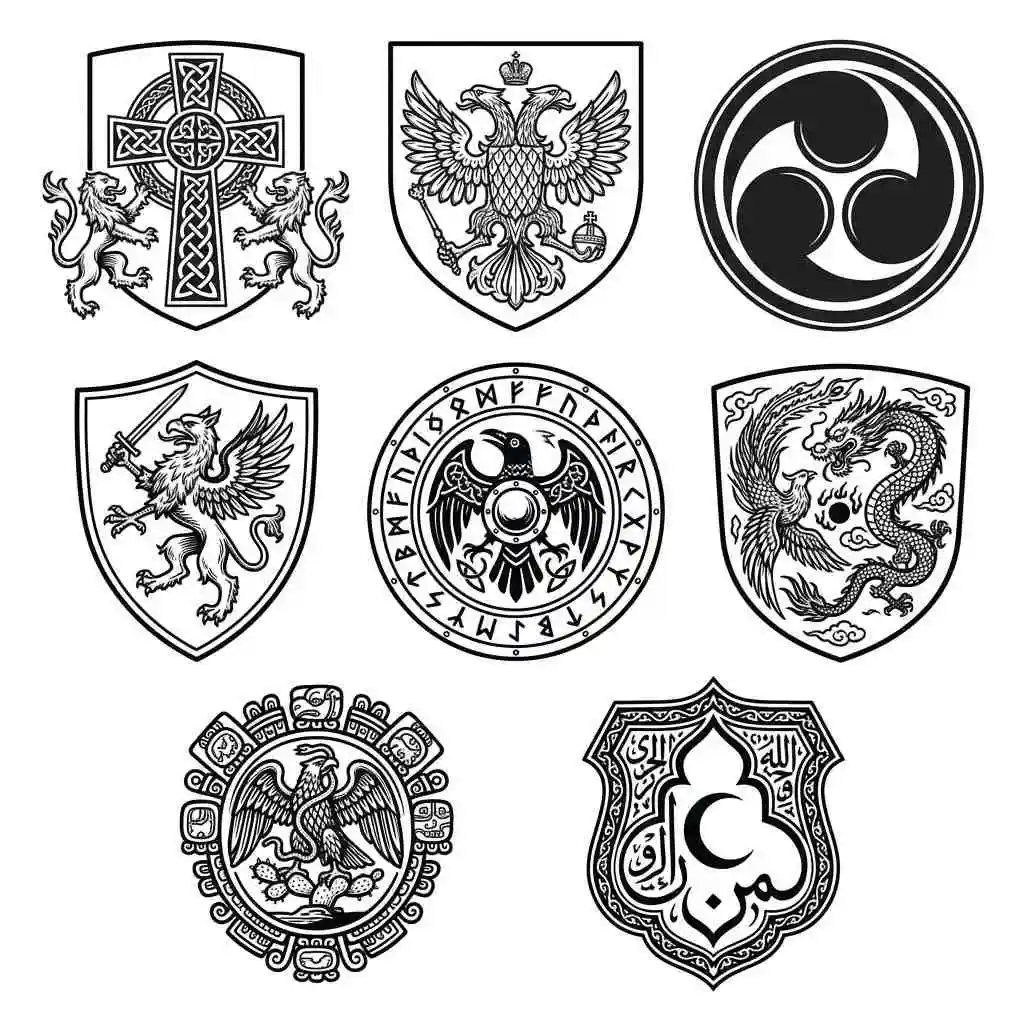
Although coats of arms are often linked to Europe, similar symbolic systems exist worldwide.
Europe
- Strong tradition of heraldry
- Symbols represent noble families and kingdoms
Asia
- Family crests in Japan known as Kamon
- Simpler but deeply meaningful designs
Africa
- Tribal symbols represent lineage and identity
- Often include animals and geometric patterns
America
- National coats of arms reflect unity and independence
- Use symbols like eagles, stars, and shields
Each region uses symbols differently, but the purpose remains the same, to express identity and heritage.
Spiritual Meaning and Deeper Interpretation
Coat of arms symbols are not just physical, they also carry spiritual and psychological meanings.
- Lion connects to inner courage and self belief
- Eagle represents spiritual vision and clarity
- Tree symbolizes growth and personal development
- Shield reflects emotional protection
On a deeper level, these symbols act like mirrors of human values. They show what people admire and aspire to become.
Symbolism in Literature and Culture
Coat of arms symbols appear in stories, movies, and literature to represent characters or families.
- Royal families in stories often have unique crests
- Fantasy worlds use symbols to show alliances and power
- Literature uses heraldry to reflect character traits
These symbols help audiences quickly understand identity and loyalty without long explanations.
Symbols in Everyday Life
Even today, coat of arms symbols influence modern design and branding.
- Sports teams use animals like lions or eagles
- Universities use shields and books
- Governments use national emblems
You may not notice it, but these symbols are everywhere, shaping how we perceive identity and authority.
Tattoo Ideas and Personal Meanings
Coat of arms symbols are popular choices for tattoos because they are deeply personal.
Popular ideas
- Lion tattoo for courage
- Eagle tattoo for freedom
- Shield tattoo for protection
- Family crest tattoo for heritage
Why people choose them
- To honor family roots
- To express personal values
- To create a sense of identity
Each tattoo becomes a personal coat of arms, telling a unique story.
Universal and Most Recognized Symbols
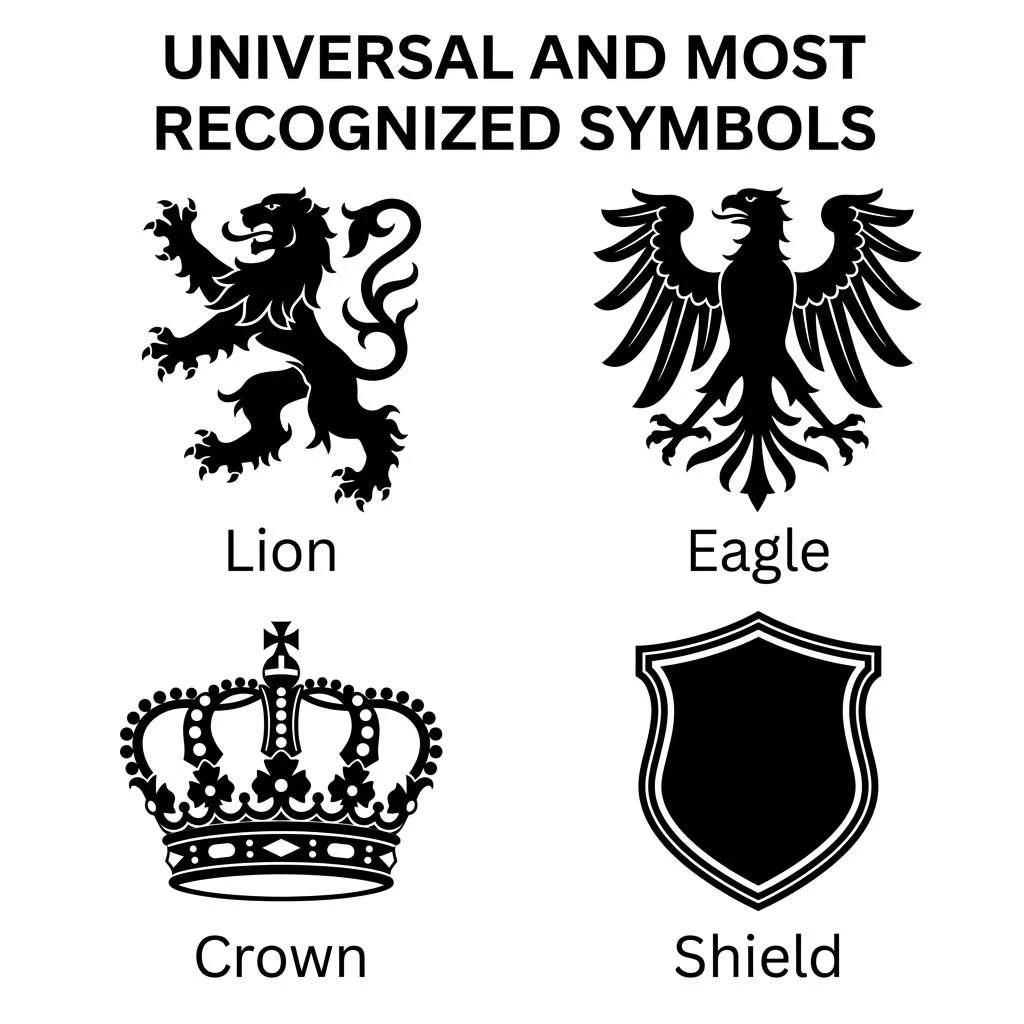
Some coat of arms symbols are understood almost everywhere.
- Lion for bravery
- Eagle for power
- Crown for authority
- Shield for protection
These symbols are universal because they connect to basic human emotions like strength, safety, and pride.
How to Create or Draw a Coat of Arms Symbol?
Creating your own coat of arms can be a meaningful and creative process.
Step by step guide
- Choose a shield shape as your base
- Pick colors that represent your personality
- Select symbols like animals or objects
- Add a motto that reflects your values
- Keep it simple so it is easy to recognize
Tips
- Use symbols that truly represent you
- Avoid overcrowding the design
- Think about long term meaning
Your design should feel personal, not just decorative.
FAQs About Coat of Arms Symbols
What do coat of arms symbols represent?
They represent identity, family heritage, values, and achievements through visual elements.
Are coat of arms still used today?
Yes, they are used by families, institutions, and countries as symbols of identity and tradition.
Can anyone create a coat of arms?
Yes, but official heraldry rules may apply in some countries.
What is the most common symbol in a coat of arms?
The lion is one of the most common symbols due to its association with courage and strength.
Why were coats of arms created?
They were originally created to identify knights in battle and later became symbols of family and status.
Conclusion
Coat of arms symbols are more than artistic designs, they are powerful storytellers. Each symbol carries layers of meaning shaped by history, culture, and human emotion. From lions representing courage to shields symbolizing protection, these designs reveal what people value most.
Even in today’s world, their influence is everywhere, from logos to tattoos. Understanding these symbols helps you connect with history and even express your own identity. Whether you are exploring your heritage or creating your own crest, coat of arms symbols offer a timeless way to tell your story.

Andrew Clark is a dedicated writer and researcher with a deep passion for symbols, their hidden meanings, and the stories they carry across cultures and time. With years of study and curiosity-driven exploration, he simplifies complex symbolic concepts into clear and engaging insights that help readers connect with deeper meanings in everyday life.
He is the author of “Hidden Codes of Human Symbols” and “The Secret Patterns of Ancient Signs”, two original works that explore the spiritual, historical, and psychological layers behind symbols. His writing blends clarity with depth, making even the most complex symbolic interpretations feel simple and meaningful.
Through his work on this website, Andrew aims to guide readers toward understanding the true essence of symbols, whether they appear in dreams, ancient traditions, or modern life. His goal is simple: to help you see beyond the surface and discover the powerful messages hidden in plain sight.
 Sophia Bennett
 Ryan Scott