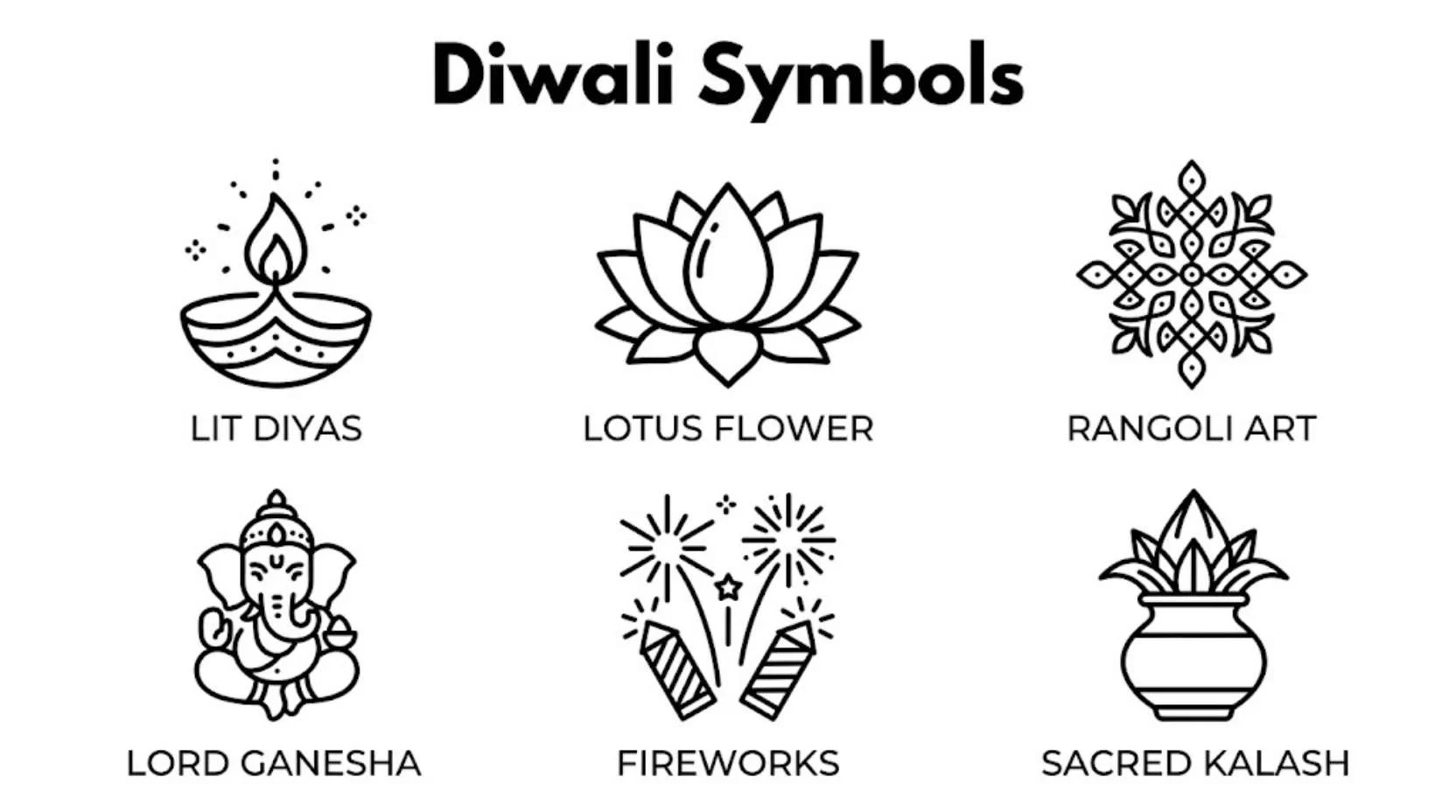
“Diwali symbols” are much more than decorative elements seen during celebrations. They carry centuries of spiritual wisdom, cultural traditions and emotional significance that connect millions of people across generations.
From glowing diyas to colorful rangoli patterns, each symbol tells a story of hope, prosperity, victory, and inner transformation. These powerful symbols have shaped traditions, inspired art, and influenced human psychology for thousands of years.
Understanding Diwali symbols helps us see the deeper meaning behind one of the world’s most beloved festivals. Many people recognize these symbols, but few know the fascinating stories, spiritual lessons, and cultural values they represent.
This guide explores the hidden meanings, origins, and significance of the most important Diwali symbols in a way that is both practical and inspiring.
Quick Answer
Diwali symbols are sacred objects, designs, animals, colors, and rituals that represent light, prosperity, wisdom, good fortune, spiritual awakening, and the victory of good over evil. Common Diwali symbols include diyas, rangoli, Goddess Lakshmi, lotus flowers, candles, fireworks, gold coins, elephants, and traditional footprints that symbolize blessings entering the home.
What Makes Something a Diwali Symbol?
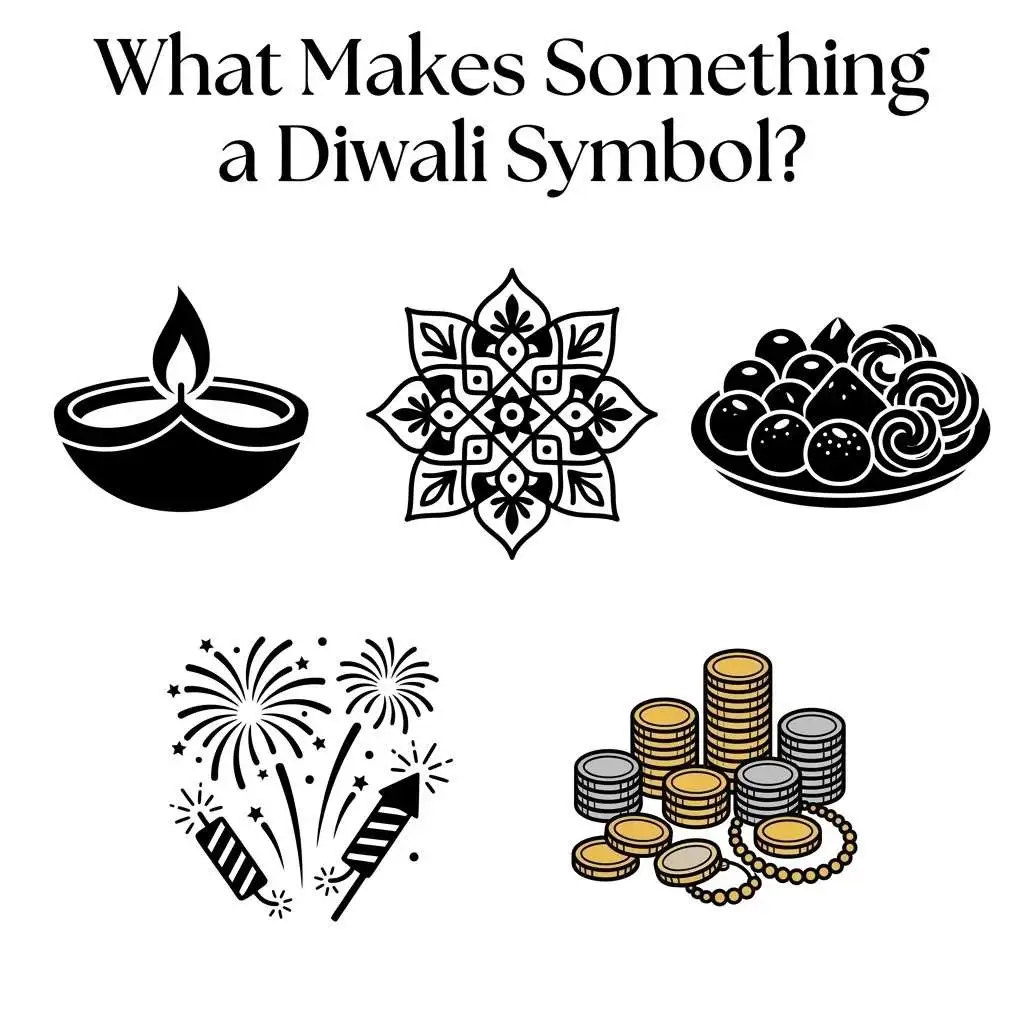
A symbol becomes associated with Diwali when it represents the festival’s core values and spiritual teachings. These values include:
- Light overcoming darkness
- Knowledge defeating ignorance
- Good triumphing over evil
- Prosperity and abundance
- Family unity and harmony
- Spiritual growth and inner awakening
Throughout history, communities created visual reminders of these ideas. Over time, these reminders evolved into the powerful symbols recognized today.
Psychologically, symbols help people connect with emotions and beliefs that are difficult to express through words alone. A single diya can instantly evoke feelings of warmth, hope, faith, and celebration.
Key Characteristics of Diwali Symbols
- They have spiritual significance
- They carry cultural traditions
- They inspire positive emotions
- They connect generations
- They communicate values visually
The Most Famous Diwali Symbols and Their Meanings
Diya: The Ultimate Symbol of Diwali
The diya is undoubtedly the most recognized Diwali symbol.
A diya is a small oil lamp made from clay. During Diwali, millions of diyas are lit in homes, temples, and public spaces.
Meaning of the Diya
- Light over darkness
- Wisdom over ignorance
- Hope during difficult times
- Spiritual enlightenment
- Divine presence
The flame reminds people to remove negativity from their lives and embrace truth, kindness, and knowledge.
Did You Know?
Traditional clay diyas have been used in India for thousands of years and remain one of the oldest surviving symbols of spiritual illumination.
Rangoli
Rangoli is a colorful floor design created near entrances and courtyards.
Artists use colored powders, rice, flower petals, and natural materials to create intricate patterns.
What Rangoli Represents
- Welcoming positive energy
- Inviting prosperity
- Beauty and creativity
- Harmony and balance
- Celebration and joy
Many families believe a beautiful rangoli attracts blessings and good fortune during Diwali.
Goddess Lakshmi
The presence of Goddess Lakshmi is central to Diwali celebrations.
She is regarded as the divine source of:
- Wealth
- Prosperity
- Fortune
- Success
- Abundance
Homes are cleaned and decorated to welcome her blessings.
Lotus Flower
The lotus flower is closely connected with Goddess Lakshmi.
Spiritual Meaning of the Lotus
- Purity
- Spiritual growth
- Beauty rising above challenges
- Divine wisdom
- Inner strength
The lotus grows in muddy water yet blooms beautifully. This makes it a powerful reminder that people can rise above difficulties and flourish.
Animal Symbols Associated With Diwali
Animals play an important role in Hindu symbolism and Diwali traditions.
Elephant
The elephant symbolizes:
- Wisdom
- Strength
- Royalty
- Prosperity
- Good fortune
Elephants are often shown alongside Goddess Lakshmi in traditional artwork.
Their presence reflects abundance and stability.
Owl
Many people are surprised to learn that the owl is associated with Goddess Lakshmi.
Meaning of the Owl
- Awareness
- Intelligence
- Discernment
- Vigilance
The owl teaches people to use wealth wisely and make thoughtful decisions.
Cow
The cow has long been respected in Indian culture.
It symbolizes:
- Nourishment
- Motherhood
- Generosity
- Fertility
- Compassion
Its symbolism aligns perfectly with Diwali’s themes of gratitude and abundance.
Nature Symbols in Diwali Traditions
Nature plays a major role in Diwali symbolism.
Flowers
Fresh flowers are used to decorate homes and temples.
Popular flowers include:
- Marigolds
- Lotus flowers
- Jasmine
- Roses
Flower Symbolism
- Happiness
- Purity
- Celebration
- Divine blessings
Marigolds are especially popular because their bright color reflects the energy of the festival.
Water
Water symbolizes:
- Purification
- Renewal
- Spiritual cleansing
- New beginnings
Many Diwali rituals involve water to represent the washing away of negativity.
Fire
Fire remains one of the most important elements of Diwali.
Its symbolism includes:
- Transformation
- Purification
- Protection
- Divine energy
The widespread use of lamps and fireworks highlights the sacred importance of fire.
Objects That Represent Diwali
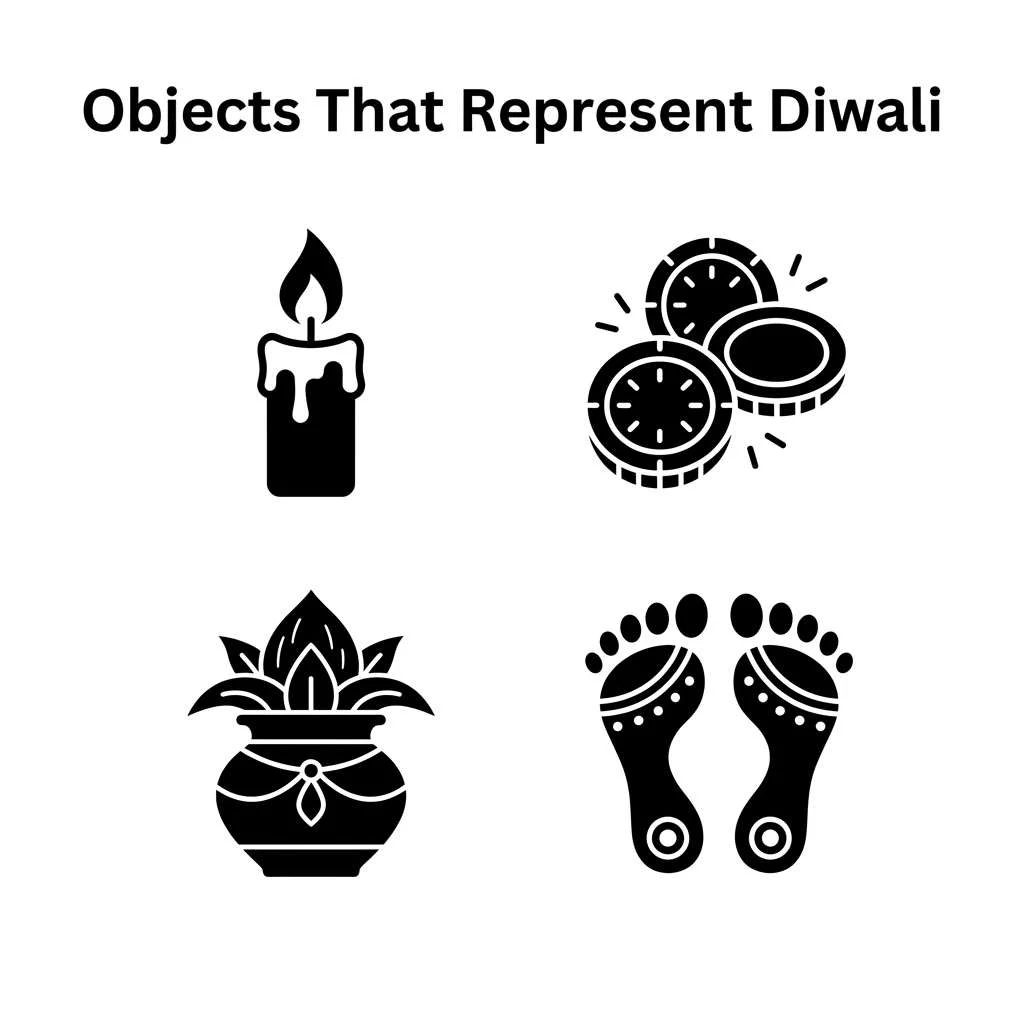
Candles
Modern celebrations often use candles alongside traditional diyas.
Candles symbolize:
- Light
- Faith
- Hope
- Guidance
They continue the ancient tradition of illuminating darkness.
Gold Coins
Gold coins are commonly displayed during Diwali.
They represent:
- Financial success
- Prosperity
- Wealth
- Blessings from Lakshmi
Many people purchase gold during Diwali because it is considered auspicious.
Kalash
A kalash is a sacred pot filled with water and decorated with mango leaves and a coconut.
Meaning of the Kalash
- Abundance
- Life
- Creation
- Divine blessings
It is often placed during religious ceremonies and prayers.
Footprints
Small footprints are frequently drawn at entrances.
These footprints symbolize:
- The arrival of Goddess Lakshmi
- Prosperity entering the home
- Divine blessings
- Positive energy
They create a powerful visual representation of welcoming abundance.
Important Actions That Symbolize Diwali
Not all symbols are physical objects. Some are meaningful actions.
Lighting Lamps
This ritual symbolizes:
- Removing darkness
- Spreading positivity
- Awakening spiritual awareness
Sharing Sweets
Exchanging sweets represents:
- Friendship
- Unity
- Love
- Celebration
Cleaning the Home
A clean home symbolizes:
- Fresh beginnings
- Mental clarity
- Readiness for blessings
Family Gatherings
Family celebrations represent:
- Togetherness
- Gratitude
- Support
- Cultural continuity
Ancient and Cultural Diwali Symbols Around the World
Although Diwali originated in India, its symbols have spread globally.
Asia
In many Asian countries, Diwali symbols emphasize:
- Spiritual enlightenment
- Family traditions
- Prosperity
Europe
European Diwali celebrations often highlight:
- Cultural diversity
- Community unity
- Shared values
United States
In the United States, Diwali symbols frequently represent:
- Cultural identity
- Heritage preservation
- Inclusion
- Celebration of diversity
Africa
African Diwali communities blend traditional symbols with local customs, creating unique expressions of:
- Hope
- Family
- Prosperity
- Faith
This global adaptation demonstrates the universal appeal of Diwali symbolism.
The Spiritual Meaning Behind Diwali Symbols
The deeper interpretation of Diwali symbols extends beyond celebration.
The Journey From Darkness to Light
Almost every Diwali symbol reflects a spiritual journey.
Darkness symbolizes:
- Fear
- Ignorance
- Negativity
Light symbolizes:
- Knowledge
- Truth
- Awareness
This transformation forms the foundation of Diwali’s spiritual message.
Inner Wealth
Many people focus on material prosperity during Diwali.
However, traditional teachings emphasize inner wealth such as:
- Wisdom
- Compassion
- Kindness
- Integrity
- Gratitude
Symbols like the lotus and diya encourage personal growth alongside financial success.
Balance and Harmony
Many Diwali symbols contain symmetrical designs and balanced patterns.
Psychologically, balance creates feelings of:
- Peace
- Security
- Stability
- Emotional wellbeing
This is one reason rangoli patterns are so visually satisfying.
Diwali Symbols in Literature and Culture
Throughout history, Diwali symbols have appeared in:
- Poetry
- Literature
- Paintings
- Music
- Films
- Religious texts
Symbolism in Storytelling
Authors often use Diwali imagery to represent:
- New beginnings
- Redemption
- Hope
- Transformation
A single lamp glowing in darkness can symbolize courage during adversity.
Modern Cultural Influence
Today, Diwali symbols appear in:
- Fashion
- Home décor
- Graphic design
- Advertising
- Social media
Their timeless meanings continue to resonate with people around the world.
Diwali Symbols in Everyday Life
Many Diwali symbols have applications beyond the festival itself.
The Diya as a Life Lesson
The diya teaches:
- Stay hopeful
- Share positivity
- Lead by example
The Lotus as Personal Growth
The lotus reminds people:
- Challenges create strength
- Growth comes from adversity
- Beauty can emerge from struggle
Rangoli as Creativity
Rangoli encourages:
- Artistic expression
- Patience
- Mindfulness
Footprints as Opportunity
Footprints symbolize welcoming:
- Success
- Positive relationships
- New possibilities
Diwali Tattoo Ideas
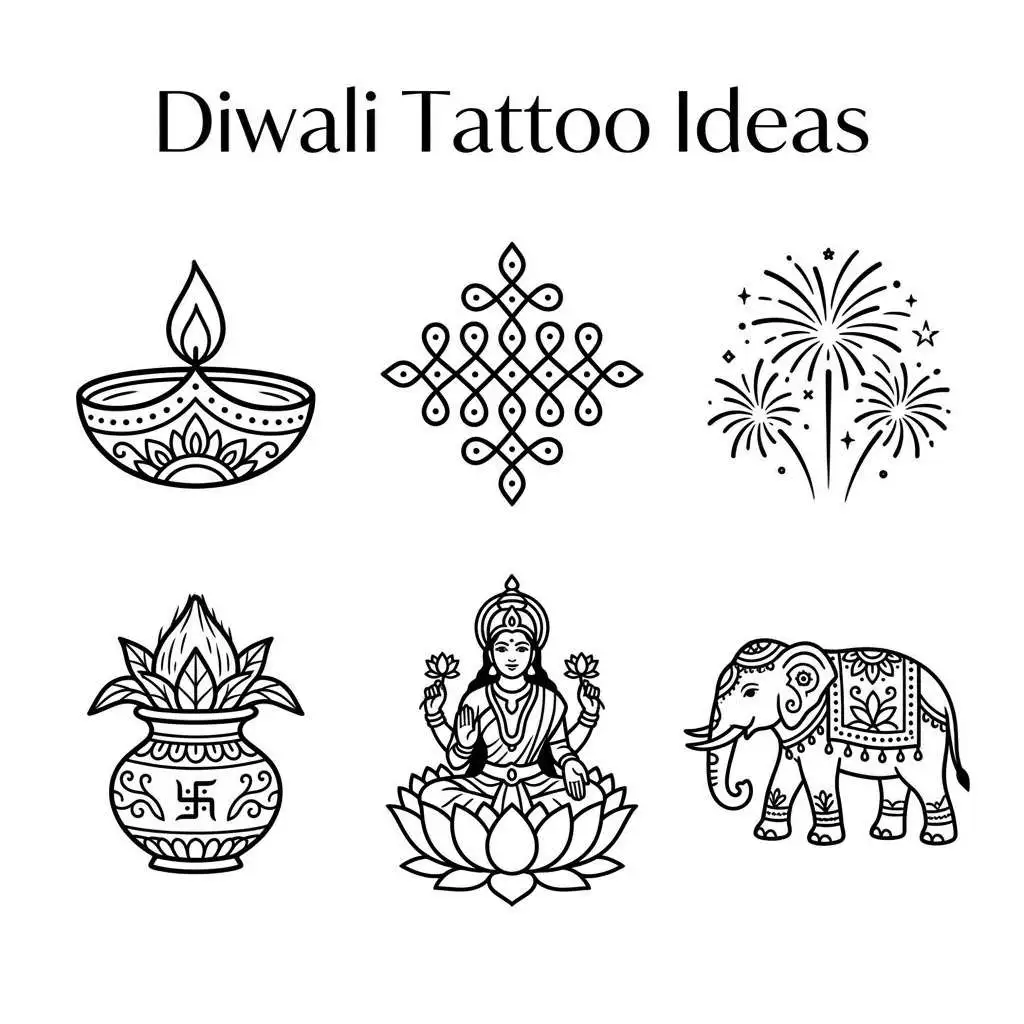
Many people choose Diwali inspired tattoos because of their rich symbolism.
Diya Tattoo
Represents:
- Inner light
- Spiritual awakening
- Guidance
Lotus Tattoo
Represents:
- Transformation
- Resilience
- Purity
Rangoli Pattern Tattoo
Represents:
- Creativity
- Cultural heritage
- Beauty
Lakshmi Inspired Tattoo
Represents:
- Prosperity
- Abundance
- Blessings
Sacred Footprints Tattoo
Represents:
- Divine guidance
- Personal growth
- Good fortune
Before selecting a tattoo, many people choose a symbol that reflects their personal journey and values.
Universal Diwali Symbols Recognized Worldwide
Some symbols are understood almost everywhere.
| Symbol | Main Meaning | Emotional Impact |
| Diya | Light and wisdom | Hope |
| Lotus | Purity and growth | Inspiration |
| Lakshmi | Prosperity | Abundance |
| Rangoli | Welcome and harmony | Joy |
| Candles | Guidance | Comfort |
| Gold Coins | Success | Confidence |
| Footprints | Blessings | Optimism |
These symbols transcend cultural boundaries because their meanings connect with universal human experiences.
How to Create or Draw a Diwali Symbol
Creating your own Diwali inspired symbol can be meaningful and enjoyable.
Step 1: Choose a Core Meaning
Decide what you want the symbol to represent.
Examples:
- Hope
- Prosperity
- Wisdom
- Family
- Growth
Step 2: Select Symbolic Elements
Combine traditional Diwali motifs such as:
- Lamp
- Lotus
- Flower petals
- Sacred footprints
- Geometric patterns
Step 3: Add Meaningful Shapes
Shapes can strengthen symbolism.
- Circles represent unity
- Triangles represent strength
- Symmetrical patterns represent balance
Step 4: Use Symbolic Colors
Common Diwali colors include:
- Gold for prosperity
- Red for energy
- Yellow for happiness
- White for purity
- Orange for spirituality
Step 5: Keep It Simple
The most memorable symbols are easy to recognize and understand.
A simple lamp with a bright flame often communicates more powerfully than a complex design.
Frequently Asked Questions
What is the most important Diwali symbol?
The diya is considered the most important Diwali symbol because it represents light, wisdom, hope, and the victory of good over evil.
Why are lotus flowers associated with Diwali?
Lotus flowers symbolize purity, prosperity, and spiritual growth. They are closely connected with Goddess Lakshmi.
What do Diwali footprints mean?
Diwali footprints represent Goddess Lakshmi entering a home and bringing prosperity, blessings, and abundance.
Why is rangoli important during Diwali?
Rangoli welcomes guests, positive energy, and good fortune. It also reflects creativity, beauty, and harmony.
What does lighting a diya symbolize?
Lighting a diya symbolizes overcoming darkness, gaining knowledge, embracing positivity, and nurturing spiritual awareness.
Conclusion
Diwali symbols are powerful reminders of humanity’s timeless desire for light, hope, wisdom, and prosperity. From the humble diya to the elegant lotus flower, each symbol carries layers of cultural, spiritual, and psychological meaning. These traditions continue to inspire millions because they speak to universal human values that transcend geography and generations.
Understanding the meaning of Diwali symbols enriches the celebration and reveals deeper lessons about growth, gratitude, and inner transformation. As the Festival of Lights continues to shine across the world, its symbols remain enduring guides toward positivity, harmony, and enlightenment.

Sophia Bennett is a passionate writer and symbol researcher who explores the deeper meanings behind ancient and modern symbols. With a strong interest in hidden messages, spiritual signs and cultural symbolism, she helps readers understand how symbols influence thoughts, emotions and everyday life.
Over the years, Sophia has dedicated her work to simplifying complex symbolic meanings into easy-to-understand insights. Her writing blends research with real-life relevance, making her content both educational and engaging for readers of all backgrounds.
She is the author of “Whispers of Hidden Symbols” and “The Silent Language of Signs”, two unique works that uncover the mystery and power behind symbols used across different cultures and traditions. Through these books, she invites readers to see the world from a new perspective, where every sign tells a story.
When she’s not writing, Sophia enjoys exploring historical texts, studying symbolic art, and discovering the unnoticed meanings hidden in everyday life.
 Ryan Scott
 Andrew Clark