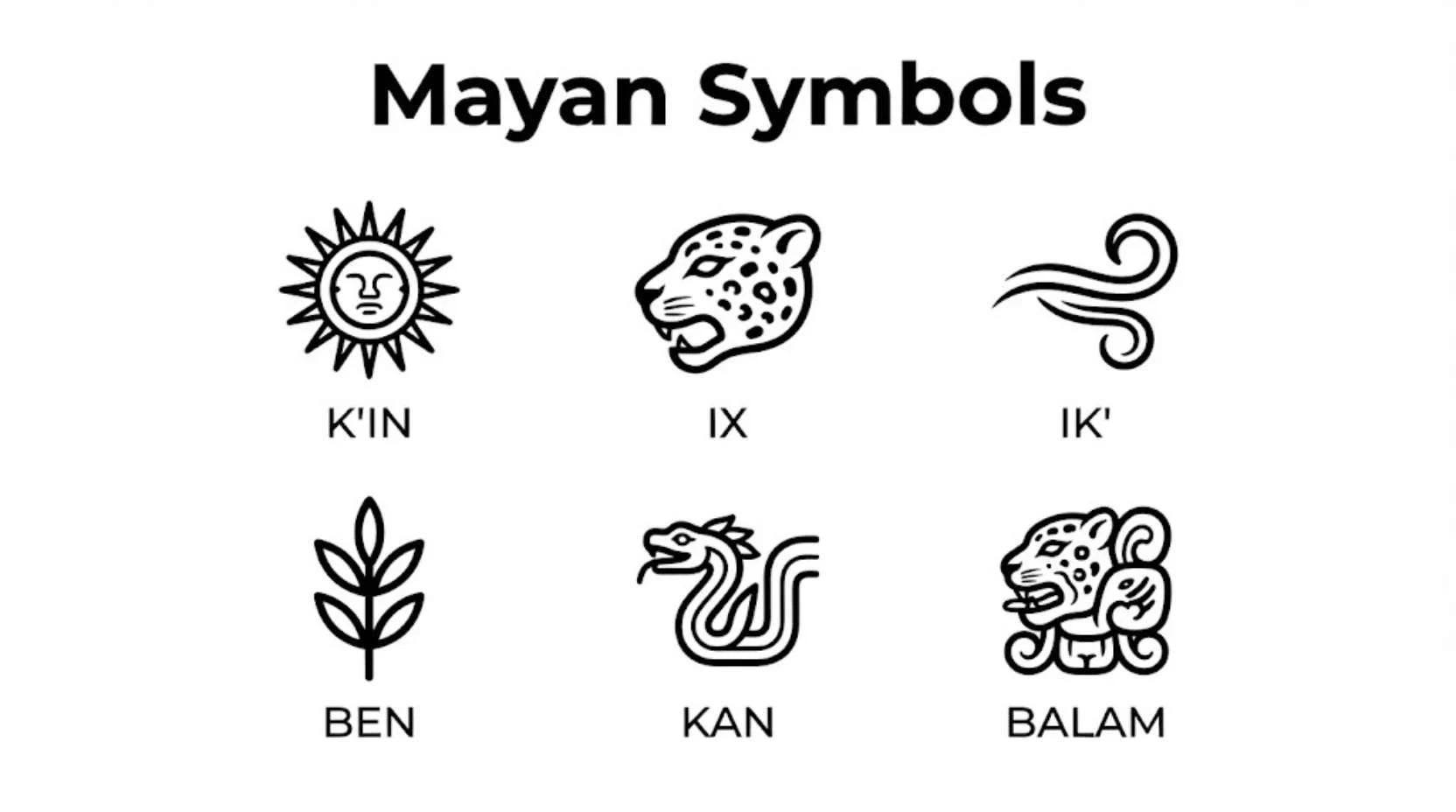
Have you ever looked at ancient “Mayan symbols” and wondered what secrets they hold? These fascinating symbols are much more than artistic carvings on stone. Mayan symbols reveal stories about life, nature, spirituality, time and the universe itself.
For thousands of years, these sacred signs helped one of the world’s most advanced ancient civilizations communicate complex ideas and preserve knowledge.
Today, Mayan symbols continue to inspire historians, artists, tattoo enthusiasts, and spiritual seekers around the world. Their meanings connect us to ancient wisdom while offering insights into human psychology, culture, and personal growth.
By understanding these remarkable symbols, you can uncover hidden meanings that have fascinated people for centuries.
Quick Answer
Mayan symbols are visual signs, glyphs, and sacred images created by the ancient Maya civilization to represent gods, animals, nature, time, spiritual beliefs, and daily life. These symbols carried religious, cultural, and practical meanings and were used in writing, calendars, monuments, ceremonies, and artwork. Some of the most famous Mayan symbols include the Sun, Jaguar, Kukulkan serpent, Ceiba Tree, Hunab Ku, and various calendar glyphs.
What Makes Something a Mayan Symbol?
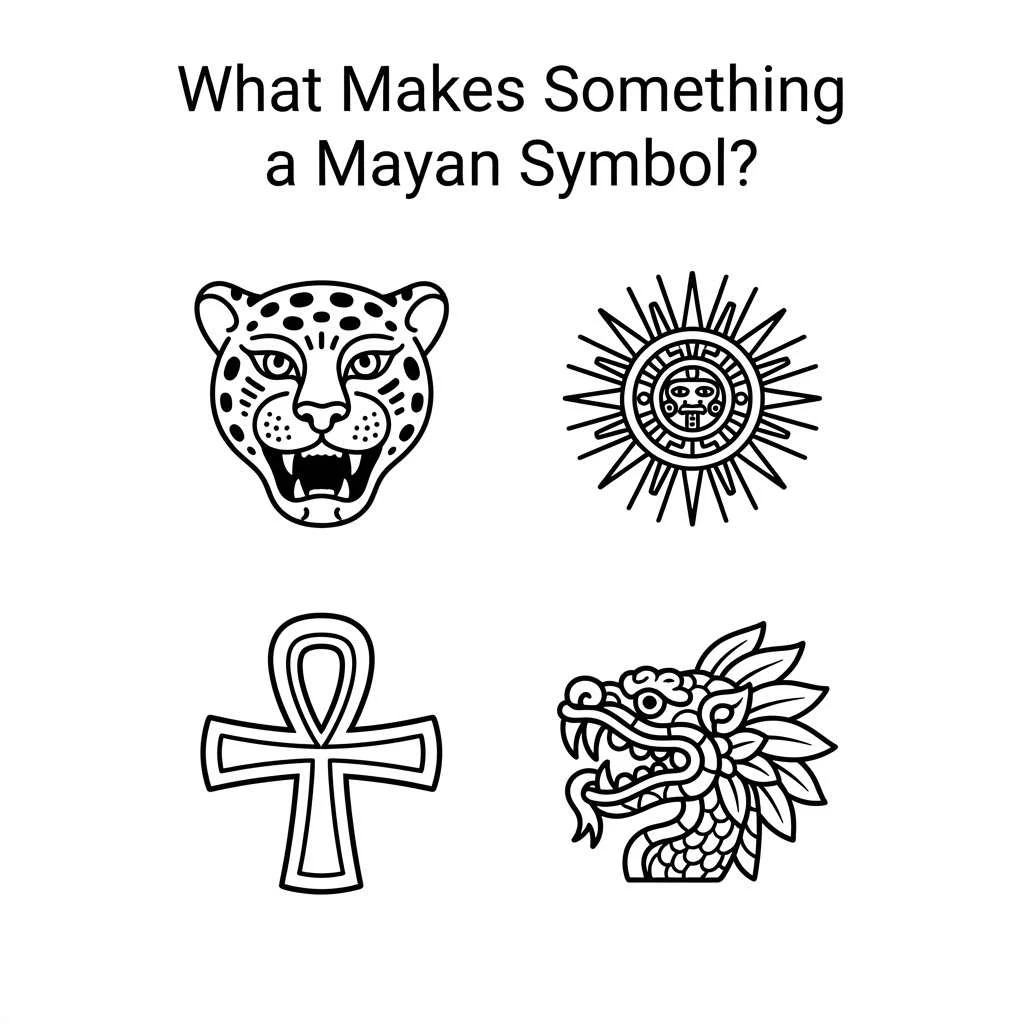
A Mayan symbol is any visual representation that communicates an idea, belief, object, deity, natural force, or spiritual concept within Maya culture.
Unlike many modern symbols that have a single meaning, Mayan symbols often contained several layers of interpretation. One image could represent a god, a natural element, a cosmic force, and a philosophical lesson at the same time.
Key characteristics of Mayan symbols include:
- Deep spiritual significance
- Connection to nature and the cosmos
- Use in religious ceremonies
- Representation of gods and supernatural beings
- Integration into writing systems
- Association with astronomy and timekeeping
The Maya viewed the universe as a connected system. As a result, their symbols reflected relationships between humans, animals, nature, and the divine world.
The Origins of Mayan Symbols
The ancient Maya civilization flourished across parts of present day Mexico, Guatemala, Belize, Honduras, and El Salvador.
Their civilization developed one of the most sophisticated writing systems in the ancient Americas. This system used glyphs, which combined pictures, sounds, and meanings into a complex visual language.
Mayan symbols appeared on:
- Stone monuments
- Temple walls
- Ceramics
- Codices
- Jewelry
- Ritual objects
- Tomb decorations
These symbols preserved history, recorded astronomical observations, and documented royal lineages.
Did You Know?
The Maya created one of the world’s earliest mathematical systems and used symbols to represent numbers, including the concept of zero, centuries before many other civilizations.
Most Famous Mayan Symbols and Their Meanings
Hunab Ku: The Symbol of Universal Balance
Hunab Ku is often considered one of the most recognized Mayan symbols.
It represents:
- Unity
- Cosmic balance
- Universal consciousness
- Creation
- Harmony
Many people see Hunab Ku as a symbol of interconnectedness. Its circular design reflects the idea that everything in the universe is connected.
Psychologically, it symbolizes inner balance and personal transformation.
The Sun Symbol
The Sun held a central place in Maya beliefs.
Its meanings include:
- Life force
- Power
- Growth
- Leadership
- Renewal
The Maya carefully tracked solar movements and based many ceremonies on the sun’s cycles.
Emotionally, the Sun symbol represents confidence, vitality, and hope.
The Moon Symbol
The Moon symbol was associated with feminine energy and natural rhythms.
Common meanings include:
- Fertility
- Intuition
- Cycles of life
- Wisdom
- Emotional awareness
Many Mayan traditions linked the moon to agriculture and women’s spiritual roles.
The Corn Symbol
Corn was the foundation of Maya life.
The Corn God symbolized:
- Abundance
- Survival
- Prosperity
- Rebirth
- Human creation
According to Maya mythology, humans were created from corn. This made it one of the most sacred symbols in their culture.
Animal Mayan Symbols and Their Sacred Meanings
Animals played an important role in Maya spirituality. They were viewed as messengers between earthly and spiritual realms.
Jaguar Symbol
The Jaguar is among the most powerful Mayan symbols.
It represents:
- Strength
- Courage
- Leadership
- Protection
- Spiritual power
The jaguar moved freely through forests at night, making it a symbol of mystery and supernatural ability.
Many Maya rulers associated themselves with the jaguar to demonstrate authority and divine favor.
Eagle Symbol
The eagle symbol stands for:
- Vision
- Freedom
- Wisdom
- Divine connection
- Higher awareness
The Maya believed eagles could travel between the heavens and earth.
Serpent Symbol
The serpent held enormous spiritual significance.
It symbolizes:
- Transformation
- Knowledge
- Rebirth
- Energy
- Cosmic power
The feathered serpent deity Kukulkan became one of the most revered figures in Maya mythology.
Monkey Symbol
The monkey represented:
- Creativity
- Intelligence
- Art
- Music
- Joy
Mayan artists often associated monkeys with imagination and cultural expression.
Deer Symbol
The deer symbolizes:
- Gentleness
- Harmony
- Grace
- Adaptability
- Peace
This symbol reminds people to move through life with balance and awareness.
Nature Symbols in Mayan Culture
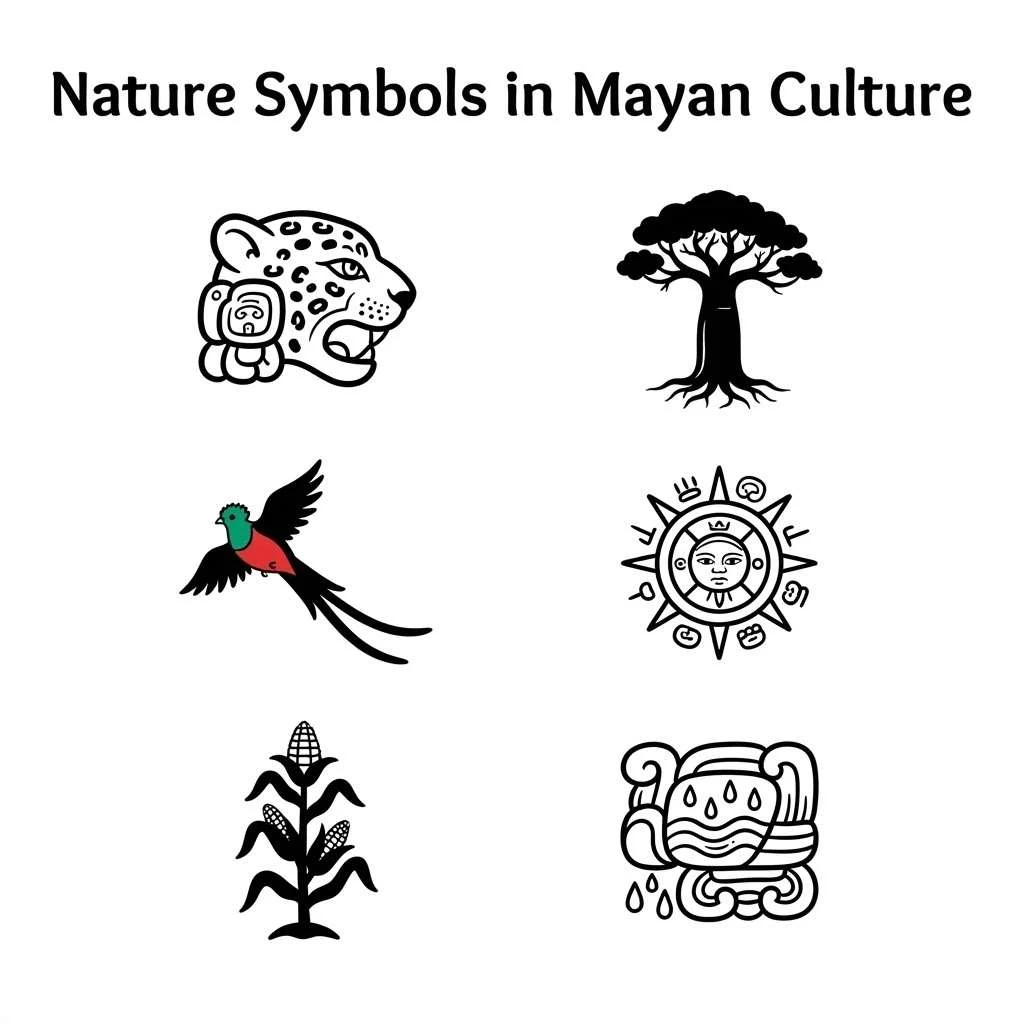
Nature formed the heart of Maya spirituality. Their symbols reflected respect for natural forces.
Ceiba Tree: The Sacred World Tree
The Ceiba Tree served as a bridge connecting different realms.
It represented:
- Heaven
- Earth
- Underworld
- Spiritual growth
- Cosmic connection
The Maya believed the universe was organized around this sacred tree.
Today, many people view the Ceiba Tree as a symbol of personal development and spiritual awakening.
Water Symbol
Water represented:
- Life
- Purification
- Healing
- Renewal
- Emotional flow
Since agriculture depended on water, it held both practical and sacred significance.
Rain Symbol
Rain symbols were connected to the rain god Chaac.
Their meanings include:
- Fertility
- Growth
- Prosperity
- Blessings
- Agricultural success
Mountain Symbol
Mountains symbolized:
- Stability
- Sacred power
- Divine presence
- Endurance
- Strength
The Maya often viewed mountains as entrances to spiritual realms.
Sacred Objects and Actions in Mayan Symbolism
Fire Symbol
Fire represented transformation and communication with divine forces.
Key meanings include:
- Purification
- Change
- Energy
- Passion
- Spiritual renewal
Fire ceremonies played a central role in many Maya rituals.
Calendar Glyphs
The Maya developed highly advanced calendars using symbolic glyphs.
These symbols represented:
- Time cycles
- Cosmic order
- Destiny
- Sacred knowledge
- Human experience
Calendar symbols continue to fascinate researchers and spiritual practitioners.
Temple Symbolism
Mayan temples symbolized:
- Connection to the gods
- Spiritual ascent
- Wisdom
- Sacred authority
- Cosmic alignment
Their architecture often reflected astronomical observations.
Ancient and Cultural Symbols Around the World Compared to Mayan Symbols
Many cultures developed symbols that share similarities with Mayan symbolism.
North America
Native traditions often use:
- Eagle symbols for spiritual vision
- Bear symbols for strength
- Circle symbols for unity
These meanings resemble many Maya concepts.
Europe
European symbolism commonly includes:
- Oak trees for endurance
- Suns for power
- Serpents for transformation
These themes parallel several Mayan beliefs.
Asia
Asian cultures often use:
- Dragons for power
- Lotus flowers for enlightenment
- Yin and Yang for balance
Like Maya symbols, these images express harmony between opposing forces.
Africa
African symbolic traditions frequently emphasize:
- Community
- Ancestors
- Nature
- Spiritual wisdom
These values also appear prominently in Maya culture.
The Spiritual Meaning of Mayan Symbols
One reason Mayan symbols remain popular today is their spiritual depth.
Ancient Maya spirituality viewed life as an interconnected web. Every person, animal, plant, and celestial body played a role within a larger cosmic system.
Common spiritual themes found in Mayan symbols include:
Transformation
Many symbols reflect personal growth and renewal.
Examples include:
- Serpents shedding skin
- Corn cycles
- Solar movements
Balance
Symbols like Hunab Ku emphasize harmony between:
- Light and darkness
- Life and death
- Human and divine
- Physical and spiritual worlds
Wisdom
Animals, celestial bodies, and sacred trees often represent higher understanding.
Connection
Mayan symbols remind people that all living things are connected.
Psychologically, this idea can encourage empathy, mindfulness, and personal responsibility.
Mayan Symbols in Literature and Popular Culture
Mayan symbols continue influencing modern storytelling.
Writers, filmmakers, and artists use them to represent:
- Mystery
- Ancient wisdom
- Hidden knowledge
- Adventure
- Spiritual discovery
Books and movies featuring lost civilizations frequently incorporate Mayan imagery to create a sense of wonder and historical depth.
Video games, fantasy novels, and graphic design projects also draw inspiration from these powerful symbols.
Mayan Symbols in Everyday Life
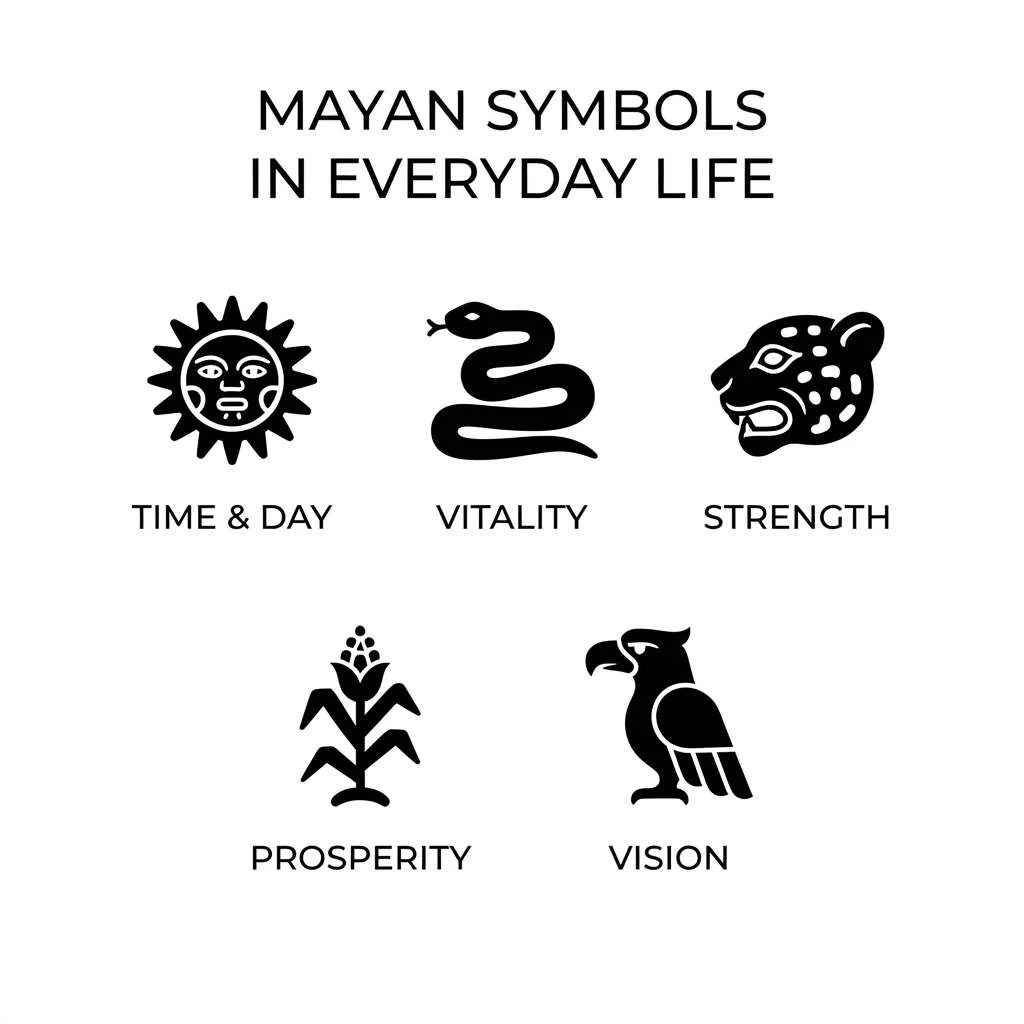
Many people encounter Mayan symbols without realizing it.
Common modern uses include:
- Jewelry designs
- Home decor
- Clothing patterns
- Artwork
- Meditation tools
- Educational materials
People often choose these symbols because they represent timeless values such as strength, wisdom, balance, and personal growth.
Why People Feel Connected to Mayan Symbols
Psychologists suggest that ancient symbols appeal to people because they communicate universal human experiences.
These include:
- Searching for meaning
- Understanding life cycles
- Seeking personal identity
- Connecting with nature
- Exploring spirituality
This emotional connection helps explain their lasting popularity.
Mayan Symbol Tattoo Ideas and Personal Meanings
Mayan symbol tattoos have become increasingly popular because of their rich history and symbolism.
Jaguar Tattoo
Represents:
- Courage
- Personal strength
- Leadership
- Protection
Hunab Ku Tattoo
Represents:
- Unity
- Balance
- Spiritual growth
- Universal connection
Feathered Serpent Tattoo
Represents:
- Transformation
- Wisdom
- Knowledge
- Evolution
Sun Tattoo
Represents:
- Vitality
- Energy
- Success
- Renewal
Ceiba Tree Tattoo
Represents:
- Family roots
- Spiritual growth
- Connection to ancestors
- Stability
Before choosing a tattoo, it is important to understand the cultural significance behind the symbol and respect its origins.
Universal Mayan Symbols Recognized Worldwide
Some Mayan symbols have gained global recognition.
The most widely recognized include:
- Hunab Ku
- Jaguar
- Feathered Serpent
- Sun Symbol
- Moon Symbol
- Ceiba Tree
- Corn God Symbol
- Calendar Glyphs
These symbols continue appearing in educational resources, museums, artwork, and cultural studies around the world.
How to Create or Draw a Mayan Inspired Symbol
Creating a symbol inspired by Maya traditions can help you appreciate their artistic style.
Step 1: Choose a Core Meaning
Select a concept such as:
- Wisdom
- Strength
- Growth
- Balance
- Protection
Step 2: Pick a Natural Element
Choose an animal, plant, celestial object, or natural force connected to that meaning.
Examples:
- Jaguar for strength
- Tree for growth
- Sun for vitality
- Serpent for transformation
Step 3: Use Geometric Shapes
Mayan art often combines:
- Circles
- Squares
- Spirals
- Symmetrical patterns
Step 4: Add Symbolic Details
Include elements that reinforce the meaning.
For example:
- Feathers for freedom
- Roots for stability
- Rays for energy
Step 5: Keep the Design Balanced
Mayan symbols often emphasize harmony and interconnectedness.
A balanced design creates a stronger visual impact and deeper symbolic meaning.
Frequently Asked Questions
What are Mayan symbols?
Mayan symbols are visual signs, glyphs, and sacred images used by the ancient Maya civilization to represent ideas, gods, animals, nature, time, and spiritual beliefs.
What is the most famous Mayan symbol?
Hunab Ku is often considered one of the most famous Mayan symbols because it represents unity, balance, and universal connection.
What does the Mayan jaguar symbolize?
The jaguar symbolizes strength, courage, leadership, protection, and spiritual power in Maya culture.
Are Mayan symbols still used today?
Yes. Many people use Mayan symbols in art, jewelry, tattoos, education, and spiritual practices.
What does the Mayan serpent represent?
The serpent represents transformation, wisdom, rebirth, energy, and sacred knowledge.
Why are Mayan symbols important?
They preserve ancient history, spiritual beliefs, cultural identity, and valuable insights into how the Maya understood the world.
Conclusion
Mayan symbols offer a fascinating window into one of history’s most remarkable civilizations. These sacred signs reveal deep lessons about balance, transformation, wisdom, nature, and human connection. From the powerful jaguar to the sacred Ceiba Tree and the cosmic Hunab Ku, each symbol carries layers of meaning that continue to inspire people today.
Their influence extends beyond ancient temples and stone carvings into modern art, spirituality, tattoos, and personal growth. By understanding Mayan symbols, we gain a deeper appreciation for both ancient wisdom and the universal human search for meaning.

Sophia Bennett is a passionate writer and symbol researcher who explores the deeper meanings behind ancient and modern symbols. With a strong interest in hidden messages, spiritual signs and cultural symbolism, she helps readers understand how symbols influence thoughts, emotions and everyday life.
Over the years, Sophia has dedicated her work to simplifying complex symbolic meanings into easy-to-understand insights. Her writing blends research with real-life relevance, making her content both educational and engaging for readers of all backgrounds.
She is the author of “Whispers of Hidden Symbols” and “The Silent Language of Signs”, two unique works that uncover the mystery and power behind symbols used across different cultures and traditions. Through these books, she invites readers to see the world from a new perspective, where every sign tells a story.
When she’s not writing, Sophia enjoys exploring historical texts, studying symbolic art, and discovering the unnoticed meanings hidden in everyday life.
 Ryan Scott
 Andrew Clark