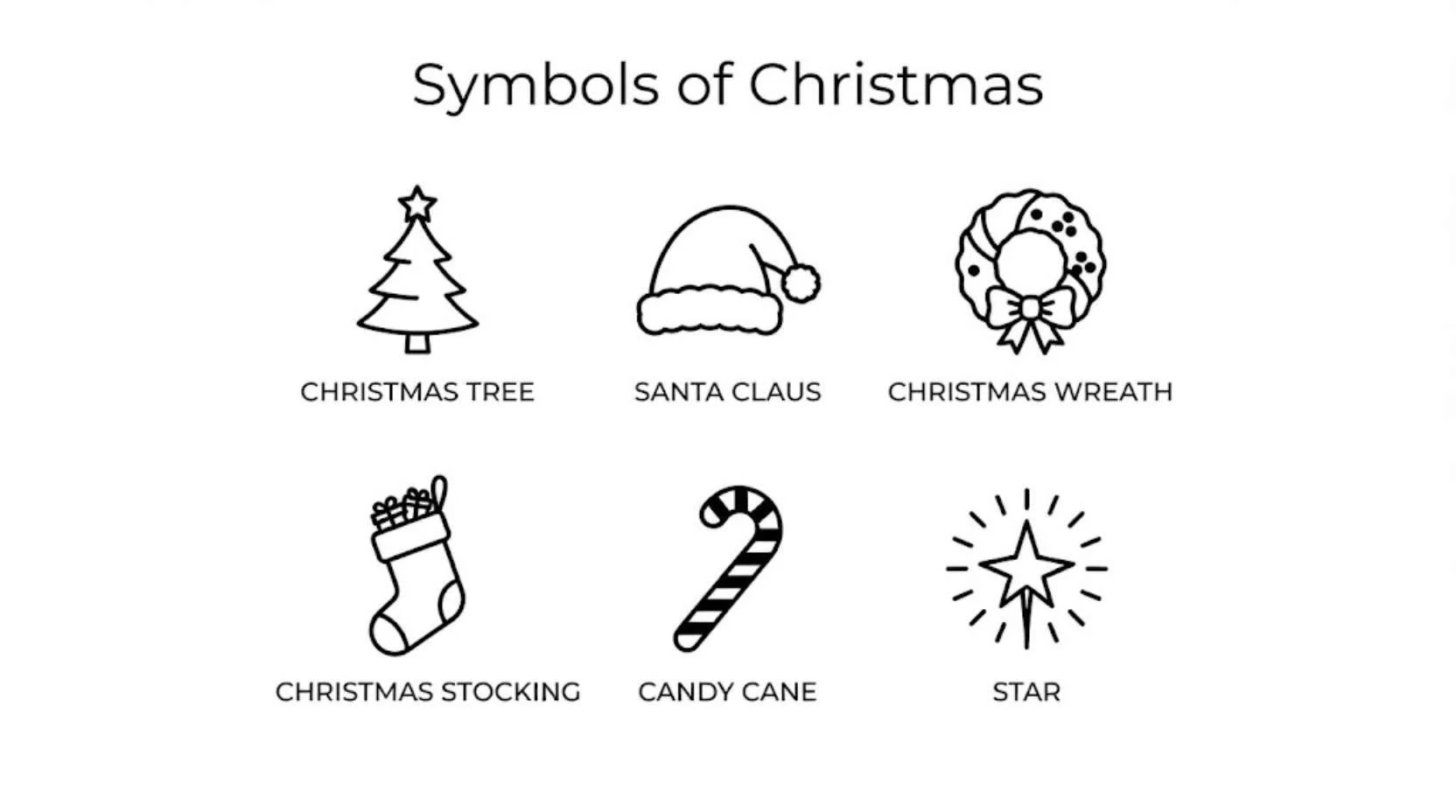
Christmas is much more than gifts, decorations and festive celebrations. The “symbols of Christmas” carry centuries of history, faith, culture, and emotional meaning.
From sparkling stars and evergreen trees to bells and candy canes, these familiar images tell stories that connect generations across the world. Many people see these symbols every year without realizing the deeper messages behind them.
Some represent hope, some symbolize eternal life, and others remind people of generosity, love, and spiritual renewal. Understanding the symbols of Christmas can make the holiday season more meaningful and memorable.
This guide explores the origins, meanings, cultural significance, and hidden messages behind the most recognized Christmas symbols used around the world.
Quick Answer
The symbols of Christmas are objects, colors, animals, plants, and traditions that represent the spirit of Christmas. Common Christmas symbols include the Christmas tree, star, angel, nativity scene, candy cane, bells, wreath, holly, mistletoe, gifts, and candles. These symbols often represent faith, hope, love, peace, generosity, eternal life, and the celebration of the birth of Jesus Christ.
What Makes Something a Symbol of Christmas?
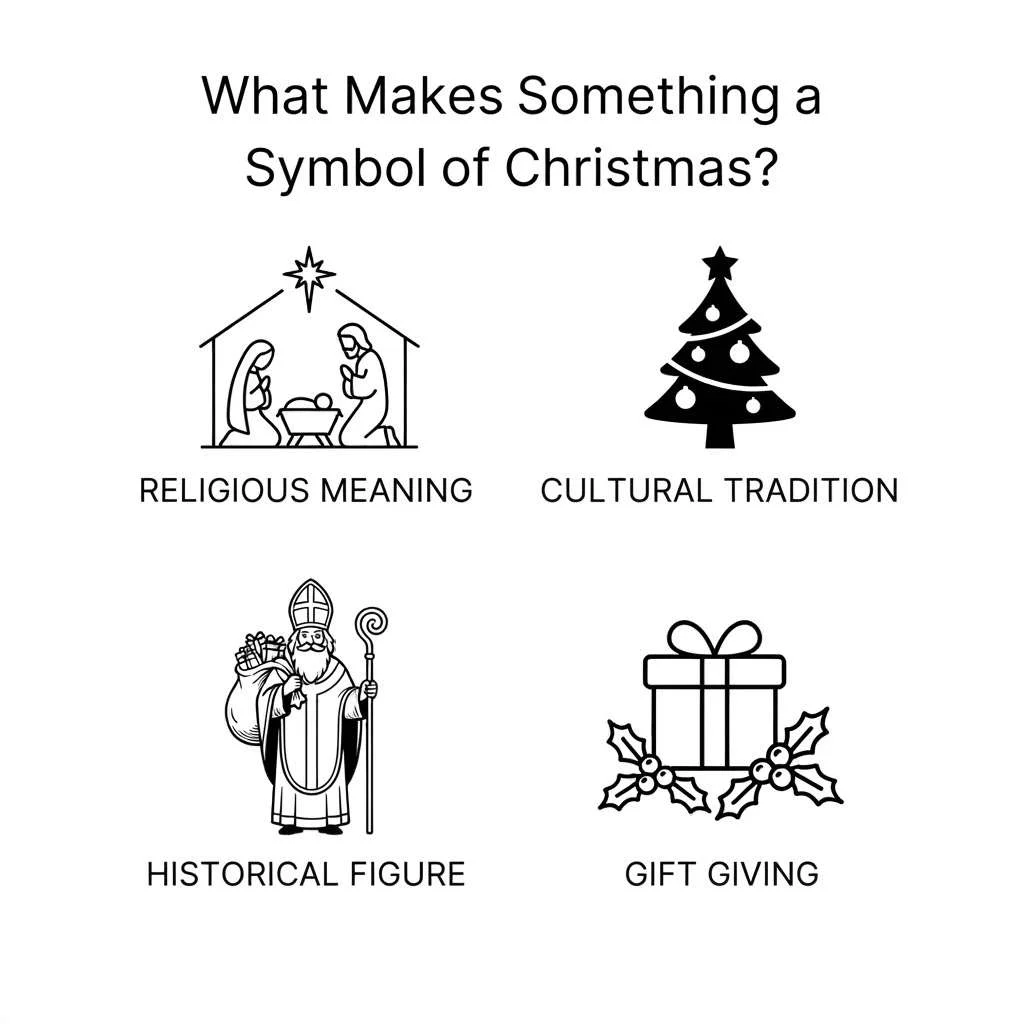
A Christmas symbol is any object, image, tradition, or action that represents the meaning, values, and history of the Christmas season.
For a symbol to become associated with Christmas, it usually develops through:
- Religious traditions
- Cultural customs
- Historical events
- Family practices
- Shared emotional experiences
The strongest Christmas symbols have survived for hundreds of years because they communicate important human values such as:
- Love
- Kindness
- Faith
- Hope
- Joy
- Togetherness
- Generosity
These symbols help people express feelings that words alone cannot always capture.
The Most Famous Symbols of Christmas and Their Meanings
Christmas Tree
The Christmas tree is one of the most recognized Christmas symbols in the world.
Meaning
The evergreen tree symbolizes:
- Eternal life
- Strength
- Hope during difficult times
- Continuity through the seasons
Because evergreen trees remain green during winter, they became symbols of resilience and life.
Historical Origin
Ancient cultures used evergreen branches during winter festivals long before modern Christmas traditions developed. Later, Christians adopted the evergreen tree as a symbol of everlasting life through faith.
Psychological Meaning
The Christmas tree creates feelings of:
- Comfort
- Family unity
- Childhood memories
- Security
- Celebration
Christmas Star
The Christmas star, often placed at the top of the tree, represents the Star of Bethlehem.
Meaning
It symbolizes:
- Divine guidance
- Direction
- Hope
- Spiritual light
According to Christian tradition, the star guided the Wise Men to the birthplace of Jesus.
Emotional Symbolism
People often view the star as a reminder that light can appear even during life’s darkest moments.
Christmas Angel
Angels appear throughout Christmas decorations, cards, and celebrations.
Meaning
Angels symbolize:
- Protection
- Peace
- Divine messages
- Good news
In the Christmas story, angels announced the birth of Jesus.
Psychological Interpretation
Angels often create feelings of:
- Safety
- Comfort
- Spiritual connection
- Reassurance
Nativity Scene
The nativity scene depicts the birth of Jesus in Bethlehem.
Meaning
The scene symbolizes:
- Humility
- Faith
- Hope
- New beginnings
- Divine love
Main Elements
- Baby Jesus
- Mary
- Joseph
- Shepherds
- Wise Men
- Animals
- Angels
The nativity remains one of the most spiritually significant Christmas symbols.
Nature Symbols of Christmas
Nature plays a major role in Christmas traditions.
Holly
Holly features bright red berries and dark green leaves.
Meaning
Holly represents:
- Protection
- Endurance
- Life during winter
The green leaves symbolize everlasting life, while the red berries often symbolize sacrifice and love.
Mistletoe
Mistletoe is a popular Christmas decoration.
Meaning
It symbolizes:
- Friendship
- Peace
- Reconciliation
- Love
Ancient European cultures viewed mistletoe as a sacred plant with protective powers.
Modern Tradition
The tradition of kissing beneath mistletoe symbolizes affection and goodwill.
Evergreen Branches
Evergreen branches appear in wreaths, garlands, and decorations.
Meaning
They symbolize:
- Immortality
- Renewal
- Persistence
- Hope
Their ability to remain green during winter made them powerful symbols of life.
Poinsettia
The poinsettia is one of the most popular Christmas flowers.
Meaning
It symbolizes:
- Purity
- Celebration
- Joy
- Faith
Its vibrant red leaves have become closely associated with Christmas decorations worldwide.
Animal Symbols of Christmas
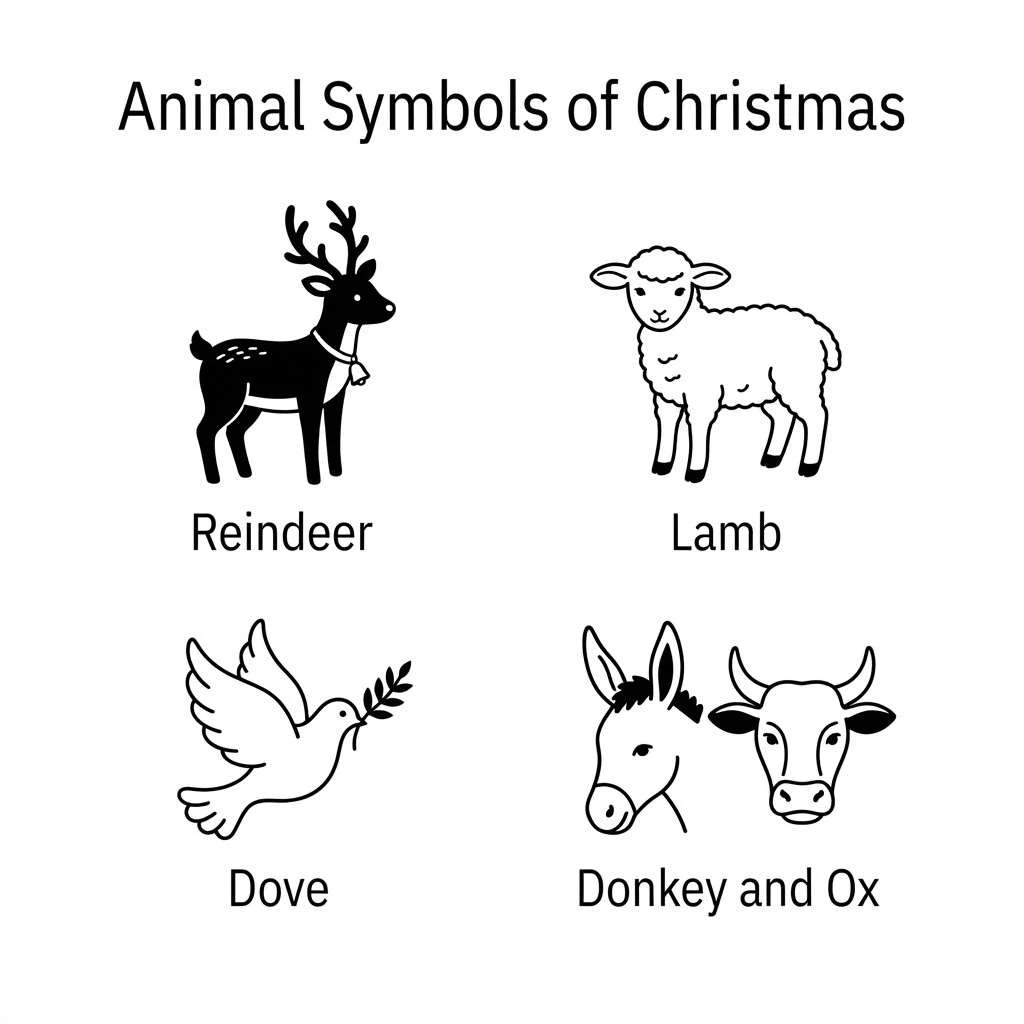
Animals also play important roles in Christmas symbolism.
Reindeer
Reindeer became popular through Christmas folklore.
Meaning
They symbolize:
- Journey
- Endurance
- Adventure
- Holiday excitement
They are closely connected to Santa Claus traditions.
Lamb
The lamb appears frequently in Christian Christmas symbolism.
Meaning
It represents:
- Innocence
- Gentleness
- Peace
- Spiritual purity
Dove
The dove is recognized worldwide.
Meaning
It symbolizes:
- Peace
- Harmony
- Hope
- Divine presence
The dove remains one of the strongest universal symbols of peace during Christmas.
Donkey and Ox
These animals often appear in nativity scenes.
Meaning
They represent:
- Humility
- Service
- Patience
- Faithfulness
Objects That Represent Christmas
Candy Cane
The candy cane is one of the most recognizable Christmas treats.
Meaning
Many traditions associate it with:
- Goodness
- Faith
- Guidance
- Joy
The red and white colors symbolize purity and love.
Did You Know?
The candy cane was originally a simple white candy stick before decorative stripes became common.
Christmas Bells
Bells have been associated with Christmas celebrations for centuries.
Meaning
They symbolize:
- Celebration
- Joyful announcements
- Unity
- Spiritual awakening
The sound of bells often signals the arrival of important events.
Christmas Wreath
A wreath is a circular decoration made from evergreen branches.
Meaning
It symbolizes:
- Eternity
- Unity
- Continuity
- Everlasting love
The circular shape has no beginning or end.
Christmas Candles
Candles remain a powerful Christmas symbol.
Meaning
They represent:
- Light
- Hope
- Faith
- Guidance
Many traditions use candles to symbolize light overcoming darkness.
Christmas Gifts
Gift giving is one of the most beloved Christmas customs.
Meaning
Gifts symbolize:
- Generosity
- Love
- Gratitude
- Compassion
The tradition is often linked to the gifts presented by the Wise Men.
Ancient and Cultural Christmas Symbols Around the World
Christmas symbolism varies across cultures while maintaining similar themes.
Christmas Symbols in Europe
European Christmas traditions often emphasize:
- Evergreen trees
- Holly
- Mistletoe
- Nativity scenes
- Advent wreaths
These symbols focus on faith, family, and winter renewal.
Christmas Symbols in North America
In the United States and Canada, popular symbols include:
- Santa Claus
- Reindeer
- Christmas stockings
- Decorated trees
- Candy canes
The emphasis often combines religious and cultural traditions.
Christmas Symbols in Asia
Many Asian countries have adapted Christmas symbols creatively.
Popular symbols include:
- Illuminated stars
- Lanterns
- Christmas lights
- Decorated public displays
These often emphasize joy, community, and celebration.
Christmas Symbols in Africa
African Christmas traditions frequently incorporate:
- Candles
- Community gatherings
- Handmade decorations
- Nativity displays
These symbols highlight family, gratitude, and togetherness.
Christmas Symbols in Latin America
Common Christmas symbols include:
- Nativity scenes
- Stars
- Candles
- Religious processions
The focus often remains strongly connected to faith and spiritual celebration.
The Spiritual Meaning of Christmas Symbols
At a deeper level, Christmas symbols represent universal spiritual truths.
Hope
The Christmas star, candles, and lights all symbolize hope.
They remind people that brighter days can come after hardship.
Love
Gifts, family gatherings, and acts of kindness symbolize love.
Love remains one of the central messages of Christmas.
Renewal
Evergreen trees and wreaths symbolize renewal and new beginnings.
They encourage people to move forward with optimism.
Peace
Angels and doves represent peace.
Their symbolism encourages harmony between individuals and communities.
Faith
Nativity scenes, stars, and angels symbolize faith and trust in something greater than ourselves.
Christmas Symbolism in Literature and Popular Culture
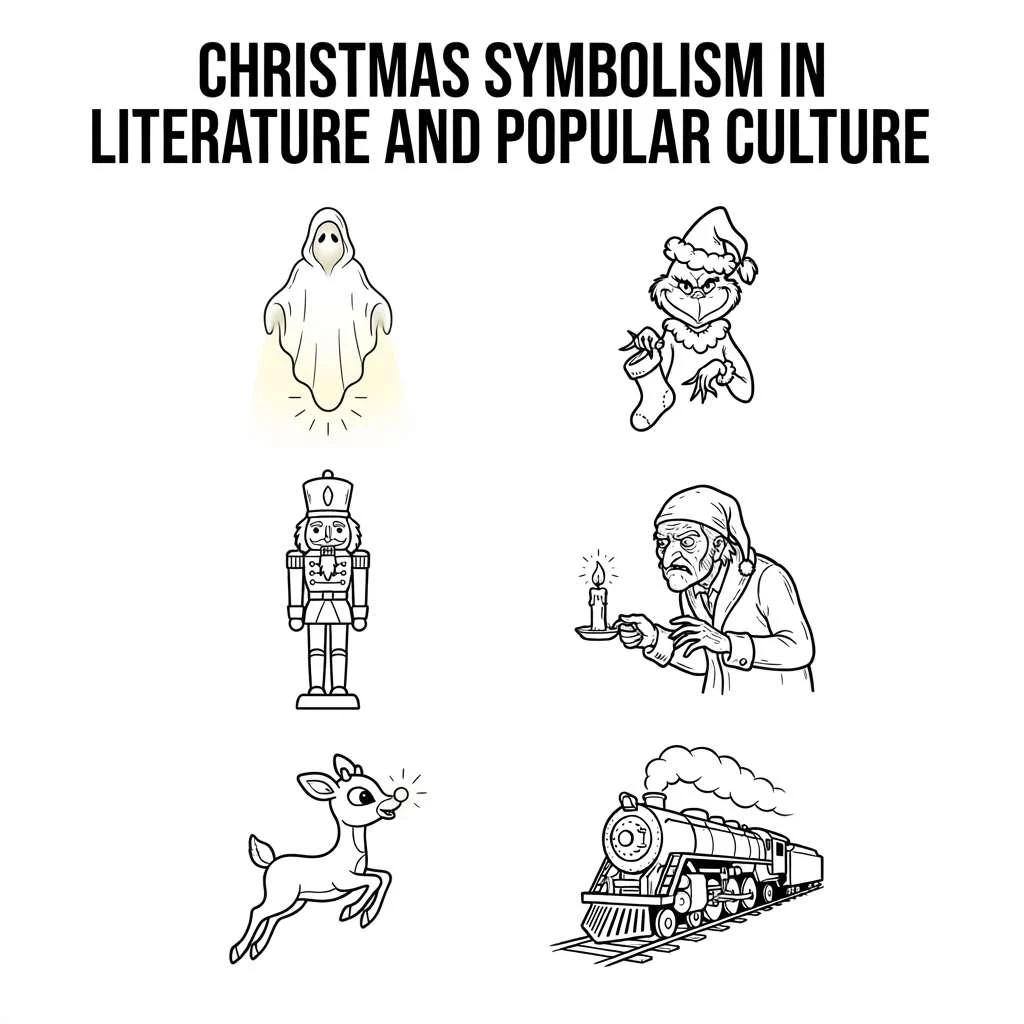
Christmas symbols appear throughout literature, movies, songs, and art.
In Literature
Authors frequently use Christmas symbols to represent:
- Transformation
- Redemption
- Generosity
- Personal growth
Stories such as Charles Dickens’ A Christmas Carol use Christmas symbolism to explore compassion and human change.
In Movies
Christmas films often feature:
- Decorated trees
- Stars
- Snow
- Bells
- Gifts
These symbols instantly create emotional connections with viewers.
In Art
Artists have used Christmas symbols for centuries to express:
- Spiritual devotion
- Celebration
- Hope
- Cultural identity
Christmas Symbols in Everyday Life
Many Christmas symbols influence daily life beyond the holiday season.
Examples include:
- Giving gifts to express appreciation
- Using candles during special occasions
- Decorating homes with greenery
- Sharing meals with loved ones
- Performing acts of kindness
These practices carry Christmas values throughout the year.
Christmas Tattoo Ideas and Their Personal Meanings
Many people choose Christmas inspired tattoos because of their emotional significance.
Christmas Star Tattoo
Represents:
- Guidance
- Hope
- Purpose
Angel Tattoo
Represents:
- Protection
- Faith
- Spiritual support
Christmas Tree Tattoo
Represents:
- Family
- Growth
- Strength
Dove Tattoo
Represents:
- Peace
- Love
- Harmony
Wreath Tattoo
Represents:
- Eternal connection
- Unity
- Endurance
Bell Tattoo
Represents:
- Celebration
- Joy
- Positive life changes
Universal Symbols of Christmas Recognized Worldwide
Some symbols transcend cultures and national borders.
Top Universal Christmas Symbols
- Christmas Tree
- Star
- Angel
- Nativity Scene
- Candle
- Gift
- Bell
- Wreath
- Holly
- Santa Claus
These symbols are recognized by millions of people regardless of language or location.
How to Create or Draw a Christmas Symbol?
Creating a Christmas symbol can be simple and meaningful.
Step 1: Choose a Core Message
Decide what value you want the symbol to represent:
- Hope
- Faith
- Love
- Joy
- Peace
Step 2: Select Visual Elements
Examples:
- Star for guidance
- Tree for life
- Dove for peace
- Candle for hope
- Heart for love
Step 3: Add Christmas Colors
Traditional colors include:
- Red
- Green
- Gold
- White
- Silver
Step 4: Keep It Simple
The most memorable symbols are easy to recognize and understand.
Step 5: Add Personal Meaning
Include details connected to your family traditions, beliefs, or experiences.
Frequently Asked Questions
What is the most important symbol of Christmas?
The Christmas tree is often considered the most recognized symbol of Christmas, while the nativity scene is one of the most spiritually significant.
Why is the Christmas tree a symbol of Christmas?
It symbolizes eternal life, hope, resilience, and renewal because evergreen trees remain green throughout winter.
What does the Christmas star symbolize?
The Christmas star symbolizes guidance, hope, faith, and divine direction.
Why are candles used during Christmas?
Candles represent light, hope, spiritual guidance, and the triumph of goodness over darkness.
What animal symbolizes Christmas?
Reindeer are among the most popular Christmas animals, while lambs, doves, donkeys, and oxen also hold symbolic importance.
What do Christmas gifts symbolize?
Christmas gifts symbolize generosity, love, gratitude, kindness and the spirit of giving.
Conclusion
The symbols of Christmas are far more than festive decorations. They carry powerful messages of hope, faith, love, renewal, and human connection. From the Christmas tree and shining star to candles, angels, and wreaths, each symbol tells a story that has inspired people for generations.
Understanding their deeper meanings adds richness to holiday traditions and helps preserve the values that make Christmas special. These timeless symbols continue to unite families, communities, and cultures around the world through shared celebration and meaning.

Andrew Clark is a dedicated writer and researcher with a deep passion for symbols, their hidden meanings, and the stories they carry across cultures and time. With years of study and curiosity-driven exploration, he simplifies complex symbolic concepts into clear and engaging insights that help readers connect with deeper meanings in everyday life.
He is the author of “Hidden Codes of Human Symbols” and “The Secret Patterns of Ancient Signs”, two original works that explore the spiritual, historical, and psychological layers behind symbols. His writing blends clarity with depth, making even the most complex symbolic interpretations feel simple and meaningful.
Through his work on this website, Andrew aims to guide readers toward understanding the true essence of symbols, whether they appear in dreams, ancient traditions, or modern life. His goal is simple: to help you see beyond the surface and discover the powerful messages hidden in plain sight.
 Sophia Bennett
 Ryan Scott