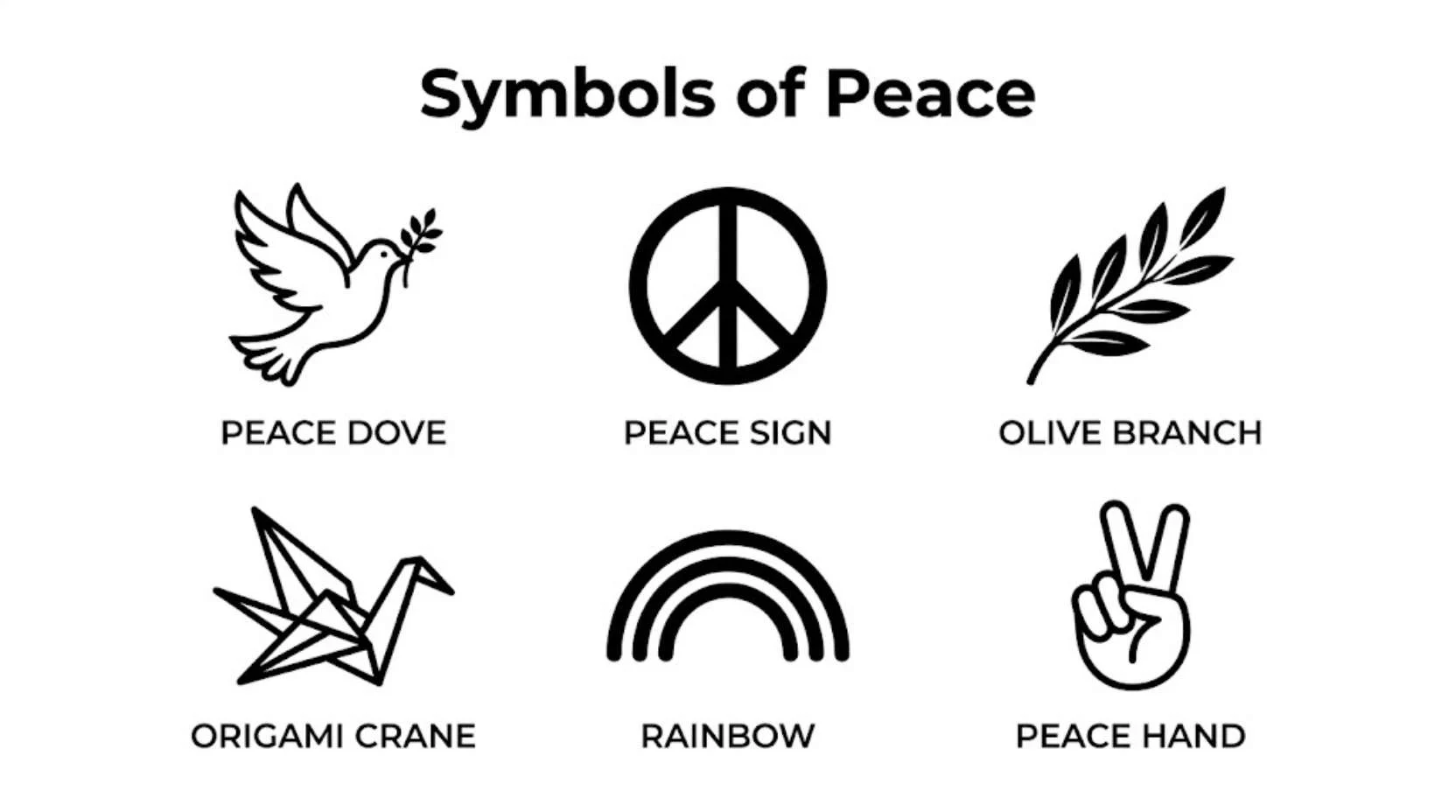
“Symbols of peace” have united people across cultures, religions, and generations for thousands of years.
From the graceful dove to the iconic peace sign, these powerful images communicate harmony, hope, and understanding without a single word.
They appear in art, history, spirituality and everyday life, carrying meanings that go far beyond their simple appearance.
In this guide, you’ll discover the fascinating origins, hidden meanings and cultural significance behind the world’s most recognized symbols of peace and learn why they continue to inspire people today.
Quick Answer
Symbols of peace are visual signs, animals, plants, objects, or gestures that represent harmony, unity, nonviolence, and goodwill. The most recognized peace symbols include the peace sign, dove, olive branch, lotus flower, white flag, yin yang, and rainbow. These symbols are used worldwide to communicate the desire for understanding, cooperation, and peaceful living.
What Makes Something a Symbol of Peace?
A symbol becomes associated with peace when people repeatedly connect it with ideas of harmony, safety, and reconciliation.
Peace symbols usually share several characteristics:
- They represent balance and calmness.
- They encourage unity instead of division.
- They are connected to hope and healing.
- They often appear during times of conflict resolution.
- They carry emotional meaning across generations.
Psychologically, peaceful symbols help people feel secure and optimistic. Studies in visual communication suggest that simple and positive imagery can create feelings of trust and emotional comfort.
Why Humans Need Peace Symbols
Symbols communicate complex emotions instantly. A single image can express what thousands of words cannot.
Peace symbols help people:
- Promote understanding
- Inspire hope
- Encourage cooperation
- Reduce fear
- Create a shared identity
This explains why peaceful imagery appears in schools, religious spaces, government buildings, and humanitarian campaigns.
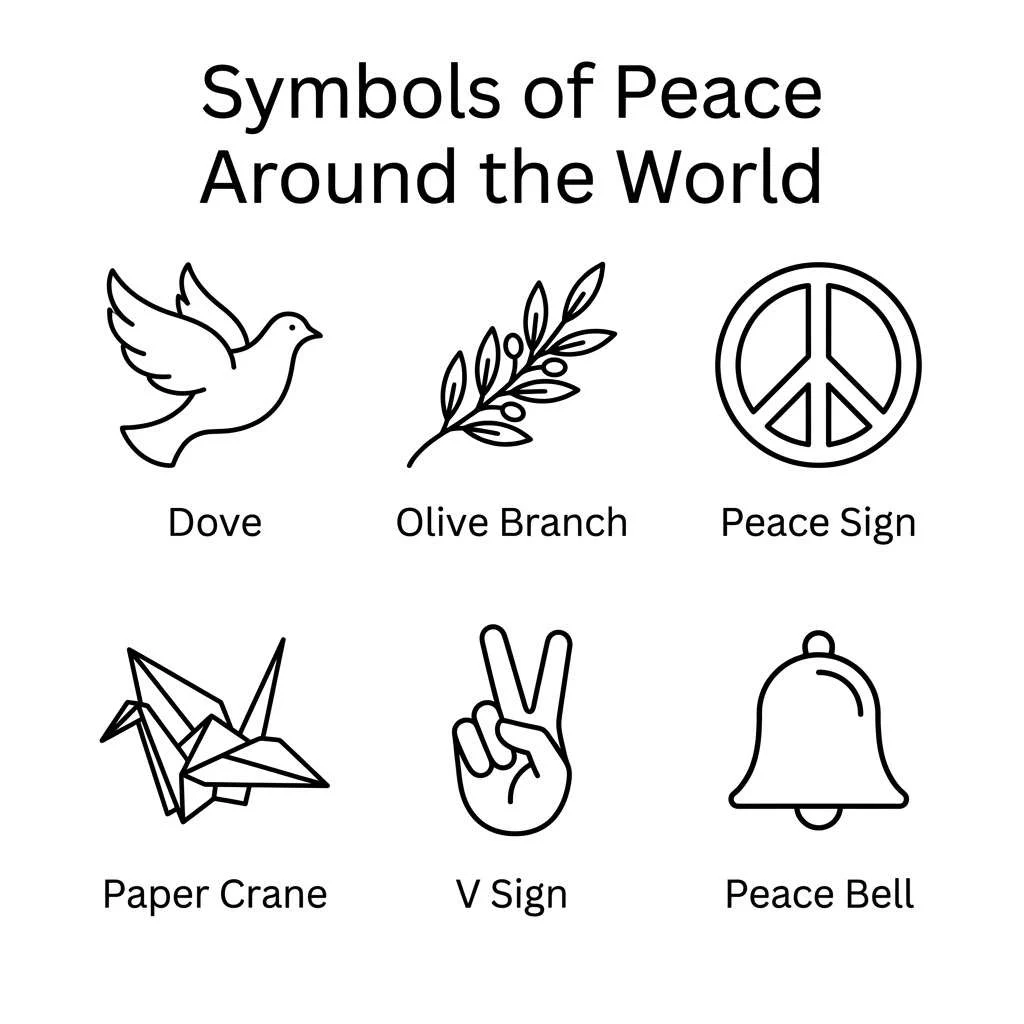
Symbols of Peace Around the World
The Peace Sign
The peace sign is one of the most recognized symbols in history.
☮
Originally created in 1958 for nuclear disarmament campaigns in Britain, it later became a global icon of nonviolence and antiwar movements.
Meaning
- Global peace
- Nonviolence
- Human rights
- Unity among nations
Psychological Symbolism
Its simple design creates a sense of openness and connection, making it easy to recognize across cultures.
The Dove
The dove is perhaps the oldest and most beloved peace symbol.
🕊️
In many traditions, the dove represents purity, hope, and divine protection.
Meaning
- Peace and harmony
- Innocence
- New beginnings
- Reconciliation
The image of a dove carrying an olive branch became especially popular after religious stories and international peace movements adopted it.
The Olive Branch
The olive branch has symbolized peace for thousands of years.
Ancient Mediterranean cultures viewed the olive tree as sacred because it provided food, oil, and economic stability.
Meaning
- Friendship
- Reconciliation
- Prosperity
- End of conflict
Even today, offering an olive branch means seeking peaceful resolution.
The White Flag
A white flag is universally recognized as a request for peace or negotiation.
Meaning
- Truce
- Surrender without violence
- Mutual respect
- Desire for dialogue
Its simplicity makes it one of the strongest symbols of peaceful intentions.
Animal Symbols of Peace
Animals often represent qualities humans admire. Many cultures associate specific animals with peaceful behavior.
Dove
The dove remains the most famous peace animal worldwide.
Swan
Swans symbolize grace, purity, and emotional balance.
Meaning
- Inner peace
- Loyalty
- Harmony
In European folklore, swans often represent spiritual tranquility.
Crane
The crane holds special significance in Asia.
Meaning
- Long life
- Wisdom
- Peaceful living
Japanese traditions frequently use cranes in peace ceremonies and artwork.
Deer
Many cultures view deer as gentle creatures.
Meaning
- Kindness
- Innocence
- Calmness
The deer often symbolizes peaceful coexistence with nature.
Elephant
In some Asian traditions, elephants represent wisdom and stable leadership.
Meaning
- Strength without aggression
- Patience
- Community harmony
Nature Symbols of Peace
Nature provides some of humanity’s most meaningful peace symbols.
Olive Tree
The olive tree itself symbolizes endurance and harmony.
Some olive trees survive for hundreds of years, making them symbols of lasting peace.
Lotus Flower
The lotus is deeply respected in Eastern traditions.
🌸
Meaning
- Spiritual peace
- Purity
- Personal growth
- Enlightenment
The flower rises through muddy water and blooms beautifully, representing peace achieved through challenges.
Rainbow
The rainbow often symbolizes hope after difficult times.
Meaning
- Renewal
- Unity
- Promise
- Harmony
Many cultures view rainbows as bridges between worlds or signs of brighter days ahead.
Bamboo
Bamboo symbolizes flexibility and resilience.
Meaning
- Balance
- Calm strength
- Adaptability
Its ability to bend without breaking makes it a powerful symbol of peaceful endurance.
Objects and Actions That Represent Peace
Lighting a Candle
A candle often represents hope and peaceful reflection.
Meaning
- Inner calm
- Spiritual guidance
- Healing
Many peace ceremonies include candle lighting.
Handshake
The handshake has long symbolized trust and cooperation.
Meaning
- Agreement
- Respect
- Friendship
It visually demonstrates the willingness to work together.
Open Hands
Open hands communicate honesty and nonaggression.
Meaning
- Acceptance
- Generosity
- Understanding
Circle
The circle is an ancient symbol of unity.
Meaning
- Wholeness
- Equality
- Infinite connection
Many peace organizations use circular designs because they suggest inclusion and balance.
Ancient Symbols of Peace From Different Cultures
Yin Yang
Originating in ancient Chinese philosophy, Yin Yang represents balance.
☯
Meaning
- Harmony between opposites
- Balance in life
- Peace through equilibrium
The symbol teaches that true peace comes from understanding opposing forces.
Ankh
Ancient Egyptians used the Ankh as a symbol of life.
Meaning
- Vitality
- Spiritual balance
- Eternal harmony
Many historians connect it to peaceful existence and divine protection.
Tree of Life
Found in numerous cultures, the Tree of Life symbolizes interconnectedness.
Meaning
- Growth
- Unity
- Stability
Its branches and roots reflect the connection between all living things.
Native American Peace Pipe
Several Indigenous communities used ceremonial pipes to establish peace agreements.
Meaning
- Respect
- Unity
- Sacred commitment
These ceremonies often marked important moments of reconciliation.
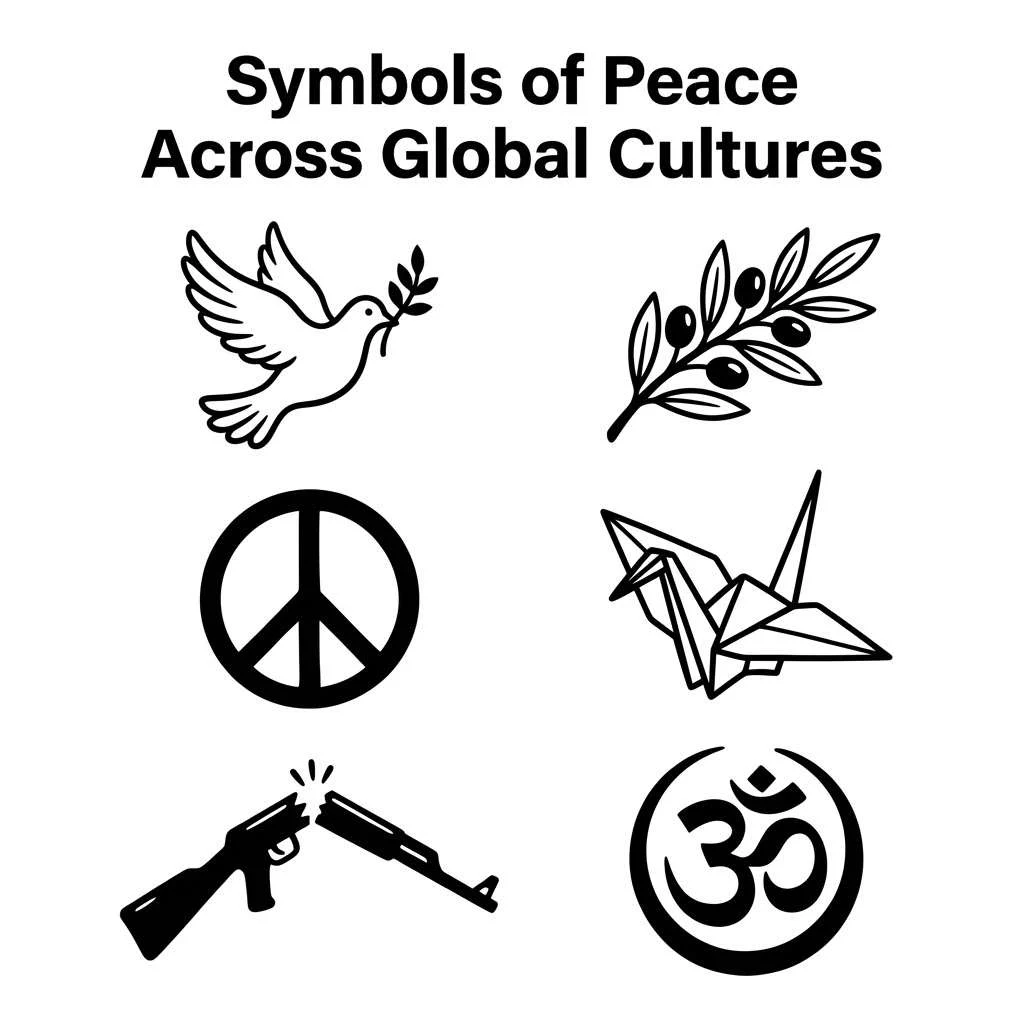
Symbols of Peace Across Global Cultures
United States
Common peace symbols include:
- Peace sign
- Dove
- White dove tattoos
- Olive branch
These became especially prominent during twentieth century peace movements.
Europe
European traditions often emphasize:
- Olive branches
- White doves
- Laurel wreaths
Ancient Greek and Roman influences remain strong.
Asia
Asian cultures frequently use:
- Lotus flower
- Yin Yang
- Bamboo
- Crane
These symbols often connect peace with spiritual balance.
Africa
Many African traditions use symbolic patterns, trees, and community imagery.
Peace often focuses on collective well being and social harmony.
Indigenous Traditions
Many Indigenous cultures see peace as living in balance with nature, family, and community.
Their symbols often emphasize interconnectedness instead of individual achievement.
Spiritual Meaning of Peace Symbols
Beyond their visual appearance, peace symbols carry profound spiritual messages.
Inner Peace
Many symbols remind us that peace begins within.
Without inner calm, lasting harmony becomes difficult to achieve.
Forgiveness
Symbols such as the dove and olive branch often encourage reconciliation.
Forgiveness creates emotional freedom and reduces conflict.
Connection
Spiritual traditions frequently teach that peace comes from recognizing our connection to others.
Transformation
The lotus flower is a perfect example of transformation leading to peace.
It teaches that growth often emerges from adversity.
Peace Symbolism in Literature and Popular Culture
Writers, filmmakers, and artists frequently use peace symbols to communicate deeper themes.
Literature
Authors often use:
- Doves
- Olive branches
- White flowers
- Calm landscapes
These elements symbolize reconciliation, hope, and healing.
Movies
Peace symbols often appear after conflicts are resolved.
Examples include:
- Sunrise scenes
- Flying birds
- Open skies
- Growing trees
Art
Artists use peaceful imagery to inspire reflection and social change.
The dove remains one of the most reproduced peace images in modern art.
Symbols of Peace in Everyday Life
You may encounter peace symbols more often than you realize.
Jewelry
Peace necklaces, bracelets, and pendants remain popular worldwide.
Home Decor
Many people display:
- Lotus artwork
- Dove paintings
- Peace signs
- Nature imagery
Schools and Communities
Educational programs often use peace symbols to promote cooperation and kindness.
Social Media
Peace emojis and symbolic imagery help communicate support, compassion, and understanding.
Peace Symbol Tattoo Ideas and Personal Meanings
Peace tattoos are popular because they combine beauty with powerful personal significance.
Dove Tattoo
Represents:
- Freedom
- Forgiveness
- New beginnings
Peace Sign Tattoo
Represents:
- Nonviolence
- Activism
- Personal values
Lotus Tattoo
Represents:
- Inner peace
- Personal growth
- Spiritual awakening
Olive Branch Tattoo
Represents:
- Reconciliation
- Hope
- Harmony
Yin Yang Tattoo
Represents:
- Balance
- Self awareness
- Life harmony
Many people choose these designs to remind themselves of their commitment to peaceful living.
The Most Universal Symbols of Peace
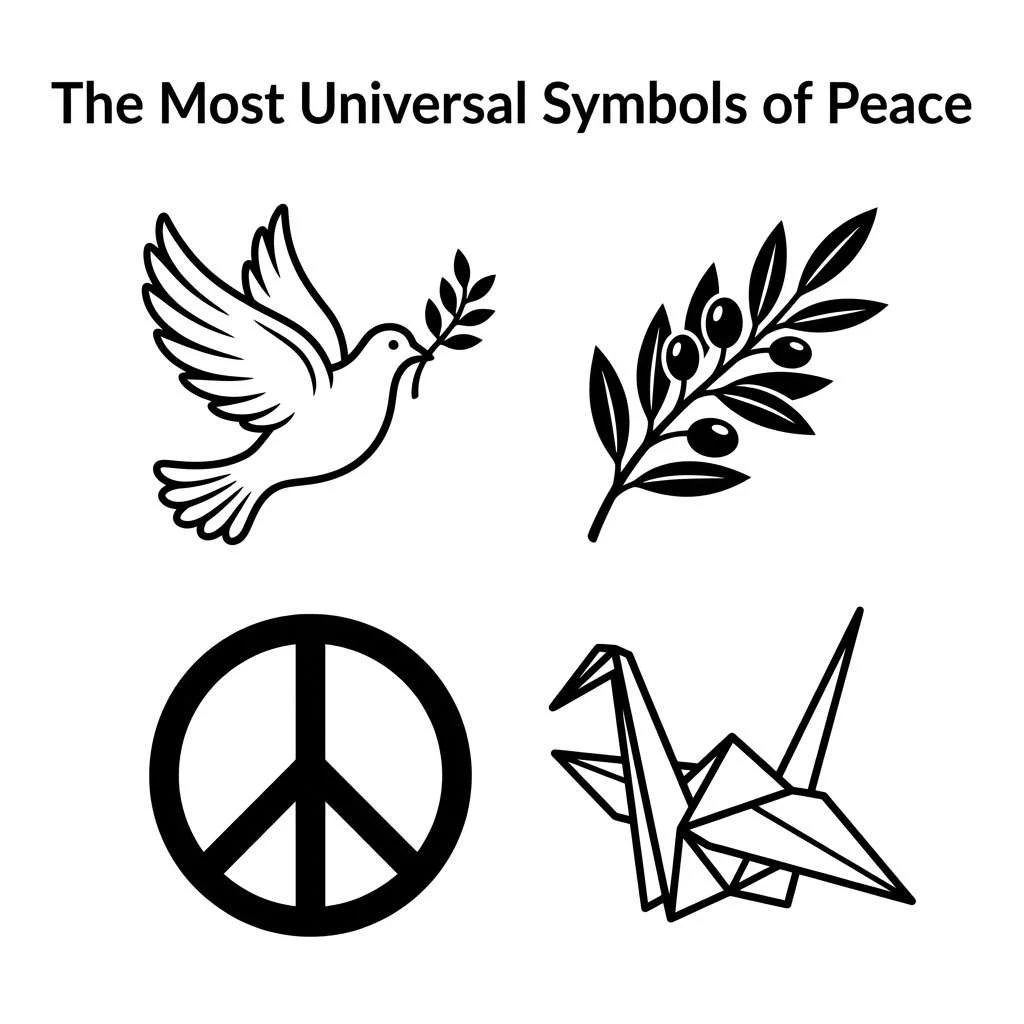
Some symbols transcend language and cultural barriers.
The most universally recognized include:
- Dove
- Olive branch
- Peace sign
- White flag
- Lotus flower
- Rainbow
- Yin Yang
These symbols continue to communicate hope and harmony across continents and generations.
How to Create or Draw a Symbol of Peace?
Creating your own peace symbol can be meaningful and creative.
Step 1: Choose Core Values
Decide what peace means to you:
- Harmony
- Unity
- Forgiveness
- Balance
- Hope
Step 2: Select Symbolic Elements
Combine meaningful imagery such as:
- Circles
- Leaves
- Birds
- Water
- Flowers
Step 3: Use Soft Shapes
Rounded shapes often feel more peaceful than sharp angles.
Step 4: Keep It Simple
The strongest symbols are usually easy to recognize and remember.
Step 5: Add Personal Meaning
Include colors, patterns, or elements that reflect your own experiences and values.
Why Peace Symbols Still Matter Today
In a world filled with constant information and challenges, symbols of peace continue to serve an important purpose.
They remind us that understanding is stronger than hostility. They encourage empathy during disagreement and hope during difficult times. These symbols connect people from different backgrounds through a shared desire for harmony.
Their lasting power comes from their simplicity. A small image can inspire kindness, encourage dialogue, and remind us of our common humanity.
Frequently Asked Questions
What is the most famous symbol of peace?
The peace sign and the dove are the most widely recognized symbols of peace around the world.
Why is a dove a symbol of peace?
The dove represents purity, hope, and reconciliation. Its gentle nature helped it become associated with peaceful intentions.
What flower symbolizes peace?
The lotus flower is one of the strongest floral symbols of peace, especially in Asian spiritual traditions.
What color represents peace?
White is the most common color associated with peace because it symbolizes purity, calmness, and unity.
Is the olive branch still a peace symbol today?
Yes. The olive branch remains a universal symbol of reconciliation, friendship, and peaceful resolution.
What animal represents peace besides a dove?
Swans, cranes, deer, and elephants are also associated with peace, harmony, and gentle strength.
Conclusion
Symbols of peace have guided humanity for thousands of years, carrying messages of hope, harmony, and understanding across cultures. From the dove and olive branch to the lotus flower and peace sign, each symbol tells a unique story about our desire for a more balanced world.
Their meanings continue to inspire people in everyday life, spiritual practice, art, and personal expression. By understanding these powerful symbols, we gain a deeper appreciation for the values they represent. Peace begins with awareness, and symbols help keep that vision alive for future generations.

Andrew Clark is a dedicated writer and researcher with a deep passion for symbols, their hidden meanings, and the stories they carry across cultures and time. With years of study and curiosity-driven exploration, he simplifies complex symbolic concepts into clear and engaging insights that help readers connect with deeper meanings in everyday life.
He is the author of “Hidden Codes of Human Symbols” and “The Secret Patterns of Ancient Signs”, two original works that explore the spiritual, historical, and psychological layers behind symbols. His writing blends clarity with depth, making even the most complex symbolic interpretations feel simple and meaningful.
Through his work on this website, Andrew aims to guide readers toward understanding the true essence of symbols, whether they appear in dreams, ancient traditions, or modern life. His goal is simple: to help you see beyond the surface and discover the powerful messages hidden in plain sight.
 Sophia Bennett
 Ryan Scott