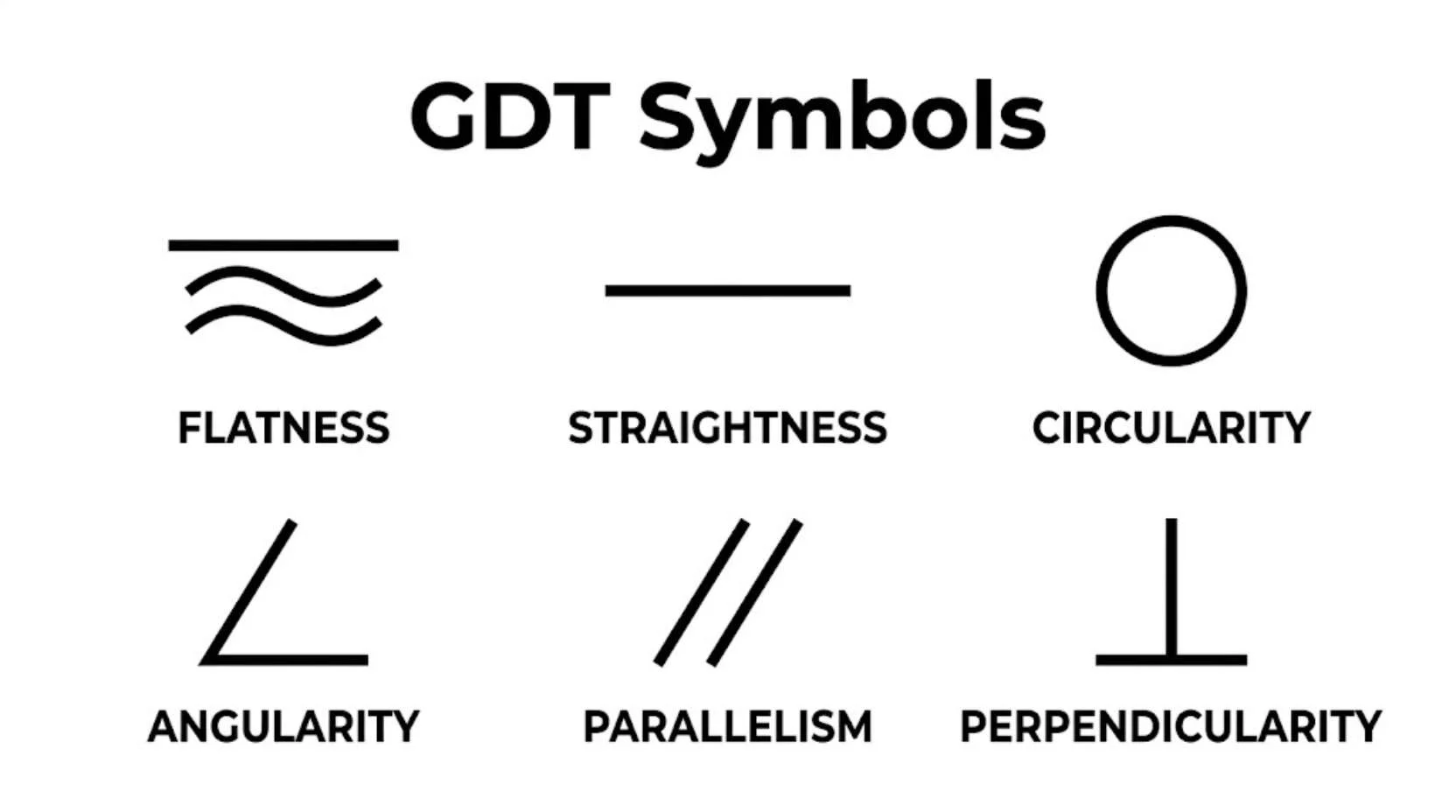
Geometric Dimensioning and Tolerancing, commonly known as GDT symbols, play a critical role in modern engineering and manufacturing.
If you have ever looked at a technical drawing and felt confused by strange geometric shapes, circles, lines and symbols, you are not alone. These symbols act as a universal language that helps engineers, machinists, designers, and quality inspectors communicate with precision.
Understanding GDT symbols is far more than learning technical markings. They represent accuracy, quality, consistency, and functionality in products that shape our daily lives.
From aircraft and automobiles to smartphones and medical devices, GDT symbols ensure every part works exactly as intended. This guide reveals the meaning, purpose, history, and practical applications of these powerful engineering symbols in a simple and easy-to-understand way.
Quick Answer
GDT symbols are standardized geometric symbols used in engineering drawings to define the allowable variation in the form, orientation, location, and profile of manufactured parts. They help ensure accuracy, consistency, and proper assembly by providing clear instructions beyond traditional dimensions.
What Are GDT Symbols?
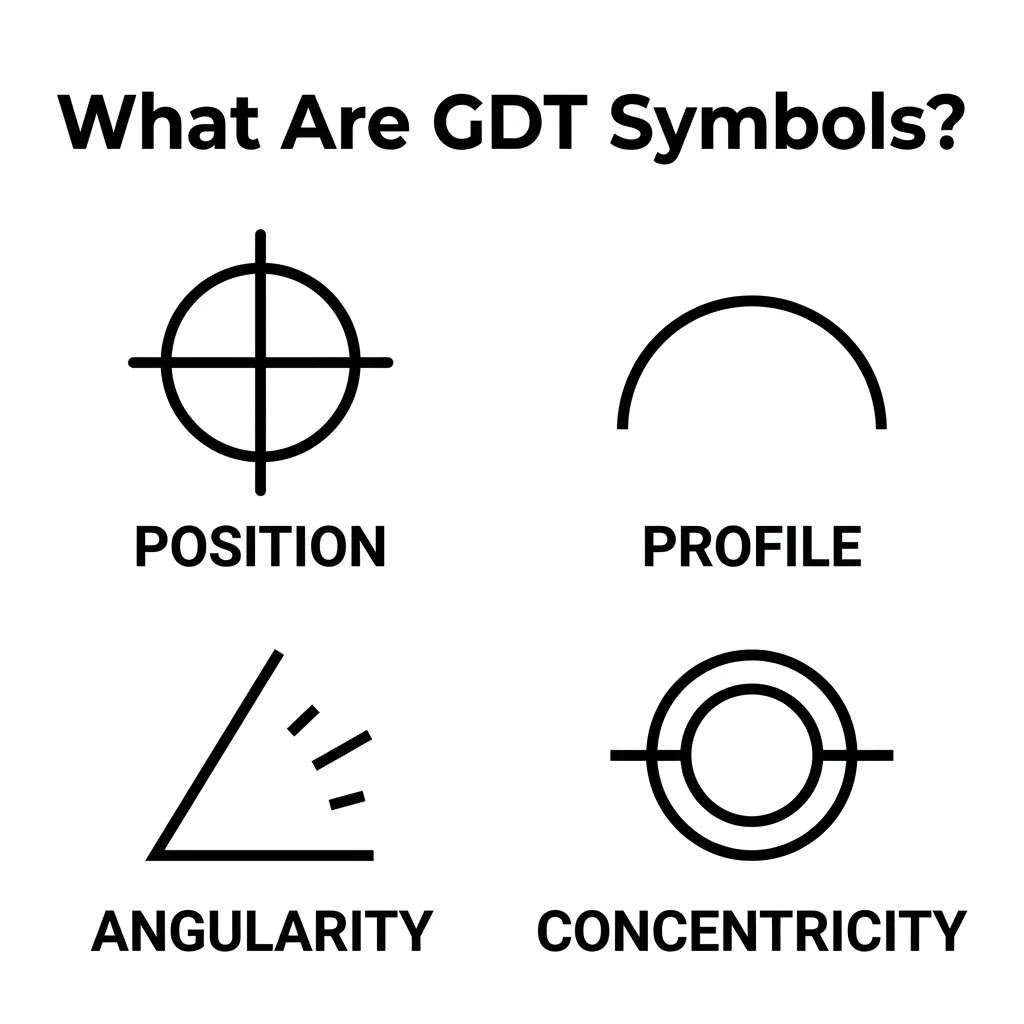
GDT stands for Geometric Dimensioning and Tolerancing, a symbolic system used on engineering drawings and blueprints.
Instead of relying only on measurements such as length, width, and height, GDT symbols describe how a feature should be shaped, positioned, and oriented.
These symbols help answer important questions:
- How flat should a surface be?
- How straight should an edge remain?
- How accurately should holes align?
- How much variation is acceptable?
Without GDT symbols, manufacturers could interpret drawings differently, leading to expensive errors and defective products.
Why GDT Symbols Matter
GDT symbols provide:
- Improved communication
- Better product quality
- Reduced manufacturing costs
- Easier inspection processes
- Greater consistency across production runs
- Enhanced product performance
Today, industries around the world depend on GDT symbols to maintain precision and reliability.
What Makes Something a Symbol in GDT?
A symbol in Geometric Dimensioning and Tolerancing represents a specific geometric characteristic that must be controlled during manufacturing.
Unlike ordinary symbols used in culture, religion, or communication, GDT symbols have a technical purpose.
A valid GDT symbol must:
- Have a standardized meaning
- Be recognized internationally
- Represent a measurable feature
- Help define manufacturing requirements
- Support inspection and quality control
Each symbol conveys detailed information using a compact visual format.
History and Evolution of GDT Symbols
The need for precision increased dramatically during the Industrial Revolution.
As machines became more complex, manufacturers required a universal system to communicate exact specifications.
Early Manufacturing Challenges
Before standardized symbols:
- Drawings were interpreted differently
- Parts often failed to fit together
- Quality varied between factories
- Production costs increased
Development of Modern GDT
The modern GDT system evolved through military and aerospace requirements.
Major milestones include:
| Period | Development |
| Early 1900s | Basic tolerancing methods |
| 1940s | Military standardization efforts |
| 1950s | Formal geometric tolerancing systems |
| 1970s | Widespread industrial adoption |
| Modern Era | International ISO and ASME standards |
Today, GDT symbols are recognized worldwide.
Most Famous and Important GDT Symbols
The GDT system contains many symbols, but several are considered fundamental.
Form Control Symbols
Form controls regulate the shape of individual features.
Straightness Symbol
Straightness ensures a line or surface remains straight within a specified tolerance.
Applications include:
- Machine shafts
- Guide rails
- Structural components
Meaning:
- Prevents unwanted bending
- Ensures smooth movement
- Improves functionality
Flatness Symbol
Flatness controls how much a surface can deviate from a perfectly flat plane.
Common examples:
- Engine blocks
- Mounting surfaces
- Precision machine tables
Benefits:
- Better assembly
- Improved sealing
- Enhanced performance
Circularity Symbol
Circularity controls the roundness of circular features.
Used for:
- Bearings
- Pistons
- Rotating shafts
Cylindricity Symbol
Cylindricity combines circularity and straightness.
It ensures a cylinder maintains its ideal shape throughout its length.
Profile Control Symbols
Profile symbols define complex shapes and contours.
Profile of a Line
Controls the shape of a specific cross section.
Used in:
- Aerospace components
- Turbine blades
- Specialized machine parts
Profile of a Surface
Controls an entire three-dimensional surface.
Benefits include:
- Improved aerodynamic performance
- Better fit between components
- Increased manufacturing consistency
Orientation Symbols and Their Meaning
Orientation controls define how features relate to reference surfaces called datums.
Parallelism Symbol
Parallelism ensures surfaces remain parallel to a datum.
Applications:
- Machine guides
- Assembly components
- Structural systems
Perpendicularity Symbol
Perpendicularity ensures features form a precise 90-degree relationship.
Common examples:
- Brackets
- Frames
- Machine housings
Angularity Symbol
Angularity controls features positioned at specified angles.
Used in:
- Aerospace assemblies
- Mechanical linkages
- Automotive systems
Position Symbols and Location Controls
Location controls manage the placement of features.
Position Symbol
The position symbol is among the most important GDT symbols.
It controls:
- Hole locations
- Pin locations
- Slot positions
Advantages:
- Higher assembly accuracy
- Reduced production errors
- Better interchangeability
Concentricity Symbol
Concentricity ensures features share a common center axis.
Examples:
- Shafts
- Bearings
- Rotating machinery
Symmetry Symbol
Symmetry controls balanced placement around a center plane.
Benefits:
- Improved appearance
- Better mechanical performance
- Reduced vibration
Runout Symbols and Rotational Accuracy
Runout controls are critical for rotating components.
Circular Runout
Controls variation during rotation at a single cross section.
Used in:
- Motor shafts
- Gears
- Precision spindles
Total Runout
Controls the entire surface during rotation.
Benefits include:
- Smooth operation
- Reduced wear
- Increased reliability
The Role of Datums in GDT Symbolism
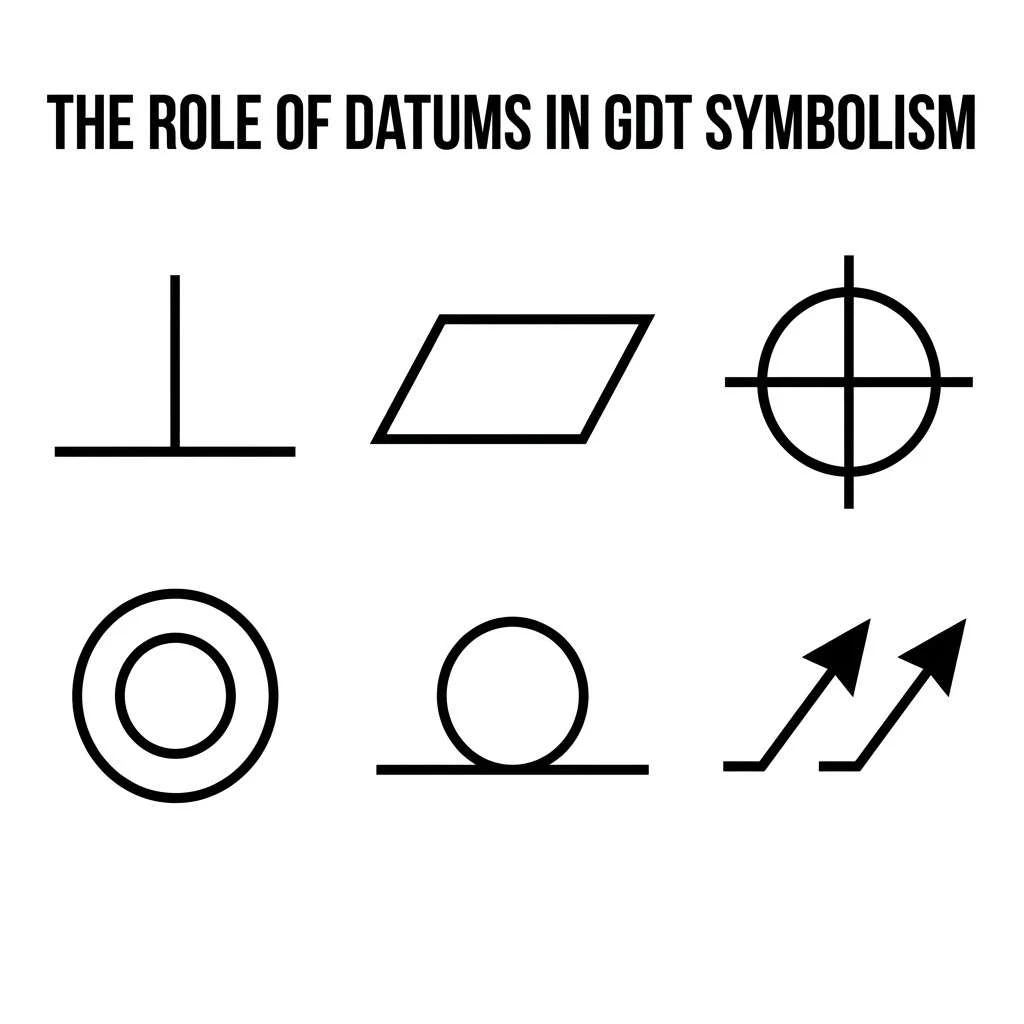
Datums act as reference points for measurement.
Think of them as the foundation of the entire GDT system.
Without datums:
- Measurements become inconsistent
- Inspections become unreliable
- Manufacturing errors increase
Common Datum Types
Primary Datum
The main reference surface.
Secondary Datum
Provides additional orientation.
Tertiary Datum
Completes the coordinate system.
Datums create a common language between design, manufacturing, and inspection teams.
Objects and Actions Represented by GDT Symbols
Unlike cultural symbols that represent emotions or beliefs, GDT symbols represent physical manufacturing requirements.
Objects Commonly Controlled
- Shafts
- Bearings
- Holes
- Gears
- Brackets
- Frames
- Engine components
- Aircraft parts
Actions Represented
GDT symbols help guide:
- Measuring
- Machining
- Assembly
- Inspection
- Quality control
- Product verification
Every symbol communicates a specific action required to achieve product quality.
Ancient and Global Symbolism of Precision
Although GDT symbols are modern, the concept of precision has ancient roots.
Ancient Egypt
Builders used precise measurements to construct pyramids.
Precision symbolized:
- Order
- Perfection
- Divine harmony
Ancient Greece
Greek architects valued geometric accuracy.
Geometry represented:
- Balance
- Knowledge
- Mathematical beauty
Asia
Traditional Asian craftsmanship emphasized exact proportions.
Examples include:
- Japanese sword making
- Chinese architecture
- Korean metalworking
Europe
The Renaissance sparked advances in engineering drawings and technical communication.
Modern GDT symbols continue this tradition of precision and craftsmanship.
Psychological Meaning Behind GDT Symbols
Every symbol carries psychological significance.
GDT symbols represent:
- Accuracy
- Discipline
- Structure
- Reliability
- Trust
- Professionalism
For engineers and machinists, these symbols provide confidence that products will function correctly.
Humans naturally seek order and predictability. GDT symbols satisfy this need by reducing uncertainty.
Why People Respect Precision
Psychologically, precision is associated with:
- Competence
- Intelligence
- Quality
- Safety
- Excellence
This explains why industries place such importance on geometric tolerancing.
Spiritual Interpretation of Precision and Geometry
While GDT symbols are technical rather than spiritual, geometry has long held symbolic significance.
Many cultures associate geometric perfection with:
- Universal order
- Harmony
- Balance
- Creation
- Wisdom
Throughout history, circles, squares, and symmetrical forms have represented deeper truths about existence.
In this sense, GDT symbols reflect humanity’s pursuit of perfection through measurement and design.
GDT Symbols in Literature and Popular Culture
Technical symbols occasionally appear in literature and media.
Science Fiction
Engineering symbols often symbolize:
- Advanced technology
- Innovation
- Human progress
Industrial Narratives
Stories involving manufacturing frequently use technical drawings as symbols of creation and problem solving.
Educational Media
Engineering textbooks and documentaries highlight GDT symbols as essential tools of modern industry.
These symbols have become visual representations of technical expertise.
GDT Symbols in Everyday Life
Many people encounter products controlled by GDT symbols without realizing it.
Examples include:
- Cars
- Airplanes
- Smartphones
- Laptops
- Watches
- Medical equipment
- Kitchen appliances
- Power tools
Whenever a product fits together perfectly, GDT symbols likely played a role in its creation.
Hidden Impact on Daily Life
GDT symbols help ensure:
- Doors close properly
- Engines run smoothly
- Electronics function reliably
- Medical devices remain safe
Their influence is everywhere.
Universal and Most Recognized GDT Symbols
Some symbols appear more frequently than others.
Top GDT Symbols Used Worldwide
| Symbol Category | Importance |
| Position | Extremely High |
| Flatness | Very High |
| Straightness | Very High |
| Perpendicularity | Very High |
| Parallelism | High |
| Circularity | High |
| Profile | High |
| Runout | High |
These symbols form the foundation of modern geometric tolerancing.
GDT Symbol Tattoo Ideas

Although uncommon, some engineers and machinists choose GDT-inspired tattoos.
Popular ideas include:
Position Symbol Tattoo
Represents:
- Purpose
- Precision
- Direction in life
Flatness Symbol Tattoo
Represents:
- Stability
- Balance
- Consistency
Perpendicularity Symbol Tattoo
Represents:
- Strong principles
- Integrity
- Structure
Geometric Blueprint Tattoo
Represents:
- Engineering passion
- Creativity
- Innovation
Such tattoos often carry personal meaning connected to a career in manufacturing or design.
How to Read GDT Symbols Correctly?
Reading GDT symbols requires understanding the feature control frame.
Step 1: Identify the Symbol
Determine the geometric characteristic being controlled.
Step 2: Read the Tolerance Value
Find the allowable variation.
Step 3: Check Datums
Identify reference features.
Step 4: Understand the Controlled Feature
Determine what part of the component is affected.
Step 5: Interpret the Requirement
Combine all information to understand the manufacturing specification.
Practice and experience make interpretation easier over time.
How to Create or Draw GDT Symbols
Creating GDT symbols requires following established standards.
Manual Drawing Method
- Draw the feature control frame.
- Add the appropriate symbol.
- Insert tolerance values.
- Include datum references.
- Connect the frame to the controlled feature.
CAD Software Method
Most modern CAD programs include built-in GDT tools.
Popular software includes:
- AutoCAD
- SolidWorks
- CATIA
- Fusion 360
- Creo
These programs ensure symbols comply with industry standards.
Tips for Accurate Symbol Creation
- Follow ASME standards
- Use consistent formatting
- Verify datum references
- Check tolerance values
- Maintain drawing clarity
Common Mistakes When Using GDT Symbols
Engineers sometimes make avoidable errors.
Frequent Problems
- Missing datum references
- Incorrect tolerance values
- Over-tolerancing
- Misinterpreting symbols
- Using unnecessary controls
Avoiding these mistakes saves time and manufacturing costs.
Benefits of Learning GDT Symbols
Learning GDT symbols provides valuable career advantages.
For Engineers
- Better designs
- Improved communication
- Stronger technical skills
For Machinists
- Easier interpretation of drawings
- Higher quality work
- Fewer manufacturing errors
For Inspectors
- More accurate measurements
- Consistent quality control
- Improved documentation
Understanding these symbols makes professionals more effective across multiple industries.
Frequently Asked Questions
What are GDT symbols used for?
GDT symbols are used to define geometric tolerances on engineering drawings, ensuring parts are manufactured and inspected accurately.
What does GDT stand for?
GDT stands for Geometric Dimensioning and Tolerancing, a system that communicates design requirements using standardized symbols.
Which GDT symbol is most important?
The position symbol is often considered the most important because it controls the location of critical features such as holes and slots.
Are GDT symbols used internationally?
Yes. GDT symbols are widely recognized through ASME and ISO standards, making them useful across global industries.
Why are datums important in GDT?
Datums provide reference points that ensure measurements and inspections remain consistent.
Is learning GDT difficult?
Beginners may find it challenging at first, but understanding the core symbols and practicing with engineering drawings makes learning much easier.
Conclusion
GDT symbols are the foundation of precision engineering and modern manufacturing. These standardized geometric symbols help designers, machinists, and inspectors communicate complex requirements with remarkable clarity. From flatness and straightness to position and runout, every symbol contributes to product quality, reliability, and performance.
Their influence extends into aerospace, automotive, electronics, and countless other industries. By learning GDT symbols, professionals gain a deeper understanding of how accurate products are designed, built, and inspected in today’s technology driven world.

Andrew Clark is a dedicated writer and researcher with a deep passion for symbols, their hidden meanings, and the stories they carry across cultures and time. With years of study and curiosity-driven exploration, he simplifies complex symbolic concepts into clear and engaging insights that help readers connect with deeper meanings in everyday life.
He is the author of “Hidden Codes of Human Symbols” and “The Secret Patterns of Ancient Signs”, two original works that explore the spiritual, historical, and psychological layers behind symbols. His writing blends clarity with depth, making even the most complex symbolic interpretations feel simple and meaningful.
Through his work on this website, Andrew aims to guide readers toward understanding the true essence of symbols, whether they appear in dreams, ancient traditions, or modern life. His goal is simple: to help you see beyond the surface and discover the powerful messages hidden in plain sight.
 Sophia Bennett
 Ryan Scott