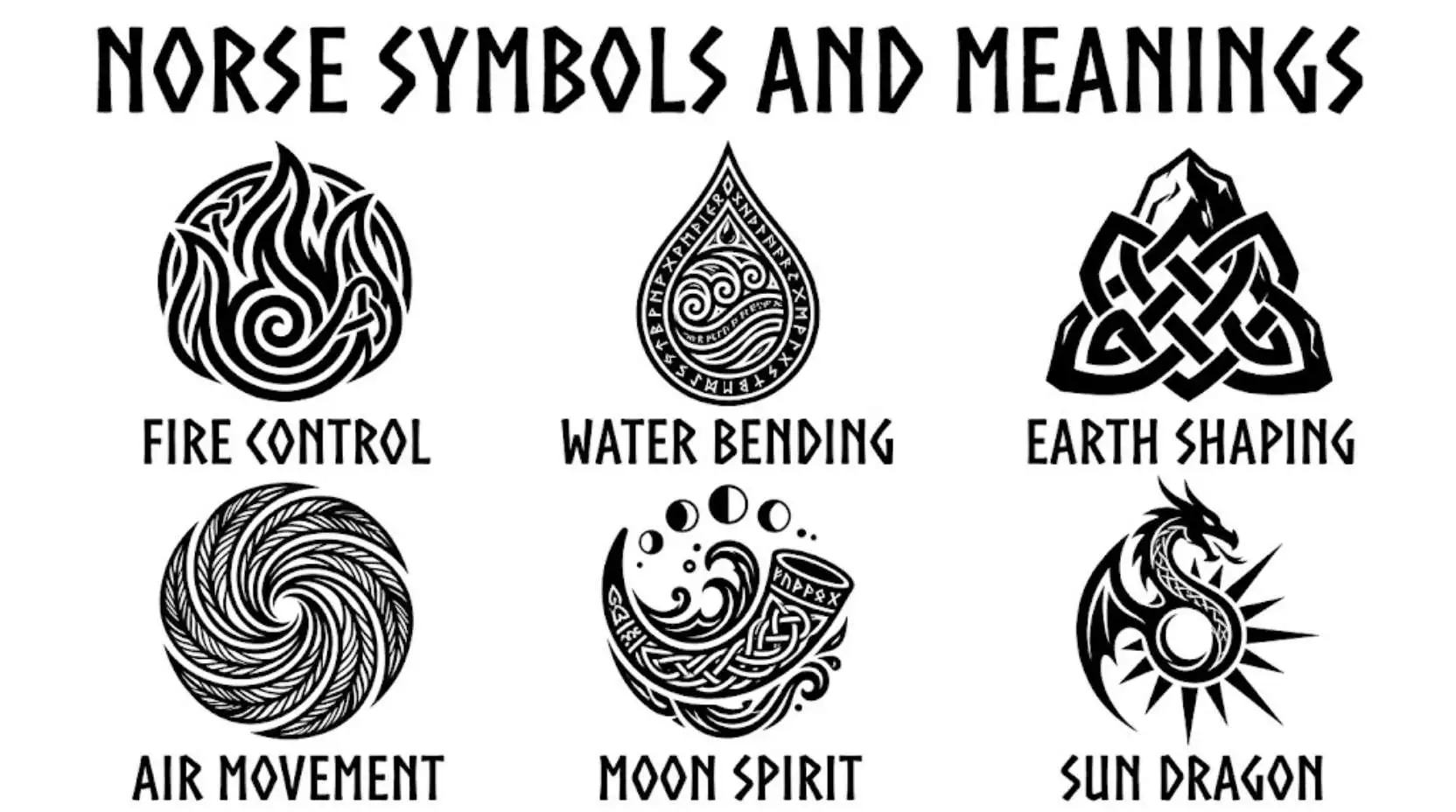
“Norse symbols and meanings” have fascinated people for centuries. These ancient signs are more than decorative designs. They carry stories of courage, destiny, protection, wisdom, and the powerful forces of nature.
From Viking warriors sailing unknown seas to modern people choosing meaningful tattoos, Norse symbols continue to inspire and connect us with a rich cultural heritage. Many of these symbols were believed to hold spiritual power.
They represented gods, cosmic balance, personal strength, and the mysteries of life. Understanding their meanings helps us uncover the beliefs, values, and emotions of the Norse people while discovering lessons that still resonate today.
In this guide, you will explore the most important Norse symbols, their origins, spiritual significance, psychological meanings, cultural impact, and how they continue to influence art, literature, fashion and personal expression around the world.
Quick Answer
Norse symbols are ancient signs used by the Vikings and Norse people to represent protection, strength, wisdom, fate, spirituality, and the connection between humans, gods, and nature. Some of the most famous Norse symbols include the Valknut, Yggdrasil, Vegvisir, Helm of Awe, Mjolnir, and the runes, each carrying unique cultural and spiritual meanings.
What Makes Something a Norse Symbol?
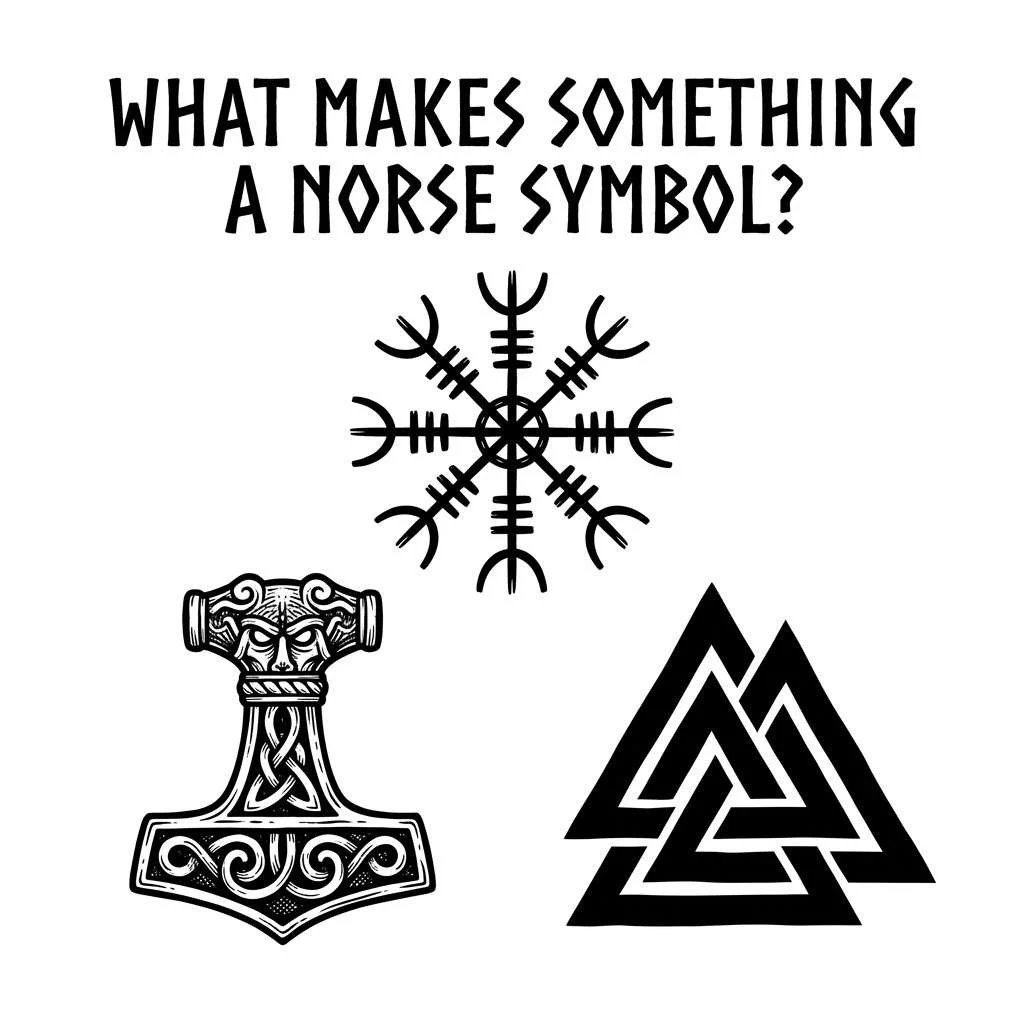
A Norse symbol is a visual representation connected to Norse mythology, Viking culture, religious beliefs, or ancient Scandinavian traditions. These symbols were often carved into stone, weapons, jewelry, ships, and sacred objects.
A true Norse symbol usually reflects one or more of these ideas:
- Strength and bravery
- Protection from danger
- Connection to gods
- Fate and destiny
- Wisdom and knowledge
- Nature and the cosmos
- Life, death, and rebirth
For the Vikings, symbols were not simply artwork. They carried powerful messages and often served as reminders of personal values and spiritual beliefs.
The Most Famous Norse Symbols and Their Meanings
Valknut Symbol
The Valknut consists of three interlocking triangles.
Meaning of the Valknut
The Valknut is often associated with:
- Odin, the chief Norse god
- Death and the afterlife
- Fallen warriors
- Spiritual transformation
- Courage in battle
Psychologically, the Valknut represents acceptance of life’s challenges and the understanding that every ending creates a new beginning.
Yggdrasil, The Tree of Life
Yggdrasil is one of the most important symbols in Norse mythology.
What Does Yggdrasil Represent?
Yggdrasil symbolizes:
- The interconnectedness of all things
- Growth and wisdom
- Balance between worlds
- The cycle of life
According to Norse beliefs, Yggdrasil connected the Nine Worlds and served as the center of the universe.
Many people today see it as a symbol of personal growth and inner strength.
Mjolnir, Thor’s Hammer
Mjolnir is the legendary hammer wielded by Thor.
Meaning of Mjolnir
Thor’s hammer symbolizes:
- Protection
- Strength
- Power
- Blessings
- Courage
Vikings often wore Mjolnir pendants for protection. Today, it remains one of the most recognized Viking symbols worldwide.
Vegvisir, The Viking Compass
The Vegvisir is commonly called the Viking compass.
Spiritual Meaning of Vegvisir
It represents:
- Guidance
- Direction
- Safe journeys
- Finding your path
- Hope during difficult times
Many modern interpretations view the Vegvisir as a reminder to stay true to your purpose even during uncertainty.
Helm of Awe
The Helm of Awe is a powerful protective symbol.
Meaning of the Helm of Awe
It symbolizes:
- Fearlessness
- Protection
- Confidence
- Mental strength
- Victory
Ancient warriors believed this symbol could help them overcome fear and intimidate enemies.
Today, it often represents resilience and determination.
Norse Runes
Runes were the writing system of ancient Germanic and Norse peoples.
What Do Runes Symbolize?
Each rune carries a unique meaning.
Examples include:
| Rune | Meaning |
| Fehu | Wealth and prosperity |
| Uruz | Strength and vitality |
| Ansuz | Wisdom and communication |
| Raidho | Journey and movement |
| Kenaz | Knowledge and creativity |
| Algiz | Protection and defense |
Runes were used for communication, divination, and spiritual practices.
Animal Symbols in Norse Mythology
Animals played a major role in Norse beliefs and symbolism.
Ravens
Odin’s ravens, Huginn and Muninn, are among the most famous Norse creatures.
Meaning of Ravens
They symbolize:
- Wisdom
- Memory
- Intelligence
- Observation
- Knowledge
The ravens traveled across the world and brought information back to Odin.
Wolves
Wolves appear frequently in Norse legends.
Wolf Symbolism
They represent:
- Power
- Survival
- Loyalty
- Freedom
- Wild nature
The wolf carries both positive and destructive meanings in Norse mythology.
Serpents and Dragons
Serpents symbolize cosmic forces and transformation.
Meaning of Serpents
They often represent:
- Rebirth
- Change
- Hidden wisdom
- Chaos
- Renewal
The Midgard Serpent is one of the most famous creatures in Norse mythology.
Bears
The bear was highly respected by Viking warriors.
Bear Symbolism
Bears represent:
- Courage
- Leadership
- Physical power
- Protection
- Endurance
Many elite warriors believed they carried the spirit of the bear into battle.
Eagles
Eagles symbolized higher knowledge and spiritual awareness.
They often represented:
- Vision
- Wisdom
- Freedom
- Divine connection
Nature Symbols in Norse Culture
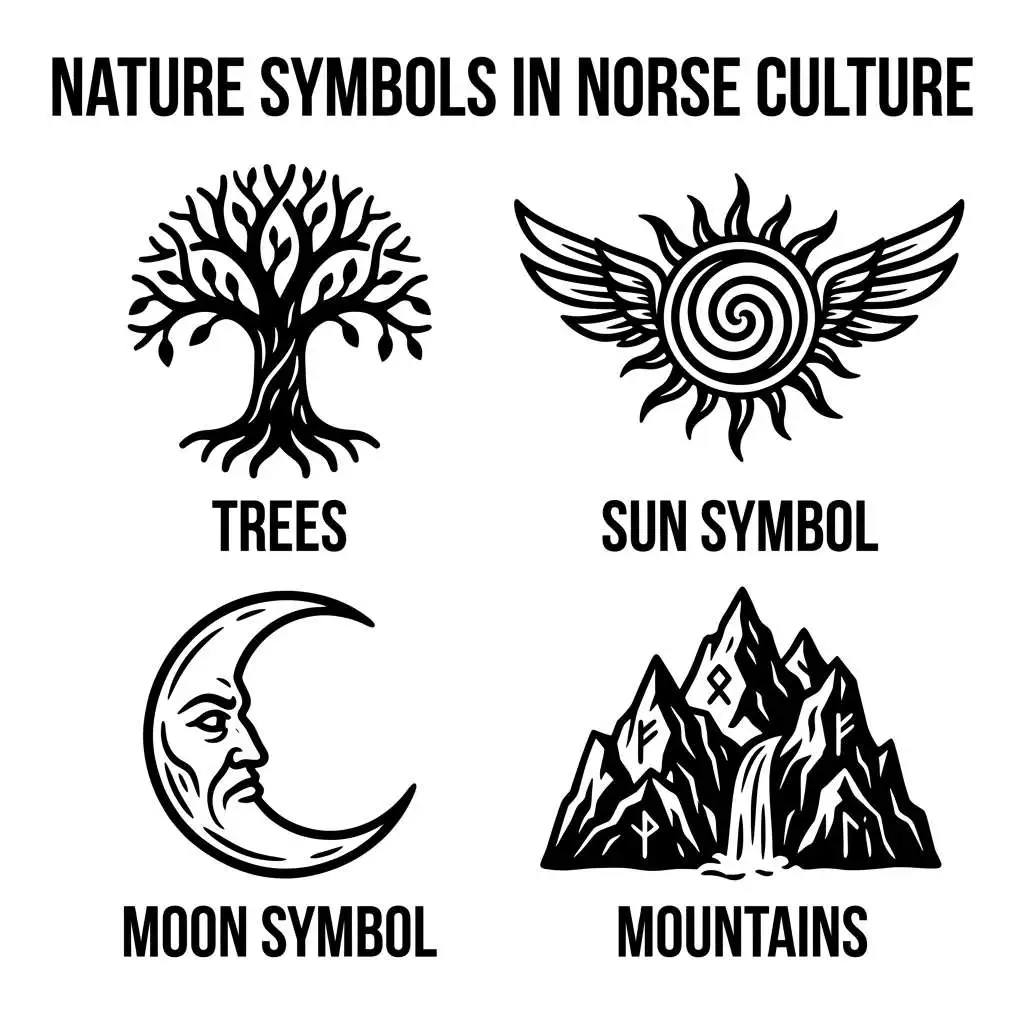
Nature held sacred significance for the Norse people.
Trees
Trees symbolized:
- Life
- Stability
- Wisdom
- Family roots
- Spiritual growth
Yggdrasil remains the ultimate example of tree symbolism.
Sun Symbol
The sun represented:
- Life
- Energy
- Hope
- Success
- Renewal
It played a central role in seasonal celebrations and agricultural life.
Moon Symbol
The moon symbolized:
- Time
- Intuition
- Cycles
- Mystery
- Reflection
Mountains
Mountains represented:
- Strength
- Permanence
- Endurance
- Connection between heaven and earth
Objects and Actions That Represent Norse Values
Many objects carried symbolic meaning in Viking society.
Viking Ships
Ships symbolized:
- Adventure
- Exploration
- Freedom
- Discovery
- Courage
They were essential to Viking culture and identity.
Swords
Swords represented:
- Honor
- Justice
- Responsibility
- Warrior spirit
A sword often reflected a person’s status and achievements.
Shields
Shields symbolized:
- Defense
- Unity
- Family protection
- Community strength
Fire
Fire represented:
- Transformation
- Passion
- Purification
- Survival
It was essential for daily life and spiritual ceremonies.
Ancient and Cultural Norse Symbols Around the World
Although Norse symbols originated in Scandinavia, similar symbolic themes appear globally.
Europe
European traditions often connect symbols with:
- Kingship
- Nature spirits
- Sacred trees
- Warrior culture
Asia
Many Asian cultures use symbols representing:
- Balance
- Spiritual journeys
- Cosmic order
These themes share similarities with Yggdrasil and Norse cosmology.
Africa
African symbolism frequently emphasizes:
- Ancestral wisdom
- Community
- Protection
- Natural forces
These concepts mirror some Norse beliefs about heritage and destiny.
North America
Modern interpretations often focus on:
- Personal identity
- Strength
- Freedom
- Adventure
Many people choose Norse symbols as expressions of self discovery and resilience.
Spiritual Meaning of Norse Symbols
The spiritual meaning of Norse symbols goes far beyond mythology.
These symbols often represent universal human experiences.
Strength During Hardship
The Vikings faced harsh climates, dangerous seas, and frequent conflict.
Their symbols remind us that strength develops through adversity.
The Search for Wisdom
Symbols connected to Odin emphasize the value of learning and self improvement.
Balance Between Opposites
Many Norse beliefs focus on balance:
- Life and death
- Chaos and order
- Strength and wisdom
- Freedom and responsibility
Connection With Nature
Nature was not separate from spirituality. Forests, mountains, rivers, and animals were considered part of a sacred cosmic system.
The Psychological Meaning Behind Norse Symbols
Modern psychology offers fascinating insights into why these symbols remain popular.
Why People Connect With Norse Symbols
Many Norse symbols activate deep emotional themes:
- Security
- Identity
- Courage
- Purpose
- Growth
Archetypes and the Human Mind
Psychologists often discuss universal archetypes.
Norse symbols reflect powerful archetypes such as:
- The Warrior
- The Wise Elder
- The Explorer
- The Protector
- The Seeker
These themes continue to resonate because they reflect common human experiences.
Norse Symbolism in Literature and Popular Culture
Norse mythology has influenced storytelling for centuries.
Literature
Many fantasy novels draw inspiration from:
- Viking legends
- Norse gods
- Ancient runes
- Mythological creatures
Movies and Television
Modern entertainment frequently incorporates Norse symbolism.
Examples include:
- Thor and Mjolnir
- Viking themed dramas
- Fantasy adventures
- Mythological adaptations
Video Games
Popular games often feature:
- Runes
- Norse gods
- Yggdrasil
- Viking warriors
These symbols help create immersive worlds rooted in ancient mythology.
Norse Symbols in Everyday Life
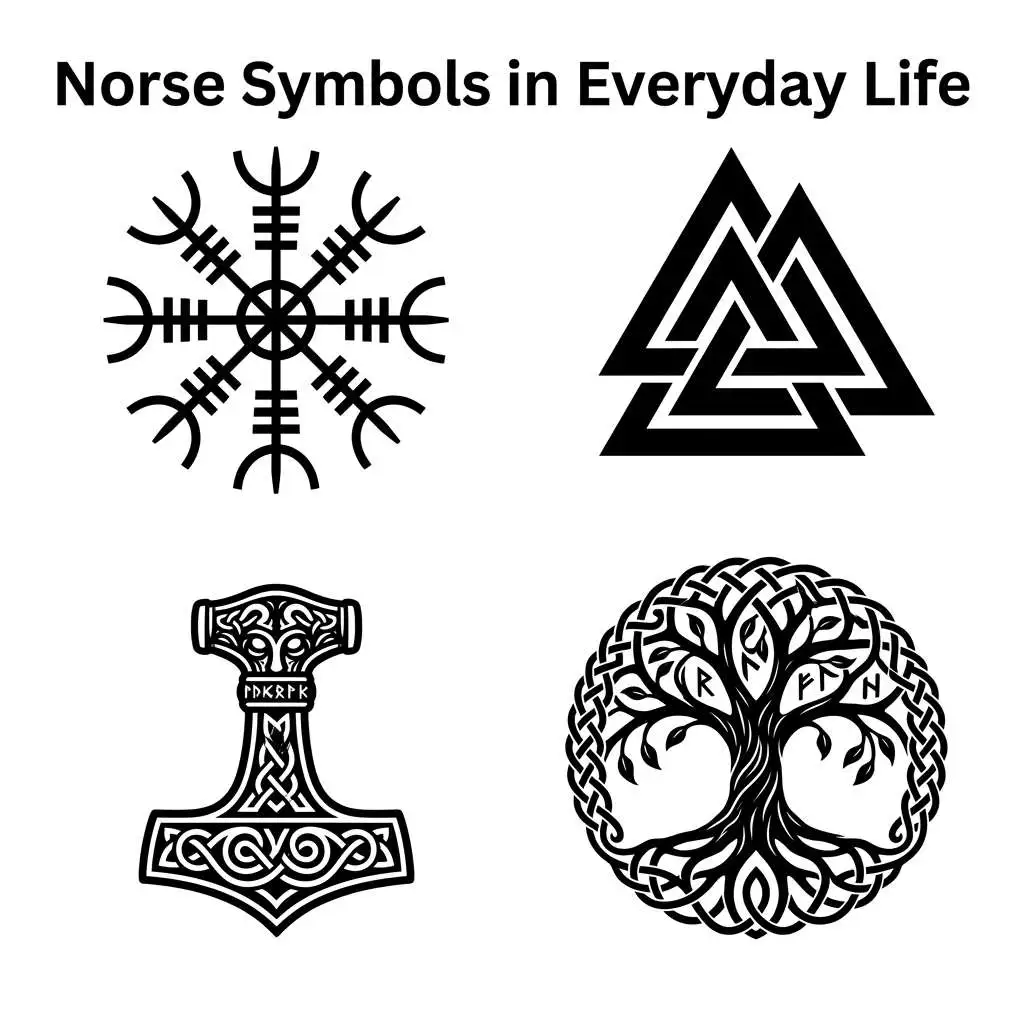
You may encounter Norse symbols more often than you realize.
Jewelry
Popular Norse jewelry includes:
- Mjolnir pendants
- Rune necklaces
- Valknut rings
- Yggdrasil charms
Home Decor
Many people display Norse artwork featuring:
- Tree of life designs
- Viking ships
- Runes
- Mythological creatures
Fashion
Norse inspired patterns appear on:
- Clothing
- Accessories
- Bags
- Watches
Personal Development
Some people use Norse symbols as daily reminders of:
- Strength
- Focus
- Courage
- Growth
Norse Symbol Tattoo Ideas and Their Personal Meanings
Norse tattoos are among the most meaningful tattoo styles today.
Valknut Tattoo
Represents:
- Bravery
- Transformation
- Honor
Yggdrasil Tattoo
Represents:
- Growth
- Family
- Spiritual connection
Mjolnir Tattoo
Represents:
- Protection
- Strength
- Confidence
Vegvisir Tattoo
Represents:
- Guidance
- Purpose
- Life direction
Rune Tattoo
Represents:
- Personal goals
- Individual values
- Spiritual beliefs
Combined Norse Tattoo Designs
Many people combine:
- Runes
- Ravens
- Wolves
- Yggdrasil
- Mjolnir
This creates a deeply personal symbol reflecting multiple aspects of identity.
Universal Norse Symbols Recognized Worldwide
Some Norse symbols have achieved global recognition.
Top Universal Norse Symbols
- Mjolnir
- Valknut
- Yggdrasil
- Vegvisir
- Helm of Awe
- Runes
These symbols appear in books, films, jewelry, tattoos, artwork, and educational resources around the world.
How to Create or Draw a Norse Inspired Symbol?
Creating a Norse inspired symbol can be a meaningful personal project.
Step 1: Choose a Core Meaning
Decide what you want the symbol to represent.
Examples:
- Strength
- Wisdom
- Protection
- Growth
- Adventure
Step 2: Select Symbolic Elements
Combine elements such as:
- Triangles
- Trees
- Runes
- Circles
- Animal shapes
Step 3: Use Symmetry
Many Norse designs feature balanced geometric patterns.
Step 4: Add Personal Meaning
Include symbols connected to your goals, values, or life experiences.
Step 5: Keep It Simple
The strongest symbols are often easy to recognize and remember.
Frequently Asked Questions
What is the most powerful Norse symbol?
Many people consider the Helm of Awe and Mjolnir among the most powerful Norse symbols because they represent protection, strength, and courage.
What does the Valknut symbolize?
The Valknut symbolizes Odin, fallen warriors, transformation, and the journey between life and death.
Is the Vegvisir an authentic Viking symbol?
The Vegvisir comes from later Icelandic manuscripts. While closely associated with Norse traditions, scholars continue to debate its exact Viking era origins.
What is the Norse symbol for protection?
Mjolnir, the Helm of Awe, and the Algiz rune are commonly associated with protection.
Why are Norse symbols popular in tattoos?
People choose Norse symbol tattoos because they represent strength, resilience, personal growth, wisdom, and spiritual connection.
What does Yggdrasil mean?
Yggdrasil is the World Tree that connects the Nine Worlds. It symbolizes life, wisdom, balance, and interconnectedness.
Conclusion
Norse symbols and meanings offer a fascinating window into the beliefs, values, and imagination of the Viking world. These ancient signs represent courage, wisdom, protection, destiny, and humanity’s connection with nature. From the mighty Mjolnir to the sacred Yggdrasil, each symbol carries layers of cultural, spiritual and psychological significance.
Their enduring popularity proves that the messages they convey remain relevant today. By understanding these symbols, we gain insight into both ancient Norse traditions and timeless aspects of the human experience.

Sophia Bennett is a passionate writer and symbol researcher who explores the deeper meanings behind ancient and modern symbols. With a strong interest in hidden messages, spiritual signs and cultural symbolism, she helps readers understand how symbols influence thoughts, emotions and everyday life.
Over the years, Sophia has dedicated her work to simplifying complex symbolic meanings into easy-to-understand insights. Her writing blends research with real-life relevance, making her content both educational and engaging for readers of all backgrounds.
She is the author of “Whispers of Hidden Symbols” and “The Silent Language of Signs”, two unique works that uncover the mystery and power behind symbols used across different cultures and traditions. Through these books, she invites readers to see the world from a new perspective, where every sign tells a story.
When she’s not writing, Sophia enjoys exploring historical texts, studying symbolic art, and discovering the unnoticed meanings hidden in everyday life.
 Ryan Scott
 Andrew Clark