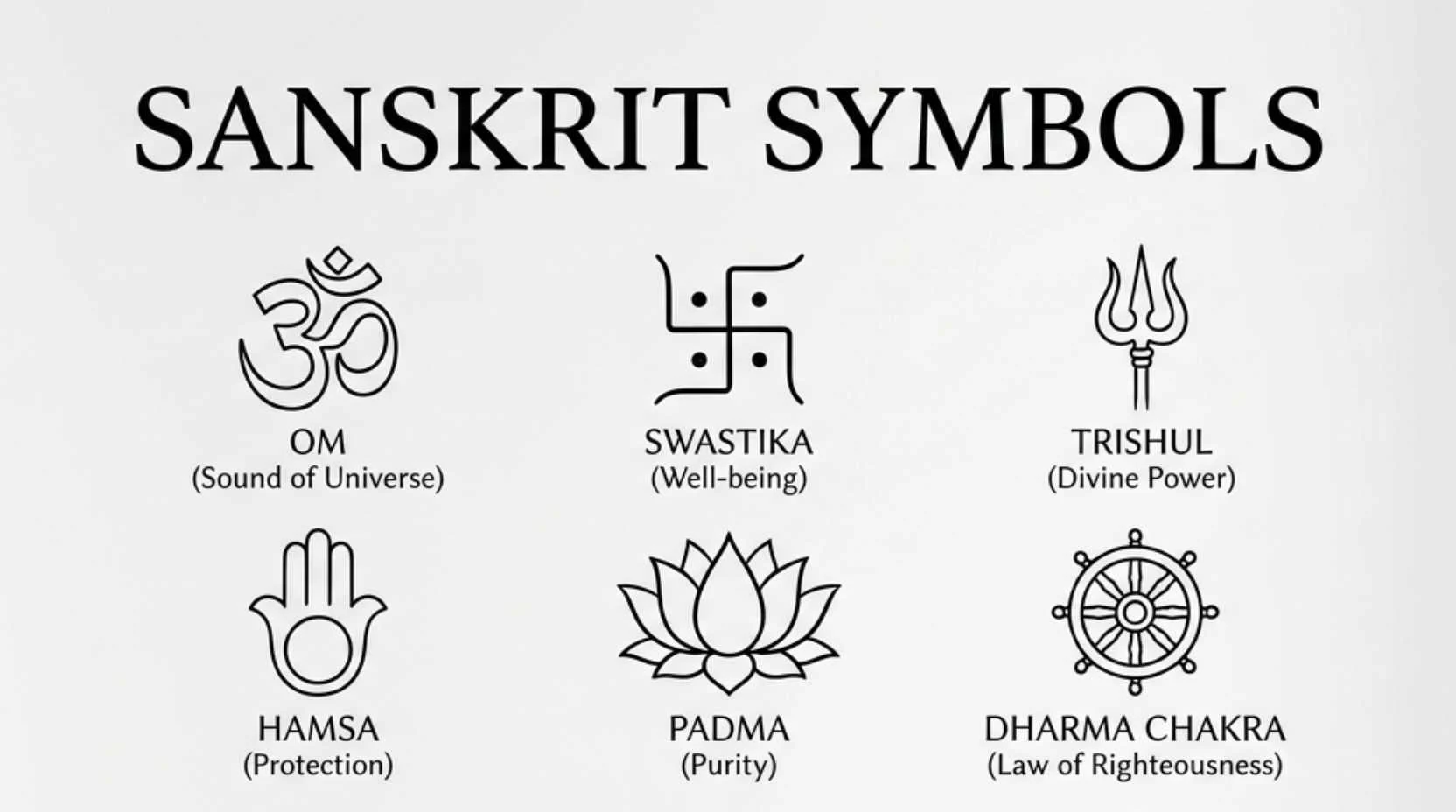
“Sanskrit symbols” have captivated people for thousands of years, carrying profound meanings that connect spirituality, wisdom and human experience.
From the sacred Om to the elegant lotus, these ancient symbols are far more than artistic designs, they are powerful representations of universal truths, inner transformation, and divine energy.
Across generations, cultures, and continents, Sanskrit symbols have inspired seekers, scholars, and spiritual practitioners alike. Their hidden meanings reveal fascinating insights into life, consciousness, and the connection between the physical and spiritual worlds.
In this guide, you’ll discover the history, symbolism, and deeper significance behind some of the most revered Sanskrit symbols and why they continue to influence modern life today.
Quick Answer
Sanskrit symbols are sacred visual representations rooted in ancient Indian philosophy, spirituality, and language. They symbolize concepts such as divine energy, wisdom, protection, balance, prosperity, enlightenment, and universal consciousness. Popular Sanskrit symbols include Om, Lotus, Swastika, Sri Yantra, Dharma Wheel, and Trishula, each carrying unique spiritual and cultural meanings.
What Makes Something a Sanskrit Symbol?
A Sanskrit symbol is more than a simple image or design. It represents an idea, spiritual principle, divine force, or philosophical teaching connected to Sanskrit culture and traditions.
Several elements make a symbol significant in Sanskrit traditions:
- Ancient historical roots
- Spiritual or religious meaning
- Connection to sacred texts
- Use in rituals and meditation
- Representation of universal truths
- Cultural significance across generations
Unlike ordinary symbols, Sanskrit symbols often serve as bridges between the physical and spiritual worlds.
The Psychological Power of Symbols
Humans naturally respond to symbols. Our brains process symbolic images faster than words. A meaningful symbol can instantly evoke feelings of peace, courage, faith, or inspiration.
This is one reason Sanskrit symbols have survived for thousands of years. Their visual simplicity combined with profound meaning creates a lasting emotional impact.
Sanskrit Symbols and Their Meanings
Om Symbol (ॐ)
The Om symbol is arguably the most recognized Sanskrit symbol in the world.
Meaning of Om
Om represents:
- The sound of the universe
- Ultimate reality
- Divine consciousness
- Unity of existence
- Spiritual awakening
According to ancient Hindu philosophy, Om was the first sound from which all creation emerged.
Emotional Meaning
People often associate Om with:
- Inner peace
- Calmness
- Mental clarity
- Spiritual growth
Today, the Om symbol appears in yoga studios, meditation spaces, jewelry, artwork, and tattoos worldwide.
Lotus Symbol (Padma)
The lotus flower is one of the most beautiful and meaningful Sanskrit symbols.
Meaning of the Lotus
The lotus grows from muddy water but blooms into a stunning flower. Because of this journey, it symbolizes:
- Purity
- Transformation
- Spiritual growth
- Enlightenment
- Resilience
Psychological Symbolism
The lotus reminds people that beauty and wisdom can emerge from life’s challenges.
Many spiritual teachers use the lotus as a metaphor for personal development and self discovery.
Swastika Symbol
Before modern history altered public perception in many parts of the world, the swastika was an ancient Sanskrit symbol representing positive energy.
Traditional Sanskrit Meaning
In Hindu, Buddhist, and Jain traditions, the swastika symbolizes:
- Good fortune
- Prosperity
- Harmony
- Divine blessings
- Success
For thousands of years, it appeared on temples, homes, and sacred objects as a sign of protection and auspiciousness.
Cultural Context
The ancient Sanskrit swastika has a completely different origin and meaning from its misuse in twentieth century political movements.
Understanding this distinction is important when studying Sanskrit symbolism.
Sri Yantra
The Sri Yantra is one of the most complex sacred geometric symbols in Sanskrit traditions.
Meaning
It consists of interlocking triangles that represent:
- Cosmic energy
- Divine feminine power
- Universal balance
- Spiritual evolution
Many practitioners use the Sri Yantra during meditation and spiritual practices.
Emotional Connection
The intricate design encourages focus, concentration, and a sense of harmony.
Dharma Wheel
Known as the Wheel of Dharma, this symbol plays a major role in Buddhist traditions rooted in Sanskrit teachings.
Symbolic Meaning
The Dharma Wheel represents:
- Wisdom
- Moral living
- Spiritual progress
- The path to enlightenment
Each spoke symbolizes important principles that guide personal growth and ethical living.
Trishula Symbol
The Trishula, or trident, is associated with Lord Shiva.
Meaning
The three prongs symbolize:
- Creation
- Preservation
- Transformation
Some interpretations connect them with:
- Mind
- Body
- Spirit
The Trishula represents power balanced by wisdom.
Animal Symbols in Sanskrit Traditions
Animals play a major role in Sanskrit symbolism because they embody specific qualities and spiritual teachings.
Elephant
The elephant is strongly associated with Lord Ganesha.
Symbolizes
- Wisdom
- Intelligence
- Success
- Protection
- Removing obstacles
People often display elephant imagery to attract positive energy and prosperity.
Cow
The cow holds sacred status in Sanskrit culture.
Represents
- Compassion
- Nourishment
- Motherhood
- Generosity
- Abundance
It symbolizes the nurturing aspects of life.
Peacock
The peacock appears frequently in Indian mythology and Sanskrit symbolism.
Meaning
- Beauty
- Grace
- Integrity
- Spiritual awakening
Its colorful feathers symbolize the diversity and richness of creation.
Snake
Snakes carry powerful symbolic meanings.
Represents
- Transformation
- Rebirth
- Protection
- Hidden wisdom
- Spiritual energy
The serpent is often connected to Kundalini energy, believed to reside within every individual.
Nature Symbols in Sanskrit Culture
Nature serves as a powerful source of symbolism.
Sun Symbol
The sun represents:
- Life force
- Vitality
- Knowledge
- Divine power
- Enlightenment
Ancient Sanskrit texts frequently praise the sun as a source of spiritual illumination.
Moon Symbol
The moon symbolizes:
- Intuition
- Emotional balance
- Peace
- Reflection
- Feminine energy
Its calming presence contrasts with the active energy of the sun.
River Symbolism
Sacred rivers symbolize:
- Purification
- Renewal
- Life
- Spiritual cleansing
Water often represents the continuous flow of existence.
Tree Symbolism
Trees symbolize:
- Growth
- Wisdom
- Stability
- Connection between heaven and earth
The banyan tree is especially revered for its spiritual significance.
Objects and Sacred Designs That Represent Sanskrit Wisdom
Diya Lamp
The traditional oil lamp symbolizes:
- Light over darkness
- Knowledge over ignorance
- Hope over fear
Lighting a diya remains an important spiritual practice.
Bell
Temple bells represent:
- Awakening consciousness
- Spiritual focus
- Divine presence
Their sound helps create a sacred atmosphere.
Mala Beads
Mala beads symbolize:
- Meditation
- Devotion
- Mindfulness
- Spiritual discipline
Many practitioners use them during prayer and chanting.
Conch Shell
The conch shell symbolizes:
- Sacred sound
- Divine communication
- Victory of truth
Its powerful sound is often used during ceremonies and rituals.
Ancient and Cultural Sanskrit Symbols Around the World
Although Sanskrit originated in India, its symbols have influenced cultures across Asia and beyond.
Sanskrit Influence in Asia
Countries influenced by Sanskrit traditions include:
- India
- Nepal
- Sri Lanka
- Thailand
- Cambodia
- Indonesia
- Tibet
- Bhutan
Temples, monuments, manuscripts, and artworks throughout these regions feature Sanskrit symbols.
Europe and Sanskrit Symbolism
European scholars became fascinated with Sanskrit during the eighteenth and nineteenth centuries. This interest helped introduce Sanskrit philosophy and symbolism to Western audiences.
Today, symbols like Om and the lotus appear throughout Europe in yoga, wellness, and spiritual communities.
African Perspectives
Many African cultures also use symbolic systems to communicate spiritual concepts. While distinct from Sanskrit traditions, they share common themes such as:
- Wisdom
- Ancestral connection
- Protection
- Community
This demonstrates how symbolism is a universal human language.
North American Influence
In the United States and Canada, Sanskrit symbols have become popular through:
- Yoga culture
- Meditation practices
- Spiritual literature
- Holistic wellness communities
Millions of people use these symbols as reminders of mindfulness and inner balance.
The Spiritual Meaning Behind Sanskrit Symbols
One reason Sanskrit symbols remain relevant is their profound spiritual depth.
Symbols as Paths to Self Discovery
Ancient teachings viewed symbols as tools for transformation.
Rather than simply decorating spaces, these symbols help people:
- Reflect on life
- Develop awareness
- Strengthen focus
- Connect with higher ideals
Connection to Universal Consciousness
Many Sanskrit symbols point toward the idea that all existence is interconnected.
This concept appears repeatedly through symbols such as:
- Om
- Lotus
- Sri Yantra
- Dharma Wheel
Each reminds us that individual life is part of a greater whole.
Inner Transformation
The deeper message behind many Sanskrit symbols is personal growth.
They encourage people to:
- Overcome fear
- Develop compassion
- Seek wisdom
- Cultivate peace
These themes remain relevant regardless of culture or religion.
Sanskrit Symbolism in Literature and Culture
Sanskrit literature contains some of the world’s richest symbolic traditions.
Epic Literature
Ancient epics use symbols extensively to convey moral and spiritual lessons.
Symbols often represent:
- Heroism
- Duty
- Sacrifice
- Wisdom
- Divine guidance
Poetry and Philosophy
Sanskrit poets frequently use symbolic imagery drawn from nature.
Examples include:
- Lotus flowers
- Rivers
- Mountains
- Birds
- Celestial bodies
These images communicate profound philosophical ideas in accessible ways.
Art and Architecture
Temples throughout South Asia contain symbolic carvings and sacred geometry.
Each design element often carries layers of meaning related to:
- Creation
- Divinity
- Cosmic order
- Spiritual progress
Sanskrit Symbols in Everyday Life
Many Sanskrit symbols continue to appear in modern life.
Home Decor
Popular uses include:
- Wall art
- Sacred spaces
- Meditation rooms
- Decorative sculptures
These symbols create a sense of peace and positive energy.
Jewelry
People wear Sanskrit symbols as:
- Necklaces
- Rings
- Bracelets
- Pendants
Many choose symbols that reflect personal values and goals.
Wellness and Mindfulness
Yoga practitioners frequently use symbols such as:
- Om
- Lotus
- Mandalas
- Sri Yantra
These images help reinforce mindfulness practices.
Sanskrit Symbol Tattoo Ideas and Personal Meanings
Sanskrit symbol tattoos have become increasingly popular because of their beauty and depth.
Om Tattoo
Perfect for people seeking:
- Spiritual growth
- Inner peace
- Mindfulness
Lotus Tattoo
Ideal for individuals who have overcome challenges and emerged stronger.
Sri Yantra Tattoo
Represents:
- Balance
- Cosmic harmony
- Personal transformation
Trishula Tattoo
Often chosen to symbolize:
- Strength
- Protection
- Courage
Sanskrit Word Tattoos
Popular words include:
- Shanti, meaning peace
- Prema, meaning love
- Dharma, meaning purpose
- Satya, meaning truth
Always verify translations with a knowledgeable Sanskrit expert before getting a tattoo.
Universal Sanskrit Symbols Recognized Worldwide
Several symbols have achieved global recognition.
Top Universal Sanskrit Symbols
- Om
- Lotus
- Sri Yantra
- Dharma Wheel
- Mandala
- Trishula
- Swastika in its original sacred context
These symbols appear across continents and continue to inspire people from diverse backgrounds.
How to Create or Draw a Sanskrit Inspired Symbol
Creating a meaningful symbol involves more than artistic skill.
Step 1: Choose a Core Meaning
Decide what you want your symbol to represent:
- Peace
- Strength
- Wisdom
- Growth
- Love
Step 2: Use Sacred Shapes
Common shapes include:
- Circles for unity
- Triangles for energy
- Lotus petals for growth
- Spirals for evolution
Step 3: Maintain Balance
Many Sanskrit symbols use symmetrical designs because balance reflects harmony.
Step 4: Add Personal Meaning
Include elements connected to your own journey and values.
Step 5: Keep It Simple
The most memorable symbols are often visually simple but emotionally powerful.
Frequently Asked Questions
What are Sanskrit symbols?
Sanskrit symbols are sacred visual representations connected to ancient Indian spirituality, philosophy, and culture. They communicate concepts such as wisdom, enlightenment, protection, and harmony.
What is the most famous Sanskrit symbol?
The Om symbol is widely considered the most famous Sanskrit symbol because it represents universal consciousness and spiritual unity.
Are Sanskrit symbols religious?
Some Sanskrit symbols have religious significance, while others represent broader philosophical and cultural ideas that appeal to people of many backgrounds.
Can I use Sanskrit symbols as tattoos?
Yes, many people choose Sanskrit symbols as tattoos because of their spiritual and personal meanings. It is important to understand the symbol’s authentic meaning before using it.
What does the lotus symbolize in Sanskrit traditions?
The lotus symbolizes purity, transformation, enlightenment, resilience, and spiritual growth.
Why are Sanskrit symbols still popular today?
They remain popular because they offer timeless messages about peace, wisdom, self improvement, and connection to something greater than ourselves.
Conclusion
Sanskrit symbols are far more than ancient designs. They represent wisdom, spirituality, personal transformation, and humanity’s search for meaning. From the sacred Om and lotus to the intricate Sri Yantra and Dharma Wheel, each symbol carries layers of history and profound insight.
These symbols continue to inspire people across cultures because they speak to universal human experiences such as growth, hope, balance, and enlightenment. By understanding their meanings, we gain a deeper appreciation for one of the world’s richest symbolic traditions and the timeless lessons it offers.

Sophia Bennett is a passionate writer and symbol researcher who explores the deeper meanings behind ancient and modern symbols. With a strong interest in hidden messages, spiritual signs and cultural symbolism, she helps readers understand how symbols influence thoughts, emotions and everyday life.
Over the years, Sophia has dedicated her work to simplifying complex symbolic meanings into easy-to-understand insights. Her writing blends research with real-life relevance, making her content both educational and engaging for readers of all backgrounds.
She is the author of “Whispers of Hidden Symbols” and “The Silent Language of Signs”, two unique works that uncover the mystery and power behind symbols used across different cultures and traditions. Through these books, she invites readers to see the world from a new perspective, where every sign tells a story.
When she’s not writing, Sophia enjoys exploring historical texts, studying symbolic art, and discovering the unnoticed meanings hidden in everyday life.
 Ryan Scott
 Andrew Clark